Zahid Torres-Rahman

How do you unlock the social impact potential of small and medium-sized enterprises (SMEs)? And how can development entrepreneurs maximise their success? Meet social impact pioneer Richenda Van Leeuwen, Executive Director of ANDE – The Aspen Network of Development Entrepreneurs.
icon-content-podcast-grey
How to become a social entrepreneur? Meet social impact pioneer Kevin Mutiso. Kevin is a serial entrepreneur, whose businesses repeatedly get selected as top start-ups across Africa.
icon-content-podcast-grey
If you feel like you’re suddenly hearing the word “regenerative” all the time, you’re not wrong. The concept has gained considerable traction in the last year, although it’s not new to the Rainforest Alliance. Read on to learn more on this issue from Rainforest Alliance, who have been partnering with farmers for over 30 years on growing practices that protect the land.
icon-content-article-grey
This article aims to highlight the changing nature of work for young Africans that has been severely impacted by the Covid-19 pandemic. This explores the state of youth unemployment on the continent and the potential for digitalisation to impact the future of work, calling on the business community and leaders to invest in skills development of youth, promoting entrepreneurial mindsets.
icon-content-article-grey
This article shares the story of a network of small-scale farmers in India tackling climate change. It forms part of ANDE’s Stories of Climate Resilience: Small Businesses, Big Impact campaign, that showcases adaptation solutions to climate change driven by entrepreneurs.
icon-content-article-grey
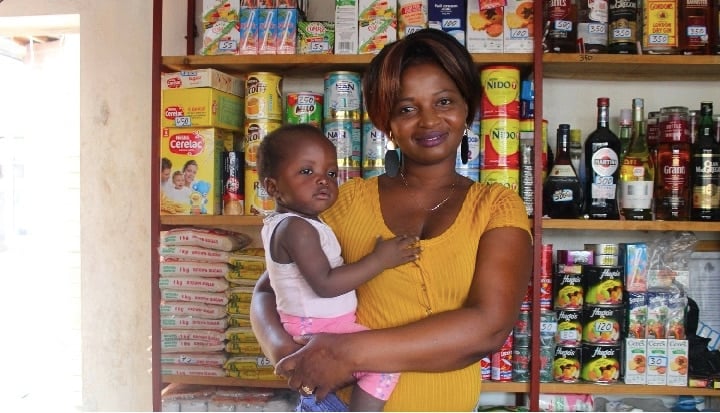
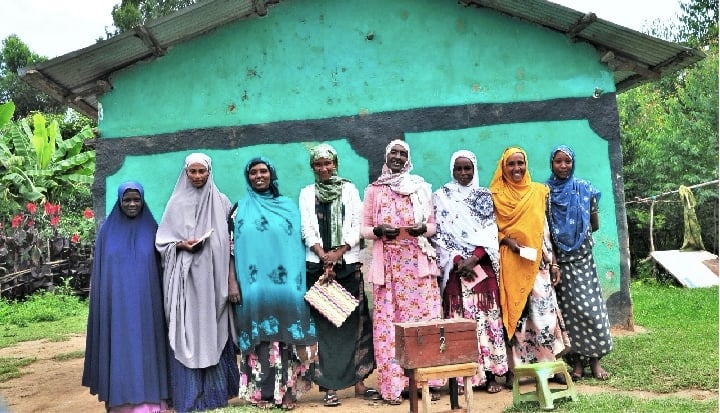
When women’s businesses succeed, the benefits to their families and communities are substantial. However, obstacles like those faced by Bernadette are pervasive for women entrepreneurs, often preventing them from reaching their full economic and personal potential. Many women entrepreneurs lack access to the training and resources they need to help them develop their business skills.
icon-content-article-grey
María Fernanda Ghiso, Youth Inclusion expert at the Rainforest Alliance, marked International Youth Day (last month) by reminding organisations that they need to enable today’s youth to deliver tangible and sustainable change.
icon-content-article-grey
A new report outlines how Farm Africa and SOS Sahel Ethiopia’s Bale Mountains Eco-region REDD+ forest conservation programme in Oromia, Ethiopia has achieved impressive results in its priority objectives of reducing deforestation, cutting greenhouse gas emissions and increasing household incomes. It has also helped the community take significant strides towards advancing gender equality.
icon-content-article-grey
Throughout the tropics, rates of forest and biodiversity loss are accelerating while the global impacts of the climate crisis are escalating. If tropical deforestation were a country, it would rank third in global emissions, behind only China and the United States. Much of this deforestation is driven by commodities such as coffee, timber, palm oil, rubber, and cocoa.
icon-content-article-grey
Pakistan’s catastrophic floods have so far caused at least 1,134 deaths, submerged a third of the country and upended the lives of 1.2million people (according to news reports). This is the human cost of the climate crisis and our thoughts are with those affected by the disaster. Read more from Michael Gidney, CEO Fairtrade Foundation on the support that is needed to rebuild after disasters and to adapt for the future.
icon-content-article-grey
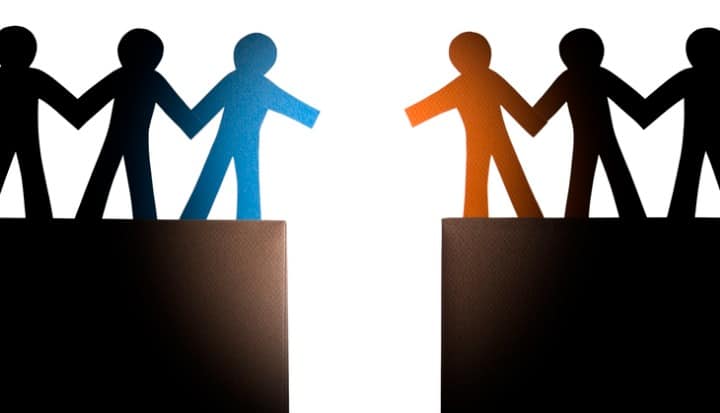
The insights in the Nudges and Bridges series aim to help everyone, including business people, understand how they can contribute to peace. The words “us” and “them” typically are used to characterize problematic opposition. This video looks at these issues and also offers ways in which creating an “us” can be a good thing.  Maybe it is terms of finding a common enemy – that seems very true these days – but it also looks at more constructive possibilities of “us and them” while warning of the very real dangers of “us vs them.” 
icon-content-article-grey
Interview with Moses Kimani, Founder and CEO at Lentera Ltd, a farming technology company that provides farmers with market linkage opportunities, digital extension services and quality inputs. Read on to learn how how real-time information for famers enables climate adaption.
icon-content-article-grey
When it comes to boosting earnings for banana growers, only an approach that works for both smallholder farmers and plantation workers can deliver the results the industry really needs, says Naomi Somerville-Large, Senior Technical Lead at the Fairtrade Foundation
icon-content-article-grey
This iteration is an interview conducted by the CIBER Institute at the Kelley School of Business with Tim Fort that frames the notion of Nudges & Bridges, and the cultural artifacts that comprise them, in the context of the conflicted world in which we live in 2022.  The interviewer poses both international and domestic questions of Professor Fort to elucidate the ways in which cultural artifacts both help us to make better decisions, especially collaborative ones, as well to act as bridges for people to find common ground with those they disagree.
icon-content-article-grey
With goals that range from “[being] financially stable”, to “being an established business tycoon”, young people from low-income communities have big ambitions. However, due to an interwoven mix of financial barriers, they currently lack the information, infrastructure, and knowledge to pursue such ambitions. How can organisations put young people from low-income communities at the heart of financial inclusion decision-making, in order to help them achieve their ambitions?
icon-content-article-grey
Two long-held criticisms of research organizations are the siloed nature of academic research— often comfortably detached from ground realities, and research outcomes never leading to the desired impact. How can the often long-drawn process of scientific, evidence-based research start to make a dent on real life? In this article, we look at how Good Business Lab approaches this conundrum by narrowing in on two verticals within the organization that were developed to address these issues.
icon-content-article-grey
An independent study led by a Nobel Prize-winning economist has confirmed some of the largest learning gains ever measured. The methods studied underpin the education of more than one million students supported by NewGlobe in classrooms every day, across Nigeria, Liberia, Rwanda, Kenya, Uganda and India.
icon-content-article-grey
How to communicate social impact with Eric Ressler. Eric Ressler’s expert insight into why sustainability communications needs to up its game and how we can go about this.
icon-content-podcast-grey
More than 3.2 billion people in low- and middle-income countries (LMICs) now access the internet on a mobile phone. Mobile is the primary way men and women access the internet in LMICs, accounting for 85% of broadband connections in 2021.[1] Despite the critical role of mobile in providing connectivity, progress in closing the gender gap in mobile internet use has stalled.
icon-content-article-grey
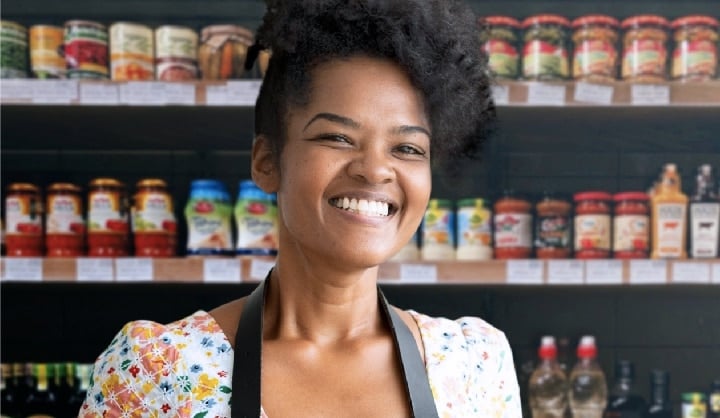
A new learning brief from IFC introduces how the fast-moving consumer goods (FMCG) sector, including manufacturers, e-supply chain actors, investors, and development organizations, can advance gender equality within the distribution activities. The brief provides a market overview and presents an emerging business case, the challenges facing women distributors and retailers, and recommendations.
icon-content-article-grey