Responsible Business

As climate-related disasters become more frequent and severe, the case for acting before crises strike is growing stronger. This article explores how Mercy Corps, H&M Foundation and Adyen are testing an innovative approach that links climate early-warning systems to remittances, helping vulnerable families access resources before disasters hit and building more resilient, anticipatory humanitarian systems.
icon-content-article-grey
Listen in to Ian Leader, Social Impact Pioneer, cross-sector strategist and founder of Local Works. Ian shares his experience in building partnerships that really work, between business, community and government.
icon-content-podcast-grey
Social Impact Pioneer Hesham Elzeftawi, shares his journey developing deep understanding and appreciation for cross-cultural learning.
icon-content-podcast-grey
Business Fights Poverty and Learn Biomimicry come together to explore how nature offers a powerful lens for going beyond resilience, helping organisations not just withstand adversity but grow stronger because of it.
icon-content-article-grey
Social Impact Pioneer Michelle Grogg is the Executive Director of the Mars Impact Fund. Listen in as Michelle shares her insights on why Mars can do more with an Impact Fund now. She shares her experiences on how businesses can drive meaningful social impact at scale and how delivering impact through both business operations and targeted investment is a vital way to make limited resources go further.
icon-content-podcast-grey
The Fossil Fuel Phaseout Conference in Santa Marta highlights the urgent need for a just, equitable energy transition amid geopolitical tensions. A collaborative, inclusive approach to the transition rooted in social justice, local empowerment, and coordinated governance can reshape power dynamics, avert climate disasters, and ensure prosperity for all. Bold action is critical now.

icon-content-article-grey
Sustainability systems must move beyond audits to meaningful engagement with small-scale producers. New guidance from ISEAL highlights how collaborative, participatory approaches can uncover root causes, strengthen resilience and improve outcomes. By recognising producers as partners and knowledge holders, businesses can build more effective, credible and regulation-ready supply chains.
icon-content-article-grey
As climate and nature commitments grow, many fail to deliver due to poor integration with social and economic realities. This article introduces “Landscape by Design,” a people-centred, place-based approach that aligns climate, nature and livelihoods. By co-creating strategies with local stakeholders, businesses can drive more resilient, inclusive and measurable sustainability outcomes.
icon-content-article-grey
Meet Social Impact Pioneer, Fernanda Facchini. She is part of the team at Natura, the Brazilian multinational cosmetics company, who are pioneering sustainable and ethical beauty products while driving regenerative practices in the Amazon rainforest. This conversation deep dives into what it takes for a commercial business to deliver social and environmental impact from its heart.
icon-content-podcast-grey
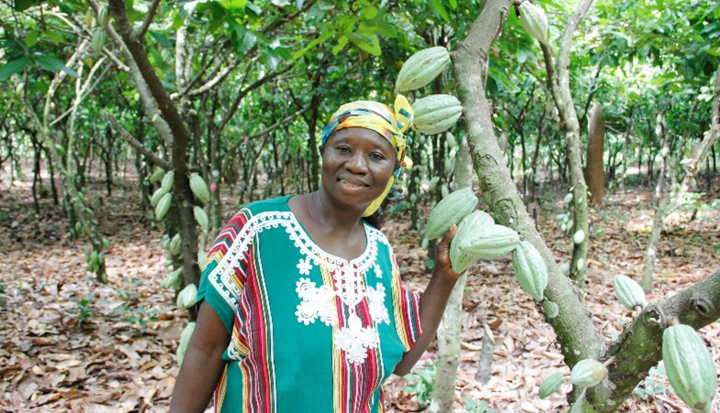
Supply chain resilience begins at the household level. Drawing lessons from the cocoa sector in West Africa, this article explores how strengthening women’s financial inclusion, decision-making power and access to savings groups can stabilise farming families and reduce risks across global supply chains. When households become more resilient, companies gain stronger, more reliable and sustainable supply systems.
icon-content-article-grey
Listen in to this podcast episode to hear from Social Impact Pioneer Marike Runneboom de Peña, Interim CEO of Fairtrade International, about why this moment is a turning point for fair trade and global supply chains.
icon-content-podcast-grey
Grant funding has long been the default tool for businesses wanting to fight poverty and support global causes. But a growing number of corporate leaders are making a different choice. Impact investments are investments made with the intention to generate positive, measurable social and/or environmental impact alongside a financial return. Here are five reasons businesses are moving their CSR strategies beyond traditional grantmaking.
icon-content-article-grey
Businesses face growing pressure to turn sustainability insight into action, yet fragmented evidence often slows progress. The Business Fights Poverty Institute bridges this gap by combining academic rigour with real-world expertise to deliver practical, actionable guidance. By enabling collaboration across sectors, it helps companies build resilient, inclusive strategies to tackle global challenges effectively.
icon-content-article-grey
How do we finance renewable energy in the places where it can have the greatest impact? Meet two visionary leaders and Social Impact Pioneers driving solutions: Lassor Feasley, co-founder and CEO of Renewables.org, and Ruchir Punjabi, co-founder and CEO of Distributed Energy
icon-content-podcast-grey
Forced labour in supply chains is no longer just an ethical issue, it is a growing competitiveness challenge for UK businesses. As global regulations tighten, responsible sourcing is becoming essential for market access, resilience and investor confidence. Stronger frameworks can protect workers, level the playing field and position the UK to lead in sustainable, high-integrity global trade.
icon-content-article-grey
Water risks are disrupting supply chains and communities worldwide, while regulators demand more credible water reporting. The Alliance for Water Stewardship’s (AWS) updated global standard offers companies a practical, independently assured framework to manage water risk, strengthen climate and nature strategies, and deliver better outcomes for workers and communities in high risk catchments.
icon-content-article-grey
How can companies strengthen livelihoods through their value chains? As businesses face rising pressure to deliver fairer and more resilient value chains, livelihoods can
insights-icon
As water scarcity intensifies, businesses must rethink not only how much water they use but who is most affected by its depletion. This article explores why gender equality, disability and social inclusion (GEDSI) are essential to effective corporate water stewardship, helping companies reduce operational risks, strengthen community trust and build more resilient, equitable water management strategies.
icon-content-article-grey
Despite growing commitments to gender equality, many supply chain programmes struggle to deliver real outcomes for women. This article argues the problem is not motivation but design. By rethinking how gender initiatives are structured—embedding context, capability, and evidence from the start—companies can move beyond participation metrics and create meaningful, lasting change in global supply chains.
icon-content-article-grey
As social impact becomes more complex, politicised and contested, businesses and practitioners are rethinking how change is led and communicated. Drawing on insights from Business Fights Poverty’s Together for 2026 forum, this article explores how organisations can move beyond acronyms, build trust locally, integrate impact into core decision-making, and sustain leadership resilience in an uncertain global landscape.
icon-content-article-grey

What do we mean by "Responsible Business"?

Sub-topics within this category

There are no sub-topics within this Category.