Climate Action

Climate Action to Alleviate Poverty

As climate-related disasters become more frequent and severe, the case for acting before crises strike is growing stronger. This article explores how Mercy Corps, H&M Foundation and Adyen are testing an innovative approach that links climate early-warning systems to remittances, helping vulnerable families access resources before disasters hit and building more resilient, anticipatory humanitarian systems.
icon-content-article-grey
The Fossil Fuel Phaseout Conference in Santa Marta highlights the urgent need for a just, equitable energy transition amid geopolitical tensions. A collaborative, inclusive approach to the transition rooted in social justice, local empowerment, and coordinated governance can reshape power dynamics, avert climate disasters, and ensure prosperity for all. Bold action is critical now.
icon-content-article-grey
As climate and nature commitments grow, many fail to deliver due to poor integration with social and economic realities. This article introduces “Landscape by Design,” a people-centred, place-based approach that aligns climate, nature and livelihoods. By co-creating strategies with local stakeholders, businesses can drive more resilient, inclusive and measurable sustainability outcomes.
icon-content-article-grey
How do we finance renewable energy in the places where it can have the greatest impact? Meet two visionary leaders and Social Impact Pioneers driving solutions: Lassor Feasley, co-founder and CEO of Renewables.org, and Ruchir Punjabi, co-founder and CEO of Distributed Energy
icon-content-podcast-grey
Water risks are disrupting supply chains and communities worldwide, while regulators demand more credible water reporting. The Alliance for Water Stewardship’s (AWS) updated global standard offers companies a practical, independently assured framework to manage water risk, strengthen climate and nature strategies, and deliver better outcomes for workers and communities in high risk catchments.
icon-content-article-grey
Climate action often fails not from apathy, but from poor design. This article argues that the most powerful environmental impact comes from embedding sustainability into everyday systems—especially finance. By making climate-positive choices automatic rather than effort-based, businesses can drive durable behaviour change and shift outcomes at scale.
icon-content-article-grey
Social Impact Pioneer, Sam Teicher talks the business of coral reefs, running impact businesses, investors and innovation.
icon-content-podcast-grey
This article explores how climate change deepens multidimensional poverty and why environmental justice must be central to policy and business. It calls for joint, intersectoral solutions to tackle overlapping vulnerabilities and highlights the role of the private sector in driving social and environmental resilience.
icon-content-article-grey
Micro-retailers are vital to local economies and brand ecosystems, but many face repeated disruption from climate shocks. A new report from Business Fights Poverty and Mastercard Strive explores how digital financial tools can fortify, navigate and recover from climate risks, creating stability for low-income entrepreneurs and strategic value for financial institutions and supply chains.
icon-content-article-grey
Extreme heat is the deadliest US climate threat, costing thousands of lives and hundreds of billions of dollars annually. A new white paper, Heat Resilience: An Opportunity for Cross-Sector Action in the United States, outlines a shared agenda, sector guidance, and policy and finance levers to drive coordinated, community-centered resilience across business, government and healthcare.
icon-content-article-grey
As world leaders endorse the Belém Declaration on people-centred climate action, one truth is clear: farmer resilience must move from rhetoric to investment. This article explores why smallholder farmers receive less than 1% of climate finance, and how local agricultural enterprises offer the fastest, most scalable route to climate-resilient supply chains and global food security.
icon-content-article-grey
David Nicholson, a leading figure in global climate action, speaking to us directly from the UN Climate COP in Belém, Brazil. As Mercy Corps’ first-ever Chief Climate Officer, appointed in 2022, Nicholson has been at the forefront of embedding bold, science-driven climate strategy into one of the world’s largest humanitarian organisations – expect to hear his thoughts on climate resilience, adaptation and business action.
icon-content-podcast-grey
Matthew Spencer, Global Director of Landscapes at IDH – The Sustainable Trade Initiative, sits down for a timely conversation recorded live from COP 2025 in Belém, Brazil. With climate risks intensifying and global supply chains under unprecedented pressure, Matthew explores why landscape-level collaboration is emerging as one of the most effective solutions for protecting the world’s most vulnerable ecosystems — while strengthening livelihoods for millions of smallholder farmers.
icon-content-podcast-grey
Business Fights Poverty explores how companies can link social and environmental impact to drive a fairer, more resilient future. Using insights from the 5 Bridges to 2045 framework and Natura’s pioneering Integrated Profit & Loss (iP&L) model, this article shows how valuing natural, social, and human capital can transform decision-making, performance, and long-term sustainability.
icon-content-article-grey
As climate risks intensify across global agriculture, Bonsucro and partners are expanding the Climate Resilience Platform (CRP) to equip farmers with actionable, science-based tools. Through open-access collaboration with CGIAR, Better Cotton, and leading research organisations, the initiative empowers producers to anticipate climate impacts, strengthen livelihoods, and accelerate resilient, sustainable supply chains across the world.

icon-content-article-grey
IDH shares its top 10 lessons from convening landscape initiatives for the last 10 years. The results across a range of landscapes show that greater impact can be achieved together. The cost and risk sharing that landscape approaches allow makes them more relevant to agri-food businesses as physical supply risks from extreme weather increase.
icon-content-article-grey
This year’s COP30 conference is shining a light on the importance of the Amazon rainforest. Evidence from Peru highlights the critical role that economic opportunity must play in Amazon conservation–and how investment can help to unlock them.
icon-content-article-grey
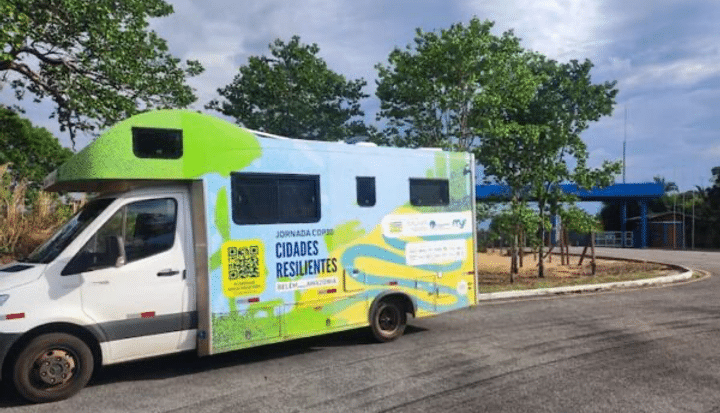
This article follows a 2,700-kilometre motorhome journey to COP30, where Fundação Dom Cabral and partners used the road as a living climate laboratory. Crossing four biomes and nine cities, the team gathered real-world evidence on resilience, local innovation, and community risks, offering business and city leaders practical lessons for climate action and resilient development.
icon-content-article-grey
Written from a riverboat en route to COP30, this unique article explores how business leaders can draw practical, investable lessons from the Amazon. It urges companies to link emissions goals with local livelihoods, co-create with communities, and view nature as infrastructure. A powerful reminder that regeneration must be built from the ground up.
icon-content-article-grey
As world leaders gather at COP, Amanda Smith, Global Head of Social at Diageo, shares insights into Diageo and CARE’s shared ambition to build resilient supply chains by tackling gender inequality and climate vulnerability together.
icon-content-article-grey

What do we mean by "Climate Action"?

Learn how targeted climate action can alleviate poverty by reducing vulnerabilities and promoting sustainable practices that ensure community resilience.

Sub-topics within this category

There are no sub-topics within this Category.