Diversity, Equity and Inclusion

Promoting Diversity, Equity, Inclusion to Fight Poverty

Women farmers are central to fixing broken food systems, yet they remain excluded from the technologies, financing and markets needed to scale solutions. New research from CARE shows that reducing food loss and waste requires gender-responsive design, investment and partnerships. Empowering women farmers can strengthen food security, resilience and climate outcomes globally.
icon-content-article-grey
Strong partnerships are essential to building resilient, climate-smart supply chains. Drawing on ofi and GIZ’s multi-year collaboration, this article shares five practical lessons for empowering women farmers at scale. From aligning around shared challenges to designing inclusive, long-term programmes, it shows how partnership can unlock livelihoods, strengthen value chains and drive measurable impact.
icon-content-article-grey
Supply chain resilience begins at the household level. Drawing lessons from the cocoa sector in West Africa, this article explores how strengthening women’s financial inclusion, decision-making power and access to savings groups can stabilise farming families and reduce risks across global supply chains. When households become more resilient, companies gain stronger, more reliable and sustainable supply systems.
icon-content-article-grey
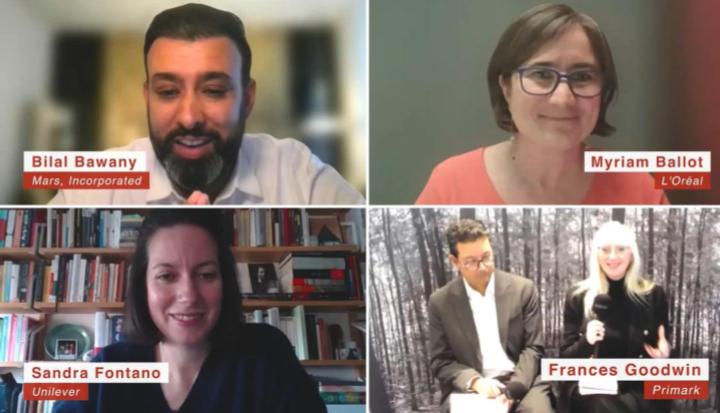
Watch this Workshop on how companies can strengthen livelihoods through their value chains, including suppliers, distributors and employees. Through an interview-style panel and table
icon-content-video-grey
Watch this Workshop which explores the biggest disruptive forces reshaping livelihoods, including AI and climate change. Take a deeper look at the impacts on
icon-content-video-grey
AI is helping women entrepreneurs save time, but not yet unlock the full growth potential of their businesses. Drawing on research across 3,000 women entrepreneurs in 66 countries, this article explores why AI adoption remains concentrated in marketing and communications, and what targeted action is needed to turn AI from a helpful tool into a genuine driver of resilience, productivity and growth.
icon-content-article-grey
As water scarcity intensifies, businesses must rethink not only how much water they use but who is most affected by its depletion. This article explores why gender equality, disability and social inclusion (GEDSI) are essential to effective corporate water stewardship, helping companies reduce operational risks, strengthen community trust and build more resilient, equitable water management strategies.
icon-content-article-grey
Despite growing commitments to gender equality, many supply chain programmes struggle to deliver real outcomes for women. This article argues the problem is not motivation but design. By rethinking how gender initiatives are structured—embedding context, capability, and evidence from the start—companies can move beyond participation metrics and create meaningful, lasting change in global supply chains.
icon-content-article-grey
Artificial intelligence offers enormous potential to level the playing field for young entrepreneurs — but without urgent action, it risks deepening inequality. Drawing on insights from Youth Business International’s policy paper, this article explores how business, policymakers, and support organisations can collaborate to close the AI divide and build a more inclusive future for entrepreneurship.
icon-content-article-grey
Avon is redefining beauty through purpose-driven sustainability. From empowering millions of Representatives to innovative cruelty-free and refillable products, Avon’s strategy integrates climate action, ethical sourcing and gender equity. This article explores how Avon’s inclusive business model and ESG commitments are creating lasting social impact across communities and supply chains.
icon-content-article-grey
Women’s Entrepreneurship Day highlights a critical truth: empowering women entrepreneurs is essential for global economic growth. Despite driving innovation and community resilience, women still face systemic barriers to finance, digital access, networks, and safety. Closing the gender gap in entrepreneurship is not only a moral imperative—it is a powerful economic strategy with transformative potential.
icon-content-article-grey
As world leaders gather at COP, Amanda Smith, Global Head of Social at Diageo, shares insights into Diageo and CARE’s shared ambition to build resilient supply chains by tackling gender inequality and climate vulnerability together.
icon-content-article-grey
The human toll of climate impacts presents specific challenges for women workers and their communities, especially in climate-vulnerable countries. Climate action and investments must not only focus on mitigation but also address the unique impacts on women and the connection between workplace and community across issues like women’s health, violence, migration, forced labor, among others. 
icon-content-article-grey
The Iris Prize 2025 celebrates young environmental leaders driving change in Mongolia, Mexico, and the Philippines. With £718,000 in support since 2022, the award funds youth-led projects tackling air pollution, river restoration, and marine conservation. The initiative highlights the urgent need to back youth innovation for a sustainable future.
icon-content-article-grey
Climate change is already harming garment workers—especially women—through extreme heat, flooding, illness, lost wages, and increased violence. RISE’s new research reveals how climate risks cascade through workers’ lives and offers actionable steps for brands and manufacturers. The call is clear: climate action in the garment sector must start with listening to workers.
icon-content-article-grey
Accelerators are touted as engines of SME growth. Yet most target established businesses, leaving low-income women behind. Hand in Hand’s grassroots accelerator proves their potential: over 8,000 women have scaled businesses, boosting incomes, creating jobs, and lifting families well beyond the poverty line. Amalia Johnsson, Hand in Hand International CEO, explains why inclusive growth demands we accelerate women too.
icon-content-article-grey
Listen to this podcast conversation to learn about The Power of Participatory Radio. Social Impact Pioneers – Meshack Kitungu Kawinzi and Hannah Davis share how one of the world’s oldest and most trusted communication tools, radio, is being harnessed to change lives and strengthen communities.
icon-content-podcast-grey
Watch this Workshop with Standard Chartered to explore the demand-side ecosystem for employability in Africa, focusing on market-responsive skills, employer incentives, and decent work.
icon-content-video-grey
How Can We Unlock Decent Jobs for Underserved Young People in Africa? Hosted with Standard Chartered This Insights Paper explores how Africa can unlock
insights-icon
Challenging stereotypes through marketing isn’t just good ethics—it’s smart business. With global ad spend nearing $2 trillion, brands have immense power to shift harmful beliefs. This article explores how inclusive communications can reduce discrimination, boost ROI, and unlock competitive advantage—if businesses act now, before the window of opportunity closes.
icon-content-article-grey

What do we mean by "Diversity, Equity and Inclusion"?

Learn about strategies that promote diversity, equity, and inclusion, fostering an environment where all individuals can thrive regardless of gender or economic status.

Sub-topics within this category