Zahid Torres-Rahman

How can we tackle GBV in the workplace and supply chain? Hosted with Care International UK
icon-content-video-grey
How can we challenge ourselves to unleash the power of women’s enterprises? Hosted with UN Women
icon-content-video-grey
In this seminar video Esther Ngumbi, Assistant Professor of Entomology and African American Studies at the University of Illinois, discusses the critical challenges that women smallholder farmers face to establish and develop their business
icon-content-article-grey
Elizabeth Vazquez is a world leader in women’s economic empowerment. Through her role as CEO and Co-Founder of WEConnect International she is on a global mission to increase supplier diversity and inclusion.
icon-content-podcast-grey
In this seminar video, Claudia Eger the Assistant Professor at the Department of Management, Politics and Philosophy at Copenhagen Business School., discusses the interaction between gender and violence, how GBV is manifested in business contexts such as in the workplace and supply chains, and what companies can do to help tackle GBV.
icon-content-article-grey
How can we empower women in agricultural value chains?
icon-content-video-grey
In this seminar video, Shiela Yabo, Business Strategist and Venture Builder, discusses the types of barriers particular to women entrepreneurs that they face when trying to access markets and funding, and what companies can do to help unleash the power of women enterprises.
icon-content-article-grey
What would you do if your entire role, for one of the globe’s most prestigious organisations – the UN – was dedicated to supporting and encouraging gender equality? Meet Blerta Cela, the Deputy Regional Director of UN Women’s Regional Office in Istanbul and this podcast’s thought leading interviewee.
icon-content-podcast-grey
The work of a female farmer begins well before dawn, and continues well after dusk, and yet in terms of empowerment, agency, and ownership, many women farmers are still in the dark. Harmanpreet Singh, Lead – Smallholder Farming for India, Bangladesh & Sri Lanka talks about the evolution of Better Life Farming in India and its positive impact for women smallholder farmers and women agri-entrepreneurs.

icon-content-article-grey
Women business owners have an insatiable desire to succeed, and there is a growing body of research that actually shows that women are better entrepreneurs then men. Whatever the reason, the result is that these women are lifting themselves and their families up out of poverty, and by doing so, providing employment and economic opportunity to others.
icon-content-article-grey
The Fourth Industrial Revolution is a digital revolution disrupting industries and transforming societies. Our digital future must not be built on technology that contributes to reinforcing existing power structures and exacerbating inequalities. It must be founded on technology that advances equality and challenges harmful norms and stereotypes. The Fourth Industrial Revolution needs Equality Tech.
icon-content-article-grey
The Connecting Business initiative (CBi) new publication presents the importance of gender in private sector and disaster management, as well as the interconnections between these fields. It includes an introduction to the topic, the results of the research, a special chapter on COVID-19, three case studies and a mapping of close to 200 resources.
icon-content-article-grey
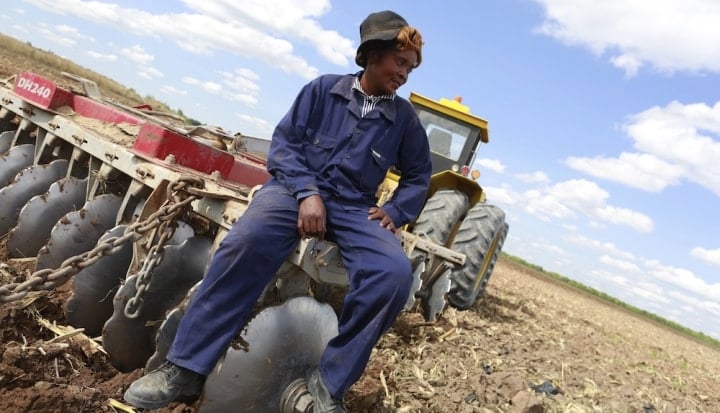
Longstanding traditions and practices relating to gender stereotypes and cultural acquiescence have a particular impact on the livelihoods and career opportunities for women in the communities where farming is often the biggest employer. What’s clear from this Olam survey is that women driving tractors can be meaningful agents for change.
icon-content-article-grey
Launching a social enterprise operating between the UK and Bangladesh during a global pandemic is a challenging endeavour. Read about the experience of Laura Rana, Founder of Khushi Kantha (‘Happy Blanket), it shows the power of taking action, as well as some of the challenges that Laura has encountered along the way.
icon-content-article-grey
From industrial engineering in Colombia to communications director, sustainability leader and corporate foundation creator – our guest today is Cata Garcia. Cata, who is now based in New York, is the Global Director of Corporate Affairs with brewing giant AB InBev, and the Board Director of their Foundation.
icon-content-podcast-grey
What does it take to scale and grow social innovations? And how does a mobile phone company come to be leading the way business can tackle gender-based violence. Andrew Dunnett, the Group Director of SDGs and Sustainable Business at Vodafone and the Director of their Vodafone Foundation explains all.
icon-content-podcast-grey
Contributions from across the Business Fights Poverty community have shone a light on how businesses and their partners are continuing to build long-term resilience in the wake of COVID-19, including supporting the wellbeing and potential of vulnerable workers in agricultural supply chains.
icon-content-article-grey
While the COVID-19 pandemic has brought an unparalleled threat to the survival of small and start-up businesses, it has also brought opportunities for growth and scale. The Transform Survive & Thrive initiative is helping businesses build resilience and self-reliance. They are looking for partners – does your organisation have skills that could help?
icon-content-article-grey
Cargill and CARE understand the complexity of the interrelated challenges of community development, nutrition, improved livelihoods and women’s empowerment. Here they share the central lesson that they have both absorbed during their decade-long partnership to provide greater opportunity and improve the wellbeing of people in cocoa-growing communities.
icon-content-article-grey
Cuba hopes to inoculate its entire population against COVID-19 with a home-grown vaccine this year, the country currently has four potential vaccines in development. Could it be that there are some valuable lessons to be learned from Cuba’s experience for developing nations scrambling to gain access to vaccines during the COVID-19 crisis?
icon-content-article-grey