Zahid Torres-Rahman

Day 4: Women and the Net Zero Economy: Business Opportunities and Challenges in Supply Chains
icon-content-video-grey
Day 4: Business Partnerships Tackling Climate Change
icon-content-video-grey
Day 3: Partnerships and Climate Action
icon-content-video-grey
Day 3: Unleashing the Potential of Youth Enterprise
icon-content-video-grey
Day 3: Business and Agricultural Transformation
icon-content-video-grey
Day 2: Harnessing Digital to Drive Inclusive Economic Opportunity
icon-content-video-grey
  Hosted with International Development Research Centre (IDRC) Rebecca Calder, Director and Co-Founder, Kore Global Sana Kapadia, Project Director, Justice, Equity, Diversity, & Inclusion
icon-content-video-grey
Day 1: Embedding Purpose into Brands to deliver the SDGs
icon-content-video-grey
Day 1: Business Leadership for the SDGS
icon-content-video-grey
In this session, Charlotte and Sofía shared the goals of WBA’s Climate and Energy Benchmark and how companies can use WBA’s indicators to increase their ambition and action on addressing their social and climate impacts.
icon-content-article-grey
Laís Higashi is President of Litre of Light Brazil and One Young World Ambassador. Litre of Light Brazil is a social organisation that provides solar solutions to low income communities without adequate access to electricity. In this session, Laís explained why partnerships are critical for the initiative she leads and shared the practical challenges of developing system-level change.
icon-content-article-grey
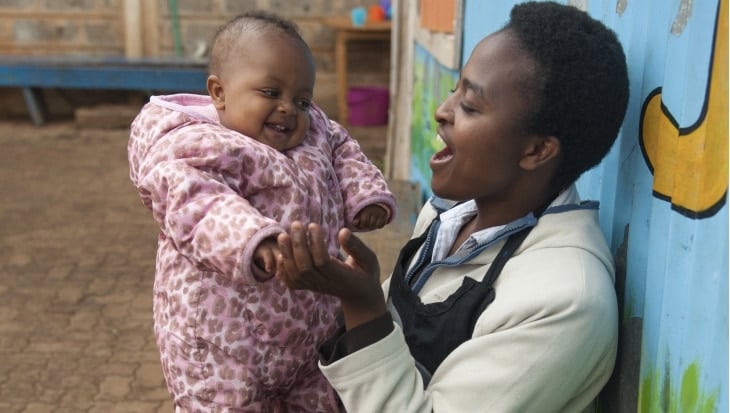
As countries struggle to address the economic and health costs of COVID-19, finding solutions for mothers in informal employent will be important. Governments, donors, and businesses will need to invest in care — and will need to know what works and what doesn’t in reaching the most vulnerable families.
icon-content-article-grey
Monica Romis is Private Sector Human Rights Advisor at Oxfam Business Advisory Service. In this session, Monica speaks about grievance mechanisms, and references good practices that can help companies move in the right direction.
icon-content-article-grey
As the global Food Systems Summit arrives, Lesley Mitchell, international non-profit Forum for the Future’s Associate Director for Sustainable Nutrition, explores what it will take to transform how we produce and consume food – and the role of business in stepping up to the challenge.
icon-content-article-grey
Agriculture is not working for people or the planet. The statistics are startling. 78% of the world’s poorest people remain reliant on agriculture, 33% of the world’s soils are degraded (a figure that could rise to 90% by 2050) and agriculture contributes to about a quarter of global climate emissions (stats from the World Bank, the FAO and the IPCC respectively). There is an emerging consensus that we need to move to a more regenerative food system.
icon-content-article-grey
As part of a series of interviews with participants of the Ghana Women in Energy conference, Dr. Cherub Antwi-Nsiah and Mrs. Ellen D. Eyison Dzah of Ghana’s Millennium Development Authority (MiDA) recently sat down with her to talk about her work and her experience as a woman working in a male-dominated sector.
icon-content-article-grey
Despite their significant contribution, women’s roles in smallholder value chains often go unrecognised, undervalued, and underpaid by society, by the economy, and in political decision-making. Our new learning and insights paper draws from an online discussion co-hosted by Unilever and Oxfam, to provide practical insights and case studies that support transformational change.
icon-content-article-grey
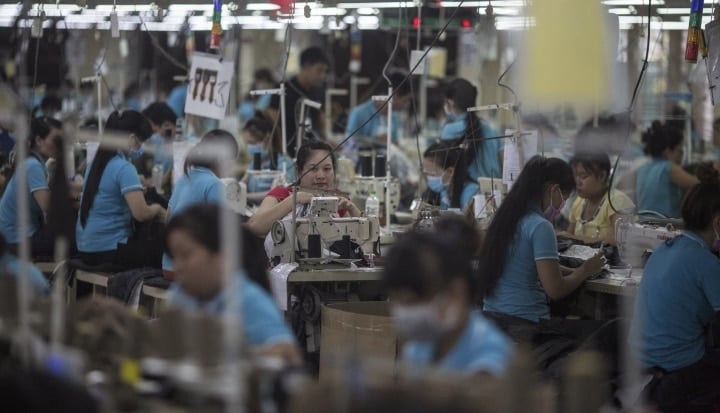
As Human Rights Due Diligence becomes increasingly important for businesses, Oxfam’s Private Sector Human Rights Advisor, Monica Romis looks at how purchasing practices have direct implications on the human rights of workers, sharing some of Oxfam’s research and highlighting concrete steps business can take for a more equitable sharing of rights and responsibilities through the supply chain.
icon-content-article-grey
Rachel Wilshaw, Workers’ Rights Senior Manager and Monica Romis, Private Sector Human Rights Advisor, reflect on a decade of working with businesses on living wage – with practical lessons from work done with companies that have partnered with Oxfam and made changes that have a positive impact on workers.
icon-content-article-grey
In this blog, Fairtrade reflects on some of the learnings from the Cadbury Farmer Resilience Fund, a partnership between Fairtrade, Mondelēz International and the FCDO.[1]  The importance of “tri-partite” partnerships between business, NGOs and government, co-creation with producers and embedding gender inclusion and climate resilience will be critical to ensure sustainable livelihoods in global supply chains.
icon-content-article-grey