Zahid Torres-Rahman

Accelerating progress on SDG 5 for gender equality requires new approaches to age old realities. Despite many efforts by business and donors to address gender equality since 2015 – be it through increasing women’s access to finance or increasing the numbers of women in leadership positions, a fundamental or structural barrier has often been ignored – the care economy. While urgent public investment is needed. Businesses have a relevant role to play.
icon-content-article-grey
The Role of Men in Women’s Empowerment with Dorothea Arndt from Hand in Hand and Ravi Verma from ICRW
icon-content-podcast-grey
Explore the challenge of scaling up staple food fortification to combat micronutrient deficiencies. Regulatory frameworks are in place, but implementation requires collaboration with millers and public-private partnerships. Micronutrient deficiencies affect billions, and fortification is a cost-effective solution. This article outlines six opportunities, from transparency to policy advocacy, to strengthen food fortification at scale, promoting health and nutrition worldwide.
icon-content-article-grey
Achieving the Sustainable Development Goals (SDGs) is a huge challenge but also the business opportunity of a lifetime. If we seize this, we can help our economies transition to a more sustainable, inclusive and healthier world.
icon-content-article-grey
During Global Goals Week, RISE: Reimagining Industry to Support Equality presents five reasons why businesses should prioritize supporting women workers in global garment supply chains and how by doing so, they can improve workers’ lives, strengthen the supply chain, catalyze systems change and contribute to meeting the UN Sustainable Development Goals
icon-content-article-grey
Social Impact Pioneers, Ariel Muller & LiLin Loh, of Forum for the Future explore futures thinking and sustainability.
icon-content-podcast-grey
As the climate crisis worsens, women are crucial to the success of cotton-growing communities. Here’s the support they need.
icon-content-article-grey
Join us for this live written discussion with a panel of experts to explore the role of business in improving maternal, child and adolescent
event-grey
African fintechs are recognizing that embracing Environmental, Social, and Governance (ESG) principles not only enhances their investment appeal but also drives sustainable business growth. This article uncovers how fintechs are embracing responsibility for sustainable advancement.
icon-content-article-grey
The health of women, children and adolescents should be a concern for all of us, including multinational business. This article explains how the Global Financing Facility for Women, Children and Adolescents is helping to catalyse investment in this critical area, including through partnerships with the private sector.
icon-content-article-grey
Savanna and Joachim from the World Benchmarking Alliance (WBA) provide practical support for business on delivering a just transition.
icon-content-podcast-grey
Better data and social performance benchmarks are critical to achieving more sustainable and equitable value chains. Tom Adams and Madeline Copp of 60 Decibels discuss the need to listen to farmers directly and at scale in order to improve their livelihoods.
icon-content-article-grey
The Decision Makers’ toolkit, ‘Beyond Strategic Planning’, is designed to help businesses prepare better for the future. The toolkit was developed by California 100 and the British-based futures practice, SOIF. It includes evidence of successful foresight applications and tools and approaches that connect foresight to strategic action.
icon-content-article-grey
Despite progress, 828 million face hunger, up by 150 million due to COVID-19. The Ceres2030 study highlights key strategies: empower communities, boost farm productivity, improve food distribution. The Zero Hunger Private Sector Pledge invites companies to join efforts, pledging financial commitments. Together, we strive to end hunger sustainably by 2030.

icon-content-article-grey
Amid the pandemic, women entrepreneurs suffered due to school closures and business shutdowns, highlighting gender inequalities and SDG challenges. Seizing hope from stories like Seema, who embraced digital tools, calls for collaborative efforts. Southern Voice’s article enriches SDG discussions with diverse Global South perspectives, advocating for inclusive policies and knowledge-sharing to empower women entrepreneurs
icon-content-article-grey
The climate crisis demands urgent emission cuts, but equitable poverty reduction is equally critical. Science-backed metrics for Net Zero and Poverty Zero must align, driven by multilateral development banks. A three-point plan for governments and the private sector can ensure a just transition, safeguarding both the planet and its people.”
icon-content-article-grey
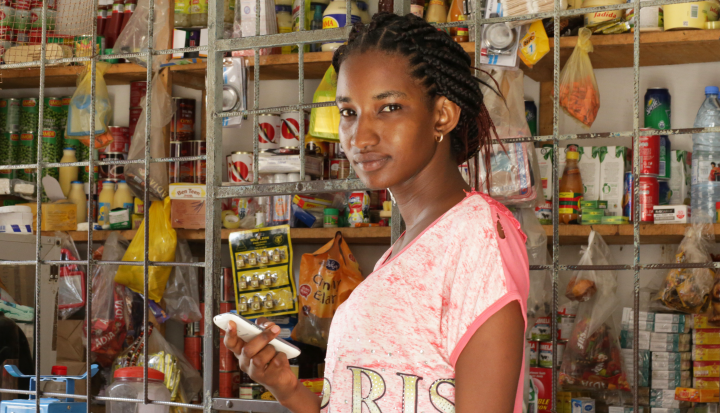
Global businesses are leveraging responsible digital payments to accelerate progress towards the United Nations Sustainable Development Goals (SDGs), with a focus on aiding small retailers, smallholder farmers, and low-income workers. Digitization not only enhances efficiency but also drives financial inclusion, benefiting millions by offering secure, accessible transactions.
icon-content-article-grey
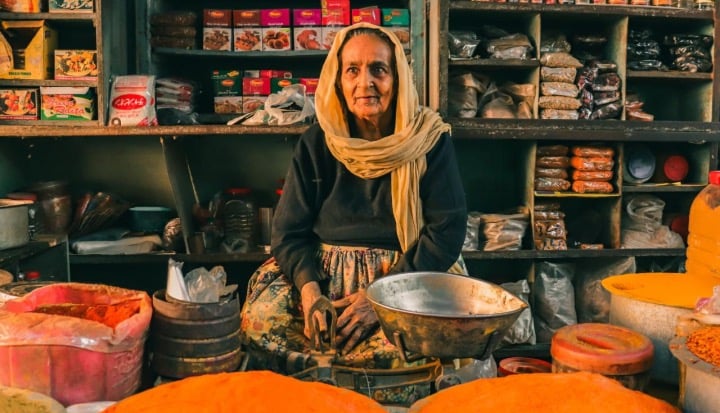
Fairtrade’s recently launched sustainable agriculture policy calls for resilient food systems built on agroecology – that is, the application of environmentally, economically and socially responsible principles to farming. Here are five reasons why our current food and farming policies need a complete reset – and how we can do it.
icon-content-article-grey
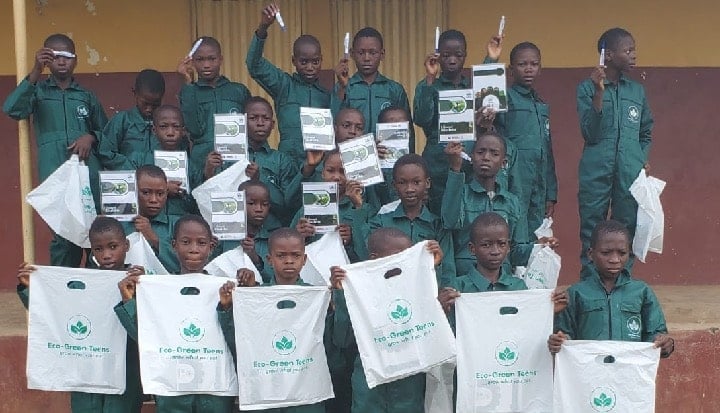
The Eco-Green Teens Project, initiated by a team in Nigeria, addresses the impact of the Covid-19 pandemic on food insecurity and rising prices. Through financial literacy and sustainable agriculture education, rural teenagers learned to cultivate staple foods and embrace a bio-circular economy. Empowered by the Global Youth Mobilization, the program fosters entrepreneurship and addresses UN SDGs.
icon-content-article-grey
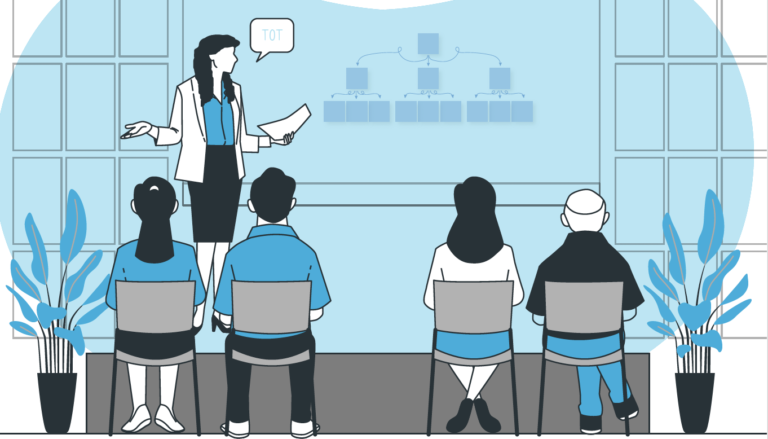
Delving into the Training of Trainers (ToT) model, this article evaluates its effectiveness and best practices. Drawing from Primark’s Ethical Trade Team’s experience and research, it offers insights into optimising ToT for large-scale knowledge dissemination and behaviour change.
icon-content-article-grey