Podcasts

In this episode, legislative attorney and human rights strategist Maaria Mozaffar shares how inclusive policy starts with empathy, not slogans. From writing human-centred laws to challenging systemic inequity, she reveals how anyone can shape justice. Tune in for a powerful conversation on dignity, courage, and transforming disillusionment into action.
icon-content-podcast-grey
Artificial intelligence offers enormous potential to level the playing field for young entrepreneurs — but without urgent action, it risks deepening inequality. Drawing on insights from Youth Business International’s policy paper, this article explores how business, policymakers, and support organisations can collaborate to close the AI divide and build a more inclusive future for entrepreneurship.
icon-content-article-grey
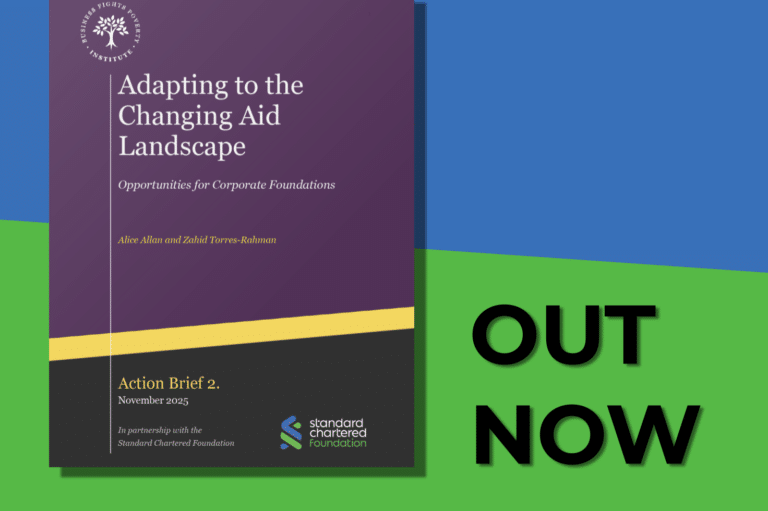
Corporate foundations stand at a pivotal moment in global development. As abrupt cuts to government aid flows create life-threatening gaps, this new report explores how corporate foundations can help shape a more financially sustainable approach to tackling poverty and inequality worldwide. Drawing on the latest data, global financing trends and insights from the development community, it highlights the scale of the challenge, rising needs, falling ODA, shrinking FDI and escalating debt, and the profound human impacts these shifts are already causing. With Standard Chartered Foundation and the Business Fights Poverty Institute.

icon-content-report-grey
Avon is redefining beauty through purpose-driven sustainability. From empowering millions of Representatives to innovative cruelty-free and refillable products, Avon’s strategy integrates climate action, ethical sourcing and gender equity. This article explores how Avon’s inclusive business model and ESG commitments are creating lasting social impact across communities and supply chains.
icon-content-article-grey
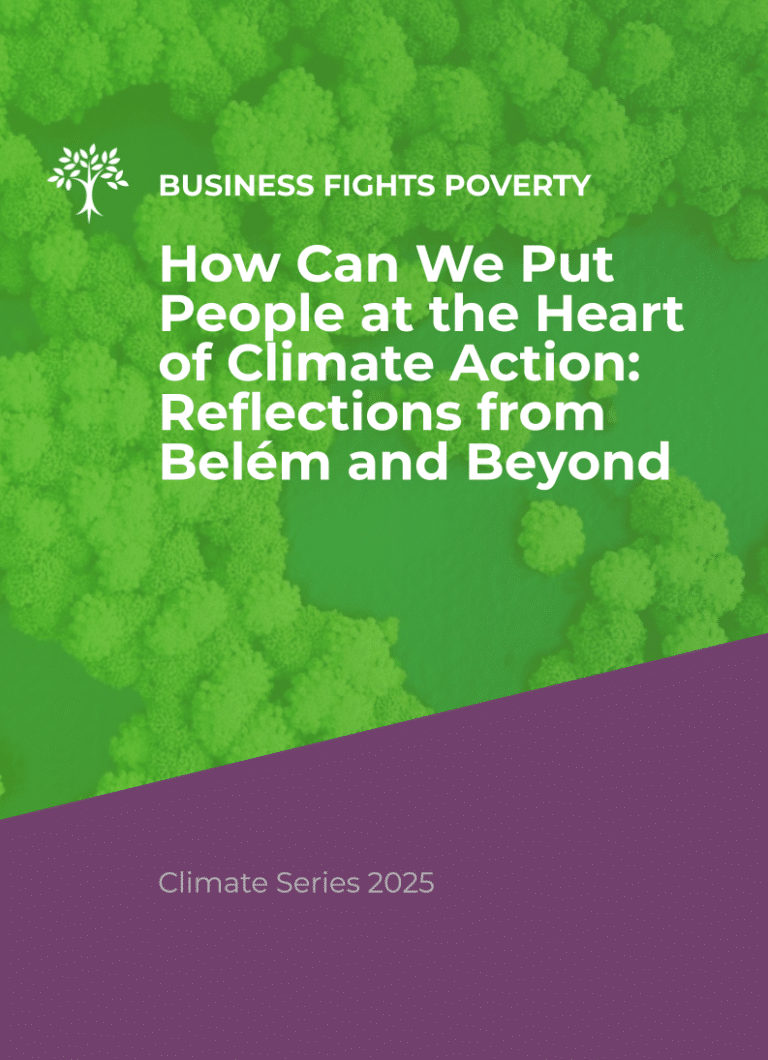
How Can We Put People at the Heart of Climate Action: Reflections from Belém and Beyond This Insights Paper explores how climate action becomes
insights-icon
This article explores how climate change deepens multidimensional poverty and why environmental justice must be central to policy and business. It calls for joint, intersectoral solutions to tackle overlapping vulnerabilities and highlights the role of the private sector in driving social and environmental resilience.
icon-content-article-grey
In this COP30 follow-up conversation, Jamie Coates, CEO of Wise Responder, guest professor at Fundação Dom Cabral (FDC), and the Business Fights Poverty representative
icon-content-video-grey
Micro-retailers are vital to local economies and brand ecosystems, but many face repeated disruption from climate shocks. A new report from Business Fights Poverty and Mastercard Strive explores how digital financial tools can fortify, navigate and recover from climate risks, creating stability for low-income entrepreneurs and strategic value for financial institutions and supply chains.
icon-content-article-grey
Fabio Marques, from Fundação Dom Cabral, outlines three essential pathways for businesses to strengthen their role in climate mitigation and adaptation during COP30. Part
icon-content-video-grey
On the final day of COP30 in Belém, Flavia & Raquel from Fundação Dom Cabral reflect on why young people must not only talk
icon-content-video-grey
Extreme heat is the deadliest US climate threat, costing thousands of lives and hundreds of billions of dollars annually. A new white paper, Heat Resilience: An Opportunity for Cross-Sector Action in the United States, outlines a shared agenda, sector guidance, and policy and finance levers to drive coordinated, community-centered resilience across business, government and healthcare.
icon-content-article-grey
As COP30 draws to a close in Belém, ​​Heiko Spitzeck, Director, Sustainability Research Center, Fundação Dom Cabral, shares a personal reflection highlighting both the
icon-content-video-grey
As world leaders endorse the Belém Declaration on people-centred climate action, one truth is clear: farmer resilience must move from rhetoric to investment. This article explores why smallholder farmers receive less than 1% of climate finance, and how local agricultural enterprises offer the fastest, most scalable route to climate-resilient supply chains and global food security.
icon-content-article-grey
This live panel discussion brought together global experts, practitioners, and peers to discuss cross-sector collaboration and people-centred solutions for climate action, highlighting the importance
icon-content-video-grey
This highlight video captures some of the insights from our COP30 panel discussion, where leaders from business, development, and community organisations explored how to
icon-content-video-grey
Global retailer Primark is pioneering responsible purchasing practices across its supply chain by adopting itemised costing methodologies, embedding cross-functional training and collaborating with suppliers. This case study explores how the retailer aligned buying, merchandising and ethical trade functions, leveraging the Ethical Trading Initiative Learning & Implementation Community to support living wages and sustainable conditions for workers worldwide.
icon-content-article-grey
David Nicholson, a leading figure in global climate action, speaking to us directly from the UN Climate COP in Belém, Brazil. As Mercy Corps’ first-ever Chief Climate Officer, appointed in 2022, Nicholson has been at the forefront of embedding bold, science-driven climate strategy into one of the world’s largest humanitarian organisations – expect to hear his thoughts on climate resilience, adaptation and business action.
icon-content-podcast-grey
Women’s Entrepreneurship Day highlights a critical truth: empowering women entrepreneurs is essential for global economic growth. Despite driving innovation and community resilience, women still face systemic barriers to finance, digital access, networks, and safety. Closing the gender gap in entrepreneurship is not only a moral imperative—it is a powerful economic strategy with transformative potential.
icon-content-article-grey
Micro-retailers are the backbone of Southeast Asia’s economies — yet they are on the frontlines of climate disruption. This new report, supported by Mastercard Strive, explores how digital financial services can help micro-retailers fortify, navigate and recover from climate shocks, unlocking greater stability, resilience and long-term opportunity. Drawing on research and practitioner insights, it highlights emerging innovations, practical frameworks, and a call to action for financial service providers to embed climate resilience at the heart of inclusive finance. Download the report to learn more.
icon-content-report-grey
Matthew Spencer, Global Director of Landscapes at IDH – The Sustainable Trade Initiative, sits down for a timely conversation recorded live from COP 2025 in Belém, Brazil. With climate risks intensifying and global supply chains under unprecedented pressure, Matthew explores why landscape-level collaboration is emerging as one of the most effective solutions for protecting the world’s most vulnerable ecosystems — while strengthening livelihoods for millions of smallholder farmers.
icon-content-podcast-grey