Economic Development

Economic Development Strategies to Combat Global Poverty

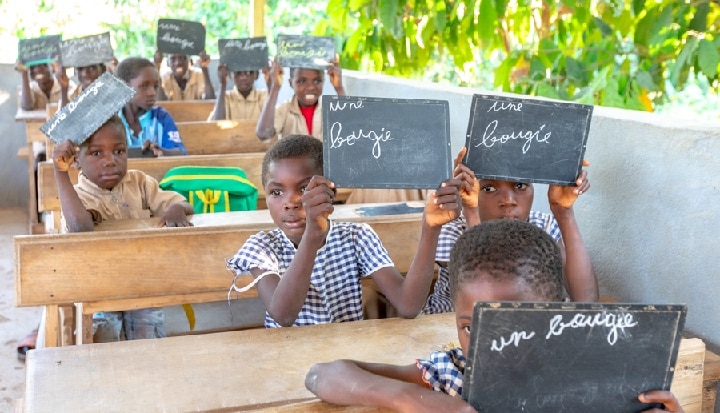
In cocoa-growing communities, advancing education pays dividends far beyond the classroom. Because the forces affecting the industry are so deeply intertwined, when children go to school and adults get training, the surrounding communities benefit in myriad ways. That’s why Cargill has been investing in schooling for children in cocoa growing communities – and the adults around them.
icon-content-article-grey
At CARE Laurie Lee worked with ten of the UK’s largest FTSE100 companies, here he reflects on all of those experiences and distils the key lessons for companies to have a positive impact on poverty and the environment, and how companies, charities and governments can work well together.
icon-content-article-grey
From 2019-2022, impact investors, AlphaMundi Foundation, Acumen, AHL Venture Partners, Root Capital, SEAF and Shell Foundation launched the Gender-Smart Enterprise Assistance Research Coalition (G-SEARCh) consortium to conduct new research in the gender lens investing community. Read more on their findings of the missed opportunities for impact investors and companies.

icon-content-article-grey
Over 60% of the world’s employed population make their living through informal work, with no access to formal contracts or protection. During shock events, these workers face immense hardship, receiving little or no support. Businesses, in partnership with NGOs like ActionAid, can address human rights risks and improve business continuity by investing in informal workers.
icon-content-article-grey
What does it take to be a climate activist? Social Impact Pioneer and climate activist Pushpanath Krishnamurthy talks about what motivates and drives him to give up an easy life and devote it to campaigning for climate justice.
icon-content-podcast-grey
How can civil society hold businesses and governments to account? This podcast examines the role of NGO advocacy and activism in pushing for better social and environmental outcomes.
icon-content-podcast-grey
Traditional health insurance models are not suitable for low-income segments, leaving millions of people globally financially vulnerable to health shocks. New approaches to financing healthcare are more urgently needed than ever. The Swiss Re Foundation 2023 Entrepreneurs for Resilience Award provides USD700k to accelerate entrepreneurial approaches to improving financial access to healthcare for low-income populations.
icon-content-article-grey
Gender norms are stunting women-led enterprises, as revealed in a new report from CARE’s Ignite program. The research confirms that women entrepreneurs worldwide are so bound by gender norms, they often cannot grow their businesses – meaning less income for the household, less employment in the community and less money into the local economy.
icon-content-article-grey
Meet Social Impact Pioneer Devi Thomas. During our conversation, Devi shares her wisdom and experience in successfully developing and delivering social movements and campaigns. Rarely does someone so generously gift their secret sauce as Devi does during this conversation. She takes us step by step through creating a movement.
icon-content-podcast-grey
Malnutrition is a business issue. The link between malnutrition and poverty might be an obvious one. The links between malnutrition and business are perhaps less so. During this conversation we are going to deep dive into both, whilst looking at the intersections between nutrition, climate change, conflict and communicable disease.
icon-content-podcast-grey
Lately, ESG is mostly in the news for the wrong reasons. Reading certain articles, it can seem as though some companies are happy to reap the benefits of seeming good, while shifting expenses (e.g., pollution) onto society. However, a lot of the negative coverage references ESG in its role as a guidance for investors (i.e., ESG for Assurance), despite the fact that ESG has evolved into an “organisational moral compass and set of principles.” Another facet of ESG – ESG for Impact, is more relevant to solving today’s greatest social challenges.
icon-content-article-grey
What do the World Food Programme, BASF, Royal DSM and Nigeria Flour Mills have in common? They all recognize the key role of small-scale and medium-sized millers to bring food fortification to scale, as part of national strategies to combat malnutrition.
icon-content-article-grey
Businesses give billions to nonprofits every year, but are they helping or hurting? We look at some of the pitfalls of traditional tied funding approaches, and introduce businesses to the concept of unrestricted funding as a way to support nonprofits to achieve real impact.
icon-content-article-grey
Is it even possible to work in deeper, genuine partnership with suppliers on net zero alongside a parallel commercial relationship? Jenny Ekelund sees encouraging signs that it is, and shares three primary scope 3 partnership models that are emerging.
icon-content-article-grey
If you want to know simply what Climate Justice is and why your business should start caring and promoting climate action, you’ve come to the right place. But don’t miss a moment, cause the #ClockisTicking.
icon-content-podcast-grey
Companies in the richest countries have still not agreed to climate measures that are in line with staying below 1.5 degrees. Danielle Smith and Hilde Stroot welcome new guidance from a UN panel, released at COP27, to push action by firms on corporate net-zero plans – and set out five key ways in which its recommendations will lead to climate justice.
icon-content-article-grey
How do climate conferences work? Hear from social impact pioneer Obed Koringo, part of the CARE delegation at COP27 in Sharm el-Sheikh, Egypt. Obed shares how governments, negotiators, civil society, businesses and other stakeholders all work together to help move along global climate commitments and drive actions towards better climate outcomes for all.
icon-content-podcast-grey
How can fairtrade help create climate justice? This podcast forms part of a series – examining how business addresses climate justice. Together we hear ways companies can put people at the heart of their climate action. We record this podcast from the climate conference – COP27, in Sharm el-Sheikh, Egypt.
icon-content-podcast-grey
How can regenerative farming create climate justice? This podcast forms part of a series – examining how business addresses climate justice. Together we hear how business puts people at the heart of the climate action. And in particular this podcast looks at food security, regenerative farming and climate resilience
icon-content-podcast-grey

What do we mean by "Economic Development"?

Explore how economic growth can significantly reduce poverty through innovative business initiatives and strategic planning. Join us in making a difference.

Sub-topics within this category