Business

Business Innovations & Initiatives

As world leaders endorse the Belém Declaration on people-centred climate action, one truth is clear: farmer resilience must move from rhetoric to investment. This article explores why smallholder farmers receive less than 1% of climate finance, and how local agricultural enterprises offer the fastest, most scalable route to climate-resilient supply chains and global food security.
icon-content-article-grey
Global retailer Primark is pioneering responsible purchasing practices across its supply chain by adopting itemised costing methodologies, embedding cross-functional training and collaborating with suppliers. This case study explores how the retailer aligned buying, merchandising and ethical trade functions, leveraging the Ethical Trading Initiative Learning & Implementation Community to support living wages and sustainable conditions for workers worldwide.
icon-content-article-grey
David Nicholson, a leading figure in global climate action, speaking to us directly from the UN Climate COP in Belém, Brazil. As Mercy Corps’ first-ever Chief Climate Officer, appointed in 2022, Nicholson has been at the forefront of embedding bold, science-driven climate strategy into one of the world’s largest humanitarian organisations – expect to hear his thoughts on climate resilience, adaptation and business action.
icon-content-podcast-grey
Women’s Entrepreneurship Day highlights a critical truth: empowering women entrepreneurs is essential for global economic growth. Despite driving innovation and community resilience, women still face systemic barriers to finance, digital access, networks, and safety. Closing the gender gap in entrepreneurship is not only a moral imperative—it is a powerful economic strategy with transformative potential.
icon-content-article-grey
Matthew Spencer, Global Director of Landscapes at IDH – The Sustainable Trade Initiative, sits down for a timely conversation recorded live from COP 2025 in Belém, Brazil. With climate risks intensifying and global supply chains under unprecedented pressure, Matthew explores why landscape-level collaboration is emerging as one of the most effective solutions for protecting the world’s most vulnerable ecosystems — while strengthening livelihoods for millions of smallholder farmers.
icon-content-podcast-grey
Business Fights Poverty explores how companies can link social and environmental impact to drive a fairer, more resilient future. Using insights from the 5 Bridges to 2045 framework and Natura’s pioneering Integrated Profit & Loss (iP&L) model, this article shows how valuing natural, social, and human capital can transform decision-making, performance, and long-term sustainability.
icon-content-article-grey
As climate risks intensify across global agriculture, Bonsucro and partners are expanding the Climate Resilience Platform (CRP) to equip farmers with actionable, science-based tools. Through open-access collaboration with CGIAR, Better Cotton, and leading research organisations, the initiative empowers producers to anticipate climate impacts, strengthen livelihoods, and accelerate resilient, sustainable supply chains across the world.

icon-content-article-grey
IDH shares its top 10 lessons from convening landscape initiatives for the last 10 years. The results across a range of landscapes show that greater impact can be achieved together. The cost and risk sharing that landscape approaches allow makes them more relevant to agri-food businesses as physical supply risks from extreme weather increase.
icon-content-article-grey
This year’s COP30 conference is shining a light on the importance of the Amazon rainforest. Evidence from Peru highlights the critical role that economic opportunity must play in Amazon conservation–and how investment can help to unlock them.
icon-content-article-grey
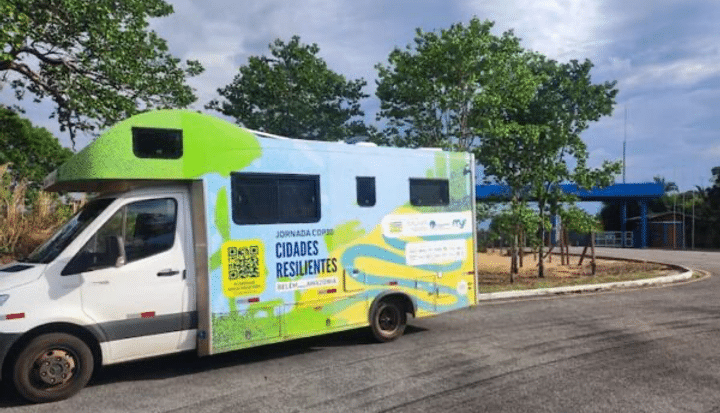
This article follows a 2,700-kilometre motorhome journey to COP30, where Fundação Dom Cabral and partners used the road as a living climate laboratory. Crossing four biomes and nine cities, the team gathered real-world evidence on resilience, local innovation, and community risks, offering business and city leaders practical lessons for climate action and resilient development.
icon-content-article-grey
Written from a riverboat en route to COP30, this unique article explores how business leaders can draw practical, investable lessons from the Amazon. It urges companies to link emissions goals with local livelihoods, co-create with communities, and view nature as infrastructure. A powerful reminder that regeneration must be built from the ground up.
icon-content-article-grey
This is a presentation of the report, The Power of Procurement. If you would like to view the full presentation, please log in or
icon-content-video-grey
The UK Government invites Business Fights Poverty members to contribute to a National Baseline Assessment of the UN Guiding Principles on Business and Human Rights. Led by Nottingham Rights Lab, the survey and consultation explore government and business efforts to protect and respect human rights. Responses are welcome until 14 November 2025.
icon-content-article-grey
Åsa Skogström Feldt, MD, IKEA Social Entrepreneurship shares how business can be a force for good & why they accelerate social enterprises.
icon-content-podcast-grey
At this year’s Business Fights Poverty Global Goals Summit, a number of sessions turned their attention to the launch of our new Five Bridges to 2045: How Business Can Build a Fairer, More Resilient Future. Eighteen experts from our global network took part in online sessions and an in-person event hosted with Barclays in New York, where representatives from Ikea, Natura, Vodafone Foundation, ABF Sugar and Fundación Paraguaya shared their perspectives on how to bring the report’s vision of embedding social impact and sustainability into core business closer to reality.
icon-content-article-grey
Social Impact Pioneer, social entrepreneur, home care leader and purposeful leader – Amrit Dhaliwal shares how to be a values-driven leader.
icon-content-podcast-grey
As globalisation widened the gap between corporations and communities, CSR often became marketing gloss. “CSR 2.0” calls for a systemic approach that embeds social impact into commercial strategy—aligning profit with purpose. By addressing beyond-the-firm constraints and fostering inclusive growth, businesses can turn responsibility into resilience, competitiveness, and genuine poverty reduction.
icon-content-article-grey
Accelerators are touted as engines of SME growth. Yet most target established businesses, leaving low-income women behind. Hand in Hand’s grassroots accelerator proves their potential: over 8,000 women have scaled businesses, boosting incomes, creating jobs, and lifting families well beyond the poverty line. Amalia Johnsson, Hand in Hand International CEO, explains why inclusive growth demands we accelerate women too.
icon-content-article-grey
Watch this Workshop with Walmart to explore how to expand MSME growth opportunities in the face of disruption. We examine strategies for strengthening local
icon-content-video-grey
How Can We Expand MSME Growth Opportunities in the Face of Disruption? Hosted with Walmart This Insights Paper examines how micro, small and medium
insights-icon

What do we mean by "Business"?

Dive into the world of business innovations dedicated to combating poverty. We spotlight transformative ideas and practices that are making an impact.

Sub-topics within this category