Learning zone

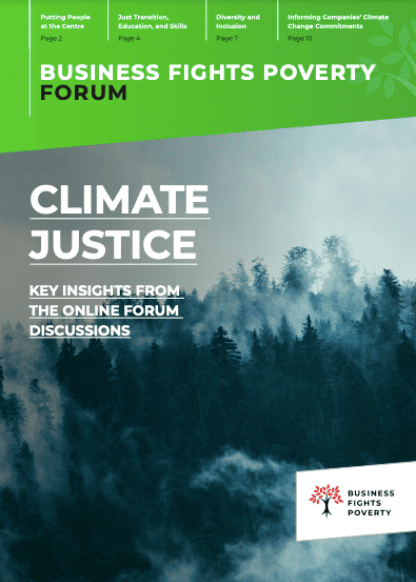
Climate Justice

Resource Kits

Explore our issue-based resource kits with downloadable, co-created learning resources. Everything you need to inform your organisation’s social impact strategy and stay ahead of emerging social impact trends.​

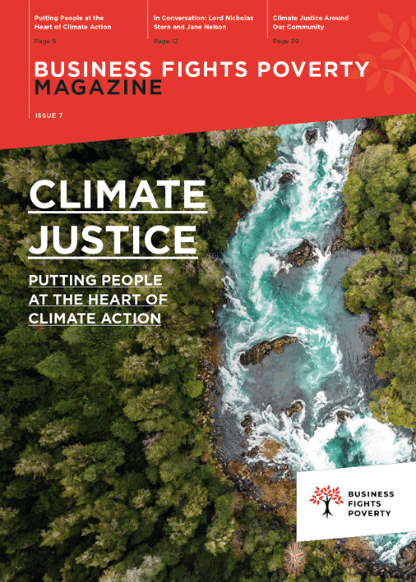
How Can Businesses Put People at the Heart of Climate Action?

This Resource Kit, supported by Pearson and developed with Change by Degrees, includes practical tools for putting people at the heart of climate action. It applies principles of climate justice to actions companies can take across their core business, philanthropy and policy advocacy.

How can we integrate gender into net zero planning in supply chains?
Supported by

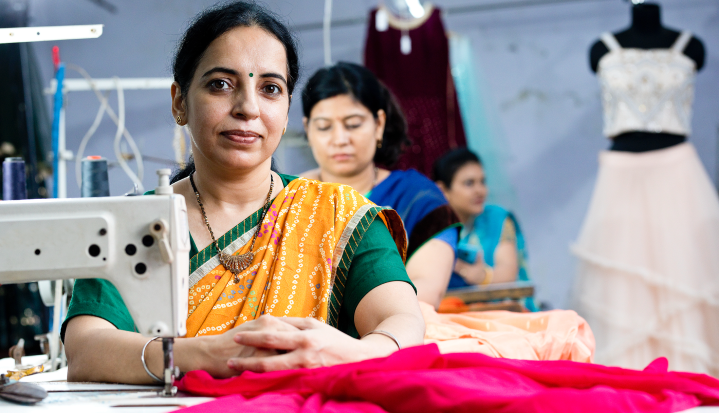
This Resource Kit looks at how businesses can integrate gender equality with climate change initiatives in their supply chains and how this can be critical to achieving net-zero emissions by 2050. Companies can integrate gender through supply chain mapping, incentivising suppliers, and investing in gender-responsive projects to enhance outcomes.

More Climate Resources

Filmed at COP30, Jamie Coats, CEO of Wise Responder, guest professor at Fundação Dom Cabral (FDC), and the Business Fights Poverty representative at COP30, interviews Natalia Fernandes Carr from Cooxupé. This interview spotlights how a large coffee cooperative built on 96.7% smallholder members is scaling climate and social impact across 50+ business units in Minas Gerais and São Paulo. Part of the Business Fights Poverty Climate Series 2025.
icon-content-video-grey
Filmed at COP30, Jamie Coats, CEO of Wise Responder, guest professor at Fundação Dom Cabral (FDC), and the Business Fights Poverty representative at COP30, interviews Angela Pinhati and Geraldo Aleandro from Natura. This conversation shows how a business-embedded model delivers climate and social impact: 19 community oil factories in the Amazon, income up to +60% for partner families, 3.5 million beauty consultants advancing inclusion, 100% recycled-PET packaging via 50+ cooperatives, and carbon-neutral operations since 2007. Part of the Business Fights Poverty Climate Series 2025.
icon-content-video-grey
Paulo Guerra, Program Director for Public Institutions at Fundação Dom Cabral (FDC), travels on a motorhome with colleagues from Instituto Bem Ambiental (IBAM), crossing four biomes and nine cities to reach COP30. The video gives an overview of what Paulo explores in his article. You can read the full article here, offering business and city leaders practical lessons for climate action and resilient development. Part of the Business Fights Poverty Climate Series 2025.
icon-content-video-grey
Vanja Ferreira, Head of New Business at Fundação Dom Cabral (FDC), travels on a riverboat en route to COP30. The video gives an overview of what Vanja explores in her article. You can read the full article here to learn how business leaders can draw practical, investable lessons from the Amazon. Part of the Business Fights Poverty Climate Series 2025.
icon-content-video-grey
Filmed at COP30 in Belém, this video features Antônio Claret, Director of Research at Wise Responder, and Jamie Coats, CEO of Wise Responder, guest professor at Fundação Dom Cabral (FDC), and the Business Fights Poverty representative at COP30. They discuss insights from day 1 speeches held in the Green Zone. Part of the Business Fights Poverty Climate Series 2025, this conversation highlights how businesses can help deliver inclusive climate solutions that leave no one behind.
icon-content-video-grey
This article follows a 2,700-kilometre motorhome journey to COP30, where Fundação Dom Cabral and partners used the road as a living climate laboratory. Crossing four biomes and nine cities, the team gathered real-world evidence on resilience, local innovation, and community risks, offering business and city leaders practical lessons for climate action and resilient development.
icon-content-article-grey
Written from a riverboat en route to COP30, this unique article explores how business leaders can draw practical, investable lessons from the Amazon. It urges companies to link emissions goals with local livelihoods, co-create with communities, and view nature as infrastructure. A powerful reminder that regeneration must be built from the ground up.
icon-content-article-grey
As world leaders gather at COP, Amanda Smith, Global Head of Social at Diageo, shares insights into Diageo and CARE’s shared ambition to build resilient supply chains by tackling gender inequality and climate vulnerability together.
icon-content-article-grey
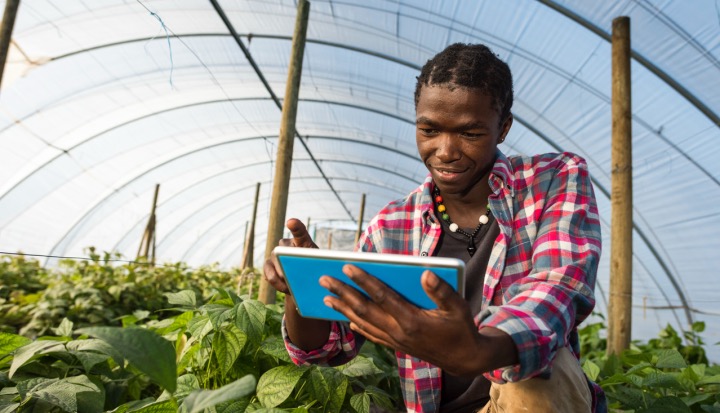
As climate change intensifies, Shared Interest supports farmers in East Africa with fair finance and training to build local resilience. From vegetable producers in Rwanda to coffee growers in Uganda, the focus is on community-led adaptation and climate-smart farming. Putting people at the centre of climate action is key to sustainable, inclusive progress.
icon-content-article-grey