Human Rights and Governance

Advancing Human Rights and Governance

Recent advances in areas of image processing methods, cloud computing and machine learning techniques, has made it easier to access and process satellite data. This article makes the case for how this offers us a new repertoire of options for measuring impact.
icon-content-article-grey
As part of Business Fights Poverty NYC Online 2020, Business Fights Poverty and Visa are convening a webinar and online peer discussion to explore how multilateral partnerships can drive digital equity for the most vulnerable.  This article gives a brief insight into the importance of digital equity, and explains how a wide range of organisations can play a part in driving change at a systemic level. 
icon-content-article-grey
The World Business Council for Sustainable Development (WBCSD) has released an issue brief outlining the business model shifts, emerging technologies and social innovations that could shape the next decade. The report is designed to help us think about the innovations that we can leverage in service of the SDGs, and those that we need to work harder to bring about.
icon-content-article-grey
The WTO has recently predicted that the economic impacts of the coronavirus pandemic will be disproportionately felt by women, with a ‘pink collar recession’ threatening to roll back the gender equality gains of recent decades.  In the UK, there are indications that women are bearing the brunt of redundancies, mothers are more likely than fathers to have been furloughed, and women have done the greater share of domestic and caring work during lockdown.
icon-content-article-grey
Blockchain is banded around as a silver bullet to solving transparency and traceability challenges. This podcast reveals what this means to reality. Meet award-winning serial entrepreneur Ashish Gadnis – as he demystifies blockchain, shares the trends he thinks we should all be thinking about and why his father said to him – “If you want to get out of poverty you can either programme or you can beg.”
icon-content-podcast-grey
As has been observed in the Business Fights Poverty community, the coronavirus pandemic poses a specific set of threats to women. Whether in the UK or Uganda, there’s growing evidence that the pressures of lockdown and the associated economic downturn will lead to a regression in women’s rights and gender equality.
icon-content-article-grey
icon-content-podcast-grey
Mobile payment systems, artificial intelligence, blockchain—such digital innovations have exploded in the last few years, and with good reason. Their capacity to harness vast amounts of data means they can improve transparency and decision-making for all kinds of industries—not least of all, for food production.
icon-content-article-grey
Ghana is among the world’s leaders in the use of mobile money, but shockingly, the cocoa sector still pays upwards of 7 billion cedis (US$1.2 billion) every year in cash and checks to purchasing clerks, who then transfer it to farmers in cash. This means over 90% of the farmer transactions are still made in cash. Our organizations have released today new analysis showing that the costs and risk of cash to the cocoa sector are valued at more than $20 million every year, or more than 20% of turnover for all LBCs.
icon-content-article-grey
COVID-19 has reignited debate on the role of purpose in business. At a recent webinar, the Business Refugee Action Network highlighted how businesses can support refugees at this time of crisis. Discussion focused on the impact on refugee livelihoods, the role of private sector programming, and the urgency of cross-sectoral collaboration. 
icon-content-article-grey
Five tips for how social sector organizations can use technology to help combat COVID-19’s economic impact
icon-content-article-grey
In March, when we announced the taka 5000 crore stimulus package (about $600 million) to pay workers’ salaries in export-oriented sectors, particularly ready-made garments which account for over 80% of the country’s exports, we encountered a major roadblock. Only 1.5 million of the 4 million workers were paid digitally. The rest were paid in cash.
icon-content-article-grey
Gender-based violence and harassment is a widespread and serious global issue that affects individuals in the workplace, their communities, and homes. CDC, EBRD and IFC have partnered to develop practical guidance that supports the private sector in efforts to address gender-based violence and harassment.
icon-content-article-grey
Among its many impacts, the COVID-19 pandemic has the potential to reverse recent gains to women’s economic empowerment. This article by TechnoServe Gender Director Cristina Manfre presents a strategy to ensure that the global community’s response to the pandemic safeguards against the risks to women’s livelihoods and enables them to help lead the economic recovery.
icon-content-article-grey
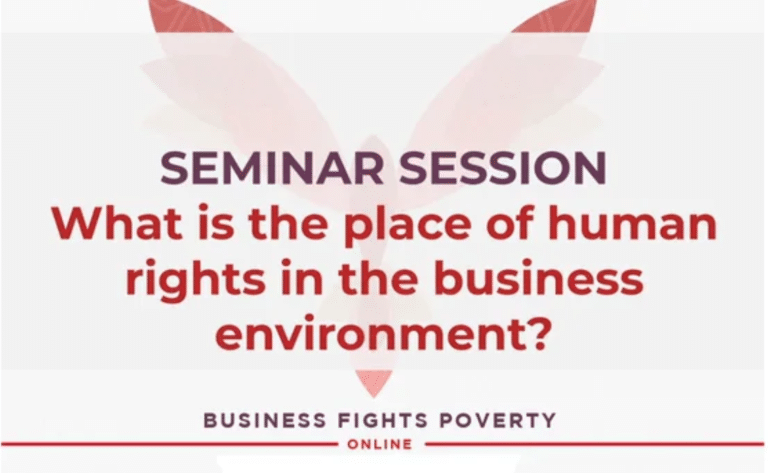
Members of the Business Fights Poverty share their insights through a series of “how-to” videos and seminars on the themes of Business Fights Poverty Online 2020. Professor Michael K. Addo, Director of the London Law Program at the University of Notre Dame explores the place of human rights in the business environment and the latest thinking on this topic.
icon-content-article-grey
Meet two global experts on gender equality and addressing gender-based violence (GBV) at home and work – Jane Pillinger and Alice Allan.
icon-content-podcast-grey
Our webinar explored “Beyond Barriers: Gender Inclusivity in the Digital Age,” focusing on improving women’s access to technology and using tech to address inequalities.
insights-icon
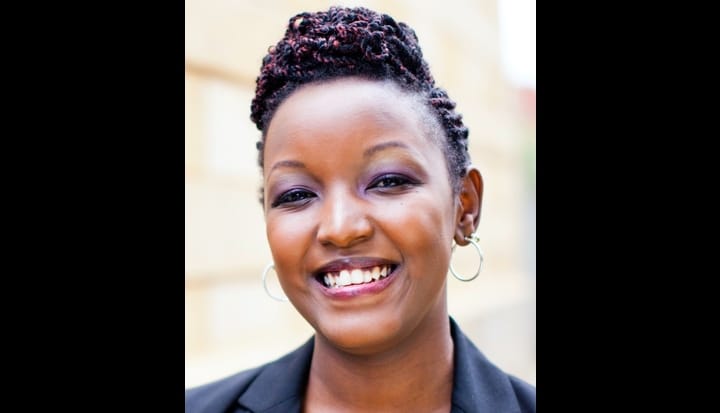
What are the skills we need for the future? Meet Joyce Mbaya-Ikiao, Founder and CEO of Zydii – the digital learning platform contextualized for the African learner. Joyce is a former star of The Apprentice Africa, 2008, acclaimed author and now business leader focused on skills and Standard Chartered Futuremakers Alumni.
icon-content-podcast-grey
The time for treating coronavirus as only or even principally a health crisis is over, says Hand in Hand International CEO Dorothea Arndt. NGOs are urgently refocusing on livelihoods – and they need the business community’s help
icon-content-article-grey
Everybody’s multiple identities will have an impact on how they experience life at work. People’s age, ethnicity, gender or sexual orientation or a mental or physical disability can all bring advantages and disadvantages.  Taking a broader approach to how we view others and not just looking at gender or race in silos, is key to achieving company diversity and inclusion ambitions.
icon-content-article-grey

What do we mean by "Human Rights and Governance"?

Explore initiatives that advance human rights and promote effective governance, driving global change, enforcing equity and alleviating poverty.

Sub-topics within this category