Human Rights and Governance

Advancing Human Rights and Governance

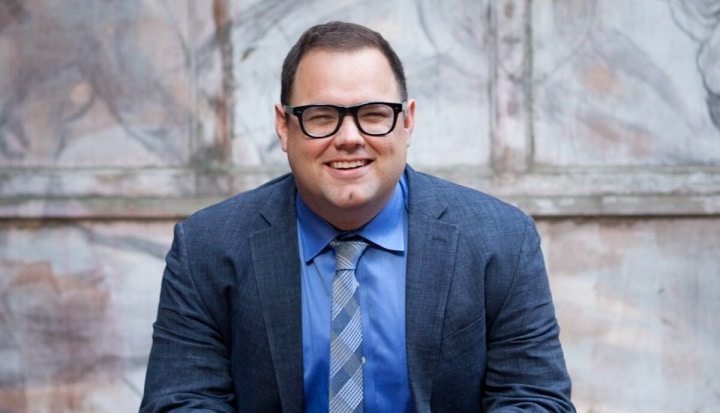
Professor Colin Mayer CBE has devoted his life, learning and career to the role of business in society – from governance and taxation to responsible and ethical business decision making. 
icon-content-podcast-grey
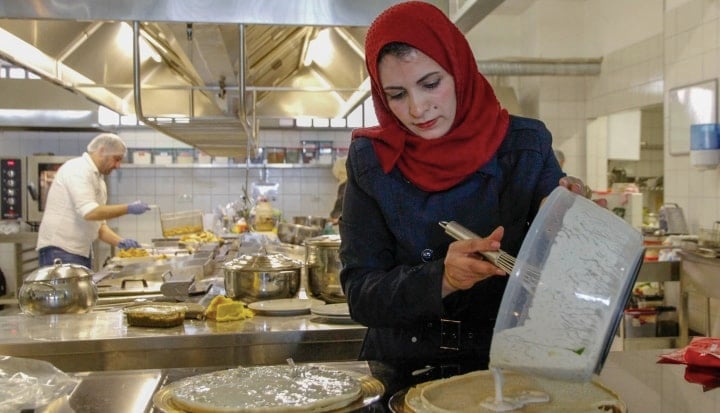
Food entrepreneurship is a growing area of livelihood creation that has gained traction as countries search for ways to address the refugee crisis. We provide recommendations for how the business community can provide support to refugee food entrepreneurs.
icon-content-article-grey
As world leaders in politics and business gather in Davos, IIED director Andrew Norton considers progress on the event’s ‘business with purpose’ agenda and asks how a progressive sustainability manifesto can omit climate change.
icon-content-article-grey
The Danish Red Cross, Grassroots Economics Foundation, and partners will collaborate to develop a new global platform for blockchain-based community currencies to boost cash transfer aid and help cash-poor regions grow their own economies, thanks to a grant from Innovation Norway matched by private sector. 
icon-content-article-grey
Timothy Fort returns to continue a series reflecting the intersection between culture, peace and business. In his latest contribution to Business Fights Poverty, Tim talks about the life of Nelson Mandela in the award-winning film, Invictus. ​
icon-content-article-grey
While the social impact and business agenda is shaping up for 2020, we first wanted to share the most popular stories we published in 2019 with you. A huge thank you to the authors featured in this list and to all of you who made contributions. We hope these stories inspire you and welcome your submissions this year*.
icon-content-article-grey
I have vivid memories, from the years I spent working on social impact in-house for big business, of scrambling for Board or Exec report around this time. ‘Please summarise the key social impact trends and the effects on business’, was the exam question. This year, I thought I would do the same for you. Feel free to borrow, comment and add your own.
icon-content-article-grey
A little over a year ago, I had just met Zahid Torres-Rahman for the first time in London. Having searched high and low for a meaningful next step up the career ladder, within five minutes of meeting Zahid I knew that I wanted to be a part of his organisation, Business Fights Poverty.
icon-content-article-grey
In the second part of this three-part series, which deals with challenges of digitizing indirect FMCG distribution channels in emerging markets, I explore why developing and deploying appropriate technologies to gather data has been a challenge and will provide some examples of how N-Frnds, a technology platform company focusing on digital distribution in emerging markets is addressing this challenge.
icon-content-article-grey
Consumers’ expectations towards companies to act socially responsibly and take a stance on social issues have grown. A recent study showed that almost two thirds of consumers make purchasing decisions based on a company’s stand on social issues.[i] It also showed that 60 percent of consumers want to see companies’ values and stances more transparently, and 53 percent believe that companies can do more than governments to solve social issues. Through corporate advocacy, companies can show they are ready to act on issues that are important for them.
icon-content-article-grey
Globally, an estimated £1.4 trillion changes hands in bribes every year. UK business has a vital role to play in tackling this corruption. But why should they do so?
icon-content-article-grey
I’ve headed up the Nestlé Cocoa Plan for almost 12 years, so I’ve seen at firsthand how our Child Labor Monitoring and Remediation System, (CLMRS), works and how it has benefitted kids and families in Côte d’Ivoire and Ghana. As demonstrated in our 2019 report ‘Tackling Child Labor’, it is making a real difference to the lives of thousands of kids and families.
icon-content-article-grey
Part I: Lack of data on indirect distribution networks Reaching the ‘last mile’ is imperative for consumer facing companies in emerging markets, however several constraints remain. In this three part series I will deal with some of these constraints and share some of the learnings and insights I have gained through my work at N-Frnds, a technology platform company focused on last-mile distribution in emerging markets.
icon-content-article-grey
The world of technology is changing rapidly and the African continent is changing with it. For the first time in history, more than half of the world’s population is using the Internet – of all regions, the strongest growth has been reported in Africa.
icon-content-article-grey
Modern slavery is often invisible, hidden in factories, small farms, plantations, or single-operator boats supplying seafood. A consumer goods company may be many tiers away from workers in these settings. This makes modern slavery very challenging to detect – and even harder to eradicate – in these and other parts of global supply chains.
icon-content-article-grey
Across the globe girls and young women living in humanitarian crises are dreaming of a better life for themselves and their families. Girls tell us that they want to be pilots, doctors and teachers. For many of them, these aspirations will never become a reality. Instead, they are faced with impossible choices to secure their mere survival. 
icon-content-article-grey
icon-content-podcast-grey
Something strange has been happening in the world of business and human rights. Leaders of multinational corporations around the globe are speaking out about the negative human rights challenges faced in their operations and supply chains. Where most companies seek to avoid any public association with human rights issues, these business leaders are breaking the mold – and they want others to do the same.
icon-content-article-grey
Join us for a live written discussion with a panel of experts to discuss how corporates can use technology to make a deeper and more responsible contribution to inclusive business. Live panel taking place on Tuesday 19 November, 10-11am New York (3pm-4pm London)
forum_grey
Sexual harassment and gender based discrimination have long been rife in the production of consumer goods. Barrientos’ new book, using the Kenyan flower industry as an example, highlights how campaigns can lead to positive change in business practice; subsequently benefitting both women workers and business performance.
icon-content-article-grey

What do we mean by "Human Rights and Governance"?

Explore initiatives that advance human rights and promote effective governance, driving global change, enforcing equity and alleviating poverty.

Sub-topics within this category