Diversity, Equity and Inclusion

Promoting Diversity, Equity, Inclusion to Fight Poverty

Members of the Business Fights Poverty network share their reflections on Black Lives Matter in this series. Today we hear from Naomi Cameron-Wyatt.
icon-content-article-grey
Members of the Business Fights Poverty network share their reflections on Black Lives Matter in this series. In this article we hear from Dr Tauni Lanier
icon-content-article-grey
Members of the Business Fights Poverty network share their reflections on Black Lives Matter in this series. In this article we hear from South African born Sizakele Marutlulle.
icon-content-article-grey
At Business Fights Poverty, we believe that there is no place for racism in society and that businesses must be actively anti-racist and need to work collaboratively to fight it. It has been encouraging to see companies and our fellow organisations working in the social impact space coming out unequivocally to say that they believe, like we do, that Black Lives Matter. Yet making statements, or blacking out social media for a day, or even giving large philanthropic donations, is not enough. And it is not enough for two reasons.
icon-content-article-grey
Business Fights Poverty Online 2020 Day 3: Skills This session is part of a series of webinars with Futuremakers by Standard Chartered. Speakers: Suzanne
icon-content-video-grey
Business Fights Poverty Online 2020 Day 4: Equity Hosted with the IFC Digital2Equal initiative. Speakers: Natalia Cano, Head of Brand & Reputation APAC, Google
icon-content-video-grey
Business Fights Poverty Online 2020 Day 4: Equity Hosted with CARE International UK Speakers: Sandra Fontano, Senior Global Sustainability Manager – Gender Equality, Unilever Ashika
icon-content-video-grey
Sue Adkins, Founder, The Collaborative Action Network (moderator) Dazon Dixon Diallo, Founder & CEO, SisterLove Romeo Effs, Board Advisor, Non-Executive Director, and Founder and
icon-content-video-grey
COVID-19 has become an unprecedented global crisis, affecting everyone – but not equally so. CARE International UK’s new study on COVID-19 and women’s economic justice and rights shows that women and girls are disproportionately affected by the economic effects of global pandemics, especially those in the poorest and most marginalised communities.
icon-content-article-grey
Supermarkets have become one of the few vital services still functioning during the global Coronavirus pandemic. Supermarket staff deserve great respect for keeping customers safe and supplied with food to sustain us through this unprecedented crisis.
icon-content-article-grey
The garment industry employs 60 million workers around the world, nearly 75% of whom are women. The International Labour Organization has estimated that nearly 25 million jobs could be lost as a result of the COVID-19 pandemic, and women working in garment supply chains are particularly vulnerable. During this period of crisis, CARE is calling on brands, governments, supplier factories, trade unions and civil society to take action to protect the rights of women working in the garment industry.
icon-content-article-grey
Prior to COVID-19, already 1 in 3 women were estimated to experience violence in their lifetimes. Now, as the UN has noted, the economic and social stresses, as well as restrictions on movement and confinement, have dramatically increased the numbers of women and girls facing violence and abuse from intimate partners, in almost all countries.
icon-content-article-grey
Data is urgently required to highlight the different impact of coronavirus on women and men, with early signs that women face higher levels of violence and more care work.
icon-content-article-grey
The impact of the COVID-19 pandemic is not gender neutral, as it affects men and women differently. Therefore, we must not be gender blind in our responses to the pandemic, or else women will carry a disproportionately higher economic cost than men. Globally, women are more vulnerable to economic shocks wrought by crises such as the coronavirus pandemic.
icon-content-article-grey
How does a business like Avon – the multinational ‘more than beauty’ compony, deal with coronavirus? Hear first-hand from Natalie Deacon, Avon’s Executive Director Corporate Affairs and Sustainability and the President Avon Foundation for Women.
icon-content-podcast-grey
Join us for an online written discussion with a panel of experts to explore how business can respond to an increase in gender based violence during the COVID-19 outbreak. Taking place on Monday 6 April, 10am-11am EDT (3pm-4pm BST/ 5pm-6pm EAT)
forum_grey
To date, this column has been devoted to films that provide a lens through which we might see the ways that various cultural artifacts, including business, music, sports and film, can help us see possible contributions to peace.  This month, I’m expanding beyond film to its screen cousin, television, with attention given to AppleTV’s The Morning Show. 
icon-content-article-grey
Due to launch in early February, a new report will reveal how companies have a unique opportunity to positively influence gender norms at scale by engaging #MenAsAllies to advance gender equality.​
icon-content-article-grey
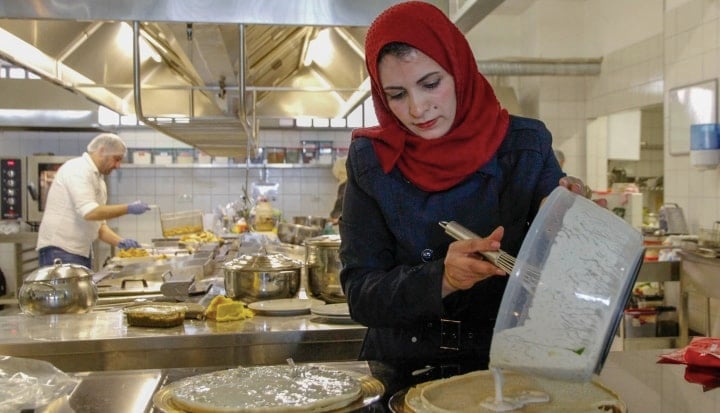
Food entrepreneurship is a growing area of livelihood creation that has gained traction as countries search for ways to address the refugee crisis. We provide recommendations for how the business community can provide support to refugee food entrepreneurs.
icon-content-article-grey
While the social impact and business agenda is shaping up for 2020, we first wanted to share the most popular stories we published in 2019 with you. A huge thank you to the authors featured in this list and to all of you who made contributions. We hope these stories inspire you and welcome your submissions this year*.
icon-content-article-grey

What do we mean by "Diversity, Equity and Inclusion"?

Learn about strategies that promote diversity, equity, and inclusion, fostering an environment where all individuals can thrive regardless of gender or economic status.

Sub-topics within this category