How does a business like Avon – the multinational ‘more than beauty’ compony, deal with coronavirus? Hear first-hand from Natalie Deacon, Avon’s Executive Director Corporate Affairs and Sustainability and the President Avon Foundation for Women.
Join us for an online written discussion with a panel of experts to explore how business can respond to an increase in gender based violence during the COVID-19 outbreak. Taking place on Monday 6 April, 10am-11am EDT (3pm-4pm BST/ 5pm-6pm EAT)
To date, this column has been devoted to films that provide a lens through which we might see the ways that various cultural artifacts, including business, music, sports and film, can help us see possible contributions to peace. This month, I’m expanding beyond film to its screen cousin, television, with attention given to AppleTV’s The Morning Show.
Due to launch in early February, a new report will reveal how companies have a unique opportunity to positively influence gender norms at scale by engaging #MenAsAllies to advance gender equality.
While the social impact and business agenda is shaping up for 2020, we first wanted to share the most popular stories we published in 2019 with you. A huge thank you to the authors featured in this list and to all of you who made contributions. We hope these stories inspire you and welcome your submissions this year*.
I have vivid memories, from the years I spent working on social impact in-house for big business, of scrambling for Board or Exec report around this time. ‘Please summarise the key social impact trends and the effects on business’, was the exam question. This year, I thought I would do the same for you. Feel free to borrow, comment and add your own.
A little over a year ago, I had just met Zahid Torres-Rahman for the first time in London. Having searched high and low for a meaningful next step up the career ladder, within five minutes of meeting Zahid I knew that I wanted to be a part of his organisation, Business Fights Poverty.
Across the globe girls and young women living in humanitarian crises are dreaming of a better life for themselves and their families. Girls tell us that they want to be pilots, doctors and teachers. For many of them, these aspirations will never become a reality. Instead, they are faced with impossible choices to secure their mere survival.
Sexual harassment and gender based discrimination have long been rife in the production of consumer goods. Barrientos’ new book, using the Kenyan flower industry as an example, highlights how campaigns can lead to positive change in business practice; subsequently benefitting both women workers and business performance.
SDG 17 calls for a revitalisation of global partnerships. In India and Nepal, a social enterprise, Pollinate Group, is working in partnership to empower women to distribute solar energy products in informal settlements. Pollinate Group is partnering with Greenlight Planet and the Australian Department of Foreign Affairs and Trade (DFAT) through the Business Partnerships Platform.
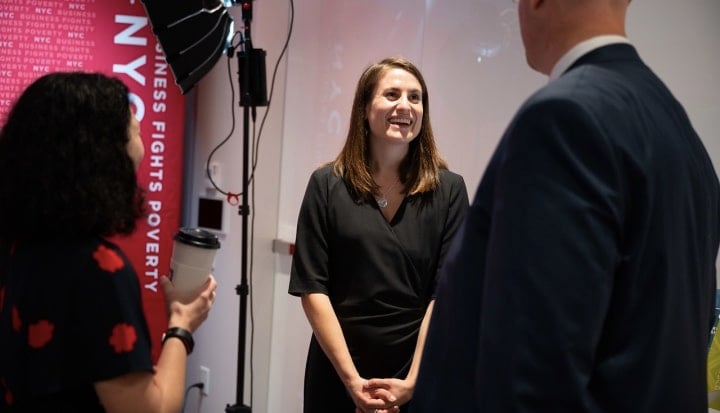
The Business Fights Poverty lunch in NYC provided an opportunity to explore how companies can address gender equality challenges through their business aware practices. The discussion was focussed on the question ‘Why is SDG 5* for gender equality reportedly off-track and what can companies do differently to accelerate progress’?
Gender equality in the workplace is an important step in the creation of thriving societies and economies. However, the World Economic Forum’s Global Gender Gap Report 2018 suggests that at the current rate of change, it will take 202 years to achieve economic gender parity globally.
We’ve seen for so long a familiar dialogue running through advertising where gender stereotypes are reinforced time and time again. But with the likes of Skol’s REPOSTER, Nike’s Dream Crazier and Sport England’s ThisGirlCan challenging female stereotypes, there is a clear development towards a new narrative.
If you are buying a toy for your child, niece, or nephew, it was most likely made by a woman in China or India. Indeed, women make up over 60 percent of the global toy manufacturing workforce and are critical to its success. However, low-income women working at toy factories can face gender discrimination, harassment, and poor health conditions.
It’s time to re-evaluate how we invest. I have seen funders stringing along companies in emerging markets for years while they jump through the hoops of their longwinded selection processes. To donors and funders I say: If you want to help businesses achieve social impact, maybe it’s your funding system that needs to change.
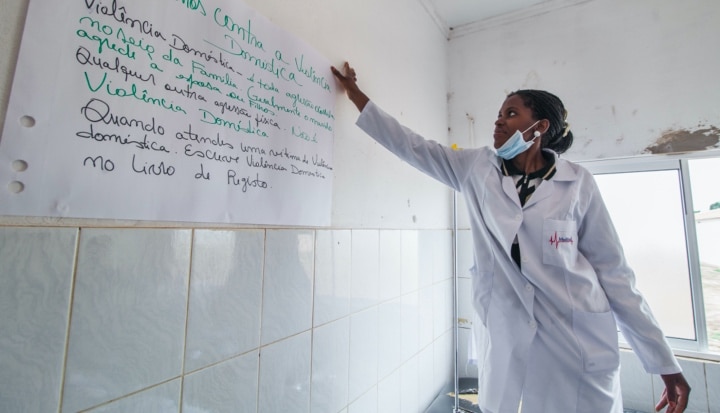
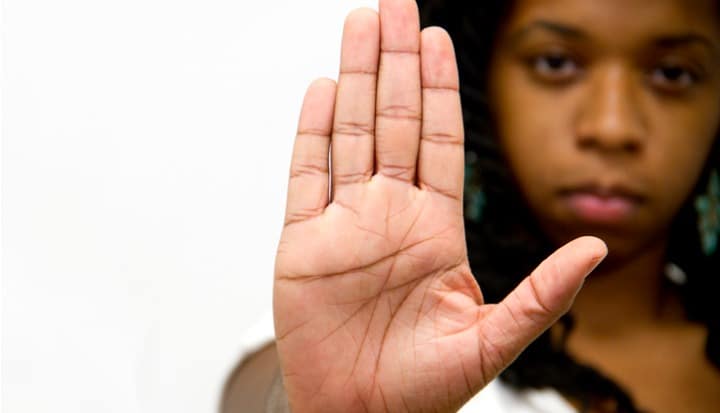
Gender Based Violence (GBV) affects 1 in 3 women globally and has been referred to by the UN Secretary General Antonio Guterres as a political ‘global pandemic’ and ‘a mark of shame on all our societies’. A new Business Fights Poverty toolkit has been published to help companies tackle violence and harassment and domestic violence. These two forms of violence can affect employees full and equal participation in the workforce.
There’s a strong call for men to step up to help deliver gender equality of opportunity. Research shows there is a gap between being supportive of action and knowing what action to take. This blog suggests practical actions that individual employees and middle managers can take and leaders of organisations can facilitate.
Be inspired by Business Fights Poverty NYC keynote speaker, Naureen Hyat, as she tells us about Tez Financial Services, a Visa Everywhere Initiative award-winning technological innovation, which is positioned to bridge the gap towards the financial inclusion of women in Pakistan.
What happens when a bank makes a move towards achieving greater gender parity internally, combined with a razor sharp focus on the ambitions set out in SDG 5? Learn more in a conversation with Laura Hemrika, Global Head, Corporate Citizenship & Foundations and Patsy Doerr, Global Head of Diversity and Inclusion, Credit Suisse.
Engaging men as allies can be a powerful accelerator to help companies, governments and institutions achieve gender equality. Elizabeth Nyamayaro takes us behind the scenes of how UN Women built a worldwide network of men who are championing SDG 5 – the gender equality goal.
Explore initiatives focused on gender equality, which are essential for promoting human rights and reducing global poverty. Click through to learn more...