Finance and Investment

Finance & Investment Strategies to End Poverty

On behalf of Futuremakers by Standard Chartered, Business Fights Poverty in partnership with Murray Edwards College, University of Cambridge, conducted a survey of over 1,200 young people about financial inclusion. The survey responses and stakeholder interviews point to three main issues: i. Young people need to be put at the heart of designing products and services that are fit for them; ii. Young people require financial information and infrastructures to make informed financial decisions; iii. A relationship of trust needs to be built as part of the provision of financial services and products.
icon-content-report-grey
On Monday, World Refugee Day marked the start of Refugee Week (20-26th June) – a UK-wide festival celebrating the contributions, creativity and resilience of refugees and people seeking sanctuary. Read on to learn more about a partnership between Comic Relief and Jersey Overseas Aid which has helped support some of the two billion people who lack access to formal financial services.
icon-content-article-grey
Ashley explores the positive impacts of mobile money and examines the challenges that remain.
icon-content-podcast-grey
Four lessons from GROW on how to sustain and scale inclusive business models to address the economic and the non-economic constraints women face.
icon-content-article-grey
The world’s poor are continuously affected by the low availability of sustainable and reliable energy, with increasing difficulty in remote areas. Modern energy services are crucial to human well-being as well as to countries’ economic development. Mark Kojo Medegli, Sustainability Leader of United People Global, explains what the way forward looks like.
icon-content-article-grey
Andrew explains why the UK’s development finance institution is going through a rebrand and what the plans are going forward. He shares with us just how we can all get involved, partner and help shape their work.
icon-content-podcast-grey
Rosa Wang, social impact pioneer, examines how mobile technology frontiers are providing financial access, connectivity, identity and empowerment for people across the world – from Kenya to India.
icon-content-podcast-grey
UNICEF is appealing for $349 million to provide life-saving support for children and their families. This funding will help to support over 3.5 million people, including 2.2 million children, and the business community has responded at an unprecedented speed and volume.
icon-content-article-grey
Lily Petkova from ISEAL discusses the gender barriers that affect the income of female smallholder farmers and how we can apply a gender lens to transformative approaches when considering a living income.
icon-content-article-grey
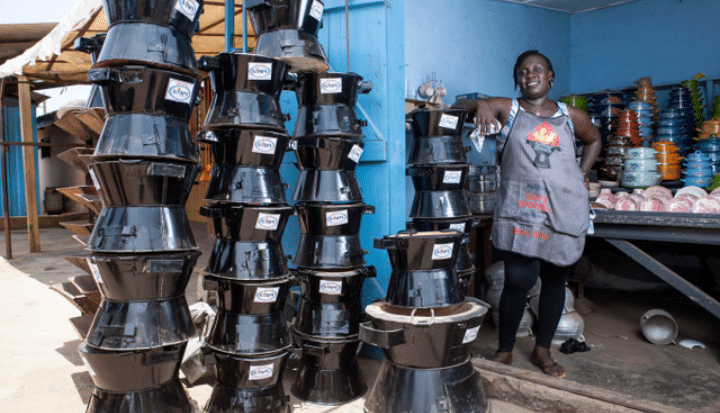
Gyapa is one of the largest and longest running cookstove projects in the world. Ann Koontz, CEO at Relief International, shares her reflections and advice on how this carbon reduction project has progressed over 10+ years and how her partnership with ClimateCare has given vital access to carbon finance enabling her to scale the project’s impact.
icon-content-article-grey
During the conversation we explore why anchoring climate change as a humanitarian disaster is essential; how our producers and farmers are climate mitigation and resilience pioneers; and what you can do next to better partner for impact.
icon-content-podcast-grey
Almost two trillion dollars is being invested in ESG investment vehicles annually. And yet to date the instruments for investing and tracking the impact of the social dimensions are weak. The Citi-SOPHIA Oxford collaboration has uncovered a robust way to improve this.
icon-content-article-grey
A new assessment shows that just 1% of the world’s most influential companies are demonstrating the fundamentals of responsible business conduct. Dan Neale outlines what needs to change for the private sector to address rather than add to growing inequality.
icon-content-article-grey
The potential to incorporate a systems approach into a fund structure represents new thinking on how to evaluate opportunities, support businesses, increase impact, measure impact, and shape entire markets to reduce the gender gap.
icon-content-article-grey
Snigdha Ali and Maria May explain why being unbanked is a serious inequality issue and how digital financing can create economic empowerment, particularly for women in emerging markets.
icon-content-podcast-grey
Applications are open for the Entrepreneurs for Resilience Award 2022. This competition awards impact-driven, market-based organizations that contribute to building resilient societies. This year, the award targets enterprises that increase financial access to healthcare in low-income communities.
icon-content-article-grey
Two billion people across the globe lack access to formal financial services and approximately 90% of these live in developing countries. The COVID-19 pandemic has accelerated growth but also increased the danger that those at the very margins of society, could get left behind. A new study examines crucial lessons learned over the past 12 months from organisations striving to continue to support vulnerable people access finical services throughout the pandemic, to prevent vital progress from being undone. 
icon-content-article-grey
Recent commitments by financial institutions to align with net zero raise the question: where is all that money going to go? The food and land use sector offers unique investment opportunities that can reduce carbon emissions in a cost effective manner, while also addressing biodiversity loss and inequality. This must be done in a people-centered way, contributing to a just rural transition.
icon-content-article-grey
How do you effectively spend billions of dollars of taxpayer’s money to help fight global poverty? And how do you invest for climate resilience and account for the unknown such as the risks of pandemics? We hear from Alicia Phillips Mandaville who is the Vice President of the Department of Policy and Evaluation at The Millennium Challenge Corporation (the MCC)
icon-content-podcast-grey
After backpacking across Africa in search of changemakers building scalable, high-impact businesses, Canadian entrepreneur Mike Quinn convinced his retired parents to mortgage their house and lend him $100,000 to co-found Zoona, one of the continent’s earliest fintechs. That risk paid off big time, as Zoona went on to process $2.5 billion of transactions and generate $26 million in income for thousands of micro-entrepreneurs across Zambia and Malawi.
icon-content-article-grey

What do we mean by "Finance and Investment"?

Learn about advanced financial strategies that aim to eradicate poverty. Our focus includes investment solutions and economic policies for lasting change.

Sub-topics within this category

There are no sub-topics within this Category.