Case Studies

The Rabeha programme, run jointly by the United Nations Industrial Development Organization (UNIDO) and UN Women, aims to significantly boost women’s economic empowerment in Egypt by mid-2024.
icon-content-article-grey
Victorine Owino transformed the savings and credit cooperative she manages into a thriving business hub in southwest Kenya, connecting local poultry farmers to training, financing and high quality supplies. Her journey from volunteer to manager is a testament to the transformative potential of women in leadership roles. And she’s now opening doors for others’ success.
icon-content-article-grey
Inclusive Businesses are uniquely equipped to improve gender equality. As commercially profitable, yet impact-driven companies, they follow the market and their social vision. Both paths lead towards women empowerment.
icon-content-article-grey
Almost two trillion dollars is being invested in ESG investment vehicles annually. And yet to date the instruments for investing and tracking the impact of the social dimensions are weak. The Citi-SOPHIA Oxford collaboration has uncovered a robust way to improve this.
icon-content-article-grey
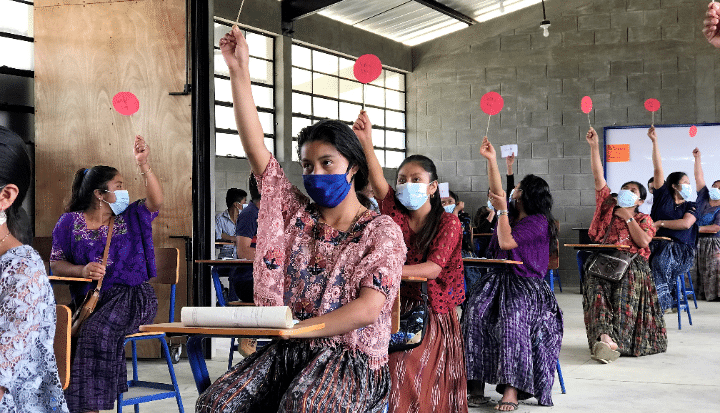
New Sun Road and USAID-Microsoft, a joint initiative striving to close the gender digital divide and increase digital opportunities for Indigenous women in the Alta Verapaz region of rural Guatemala.
icon-content-article-grey
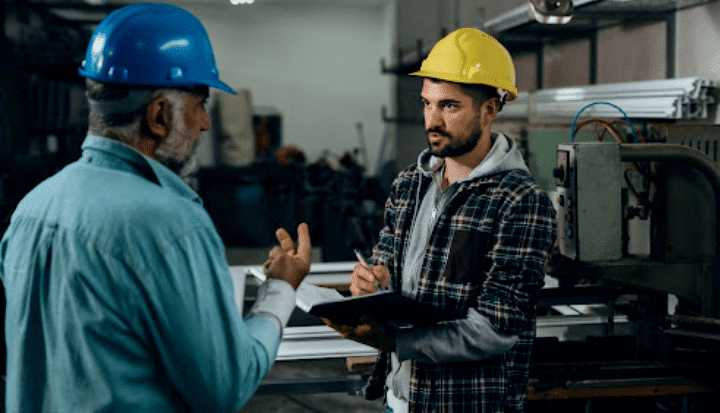
Parental leave is just one of many topics that workers in factories needs to learn more about. With 16 weeks stipulated by law it is quite generous from an international perspective, but with many factories lacking effective training tools, and many workers unable to read and write, this is sadly often missed.
icon-content-article-grey
A new assessment shows that just 1% of the world’s most influential companies are demonstrating the fundamentals of responsible business conduct. Dan Neale outlines what needs to change for the private sector to address rather than add to growing inequality.
icon-content-article-grey
The potential to incorporate a systems approach into a fund structure represents new thinking on how to evaluate opportunities, support businesses, increase impact, measure impact, and shape entire markets to reduce the gender gap.
icon-content-article-grey
In January, UNICEF Italy launched BZR, a new fundraising platform developed as part of Next Generation, a laboratory for new disruptive solutions of partnerships and fundraising. BZR is a virtual marketplace where fashion companies and influencers sell their unused products, and all profits go directly to fund UNICEF programmes in Afghanistan. 
icon-content-article-grey
Last year, Mars’ Farmer Income Lab estimated that up to 70% of the smallholder farmers in agri-food supply chains – more than 122 million people – may be living below the global poverty line of $3.20 per day. Mars, like any agri-business, relies on the work of these farmers around the world who produce the ingredients that go into our products, such as cocoa, rice and mint. This is why eradicating poverty in supply chains is a significant challenge that must be urgently addressed.
icon-content-article-grey
Forced labor, also referred to as modern slavery, is one of the most pervasive issues facing supply chains today. For our part to contribute to these efforts, Quizrr has launched a global initiative to eradicate forced labor in supply chains with the support of funding from The Walt Disney Company’s Supply Chain Investment Program.
icon-content-article-grey
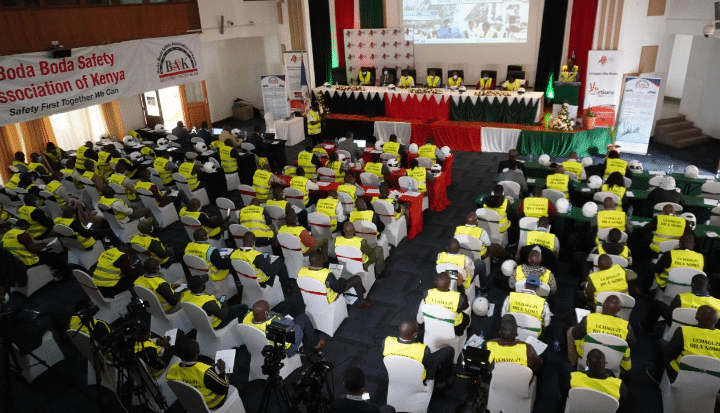
The BodaBoda Safety Association of Kenya (B.A.K) currently has 1.4 million registered members. 1.2 million of these are between the ages of 18-35. As an association, our entire membership base is made up of small business owners. We are developing a framework to effectively upskill and reskill for the future of work.
icon-content-article-grey
Engage with our featured content to discover the value of regenerative agriculture, and how companies, NGOs and farmers are utilising this approach to create profit, gender-inclusivity and climate resilience.
icon-content-article-grey
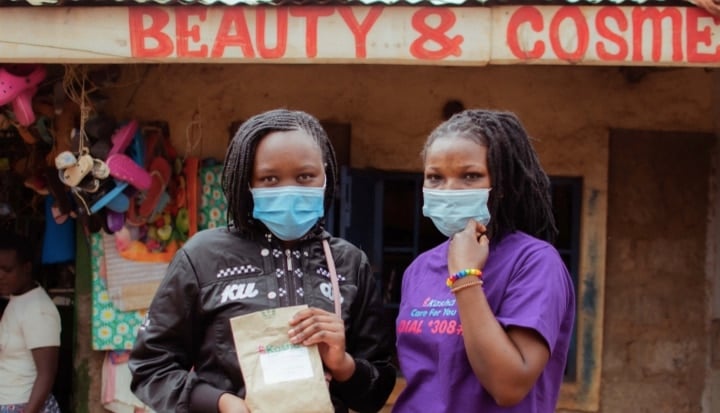
Leading East African FemTech company, Kasha, share nine key lessons learnt from scaling their business with support from TRANSFORM. TRANSFORM is a joint initiative between Unilever, the UK’s Foreign, Commonwealth & Development Office (FCDO) and EY that provides grant funding and business consultancy to impact enterprises in sub-Saharan Africa and South Asia.
icon-content-article-grey
Over the past 3 years UNICEF and Dove have partnered to adapt and integrate Dove’s evidence-based self-esteem and body confidence curriculum (DSEP) within UNICEF’s ongoing collaboration with ministries of education and the private sector across 3 countries. Read on to learn more.
icon-content-article-grey
Recent commitments by financial institutions to align with net zero raise the question: where is all that money going to go? The food and land use sector offers unique investment opportunities that can reduce carbon emissions in a cost effective manner, while also addressing biodiversity loss and inequality. This must be done in a people-centered way, contributing to a just rural transition.
icon-content-article-grey
Sustainability in Tourism has undertaken massive development during the previous three decades. Today, all holidaymakers are posed with the question – how will my holiday choice affect people and the environment? The evolution of consumer behaviour and decision making will be dependent upon how we adapt our understanding of economic, social and environmental impacts.
icon-content-article-grey
Populations in vulnerable contexts disproportionately bear the consequences of climate change, however, their voice is often silenced by other issues or approaches to the topic. Find out how the Green Stoplight provides a framework to break down environmental action into small and doable steps to then unite communities in hopes of influencing public policy.
icon-content-article-grey
In December 2009, Push embarked on his first long walk – his ‘Walk for Climate Justice’ – from Oxford, UK, to Copenhagen, Denmark, to raise awareness of the issues of climate change and poverty in advance of the UN conference on climate change in Copenhagen, COP15. In 2011, he repeated this effort in another Walk for Climate Justice in the southern Indian state of Karnataka, to call attention to the plight of small producers such as coffee growers in an era of climate change. This walk was supported by the Karnataka Growers Federation (KGF) and Centre for Social Markets (CSM), and reached 30,000 people directly, and through radio he was able to reach a million listeners a day!
icon-content-article-grey
Our farms, and the wider ecosystem, need regenerating. That’s why I’ve been working on the REEL Regenerative Code for Cotton to introduce various regenerative farming practices and new techniques to cotton farmers, which not only enhance but also enable them to foster mitigation and adaptation to climate change. It’s a win-win for the farmers and for the environment.
icon-content-article-grey

What do we mean by "Case Studies"?

Sub-topics within this category

There are no sub-topics within this Category.