Human Rights and Governance

Advancing Human Rights and Governance

On 29 November, Switzerland will hold a nationwide referendum on the Responsible Business Initiative. A vote in favour of the initiative will make companies headquartered in Switzerland legally responsible for what happens in their supply chains.
icon-content-article-grey
As the world continues to produce, buy, and discard newer and more advanced electronic devices and appliances, countries are also facing the growing problem of what do with the waste generated when these products are discarded. If not properly processed, this e-waste (also known as waste electrical and electronic equipment or WEEE), poses a serious threat to the environment and to public health, especially in developing countries where e-waste is often shipped.
icon-content-article-grey
So far, Latin American MSME sector recovery forecasts remain pessimistic, mostly since they have yet to face structural barriers such as informality, lack of access to markets and inclusive value chains, as well as low financial and digital inclusion rates. Consequently, some international projections remain that more than 25 million people will enter poverty levels after the crisis. Do we know what that means economically and ethically for humanity? FUNDES identifies three specific gaps that affect the development of Latin American MSMEs in the traditional economy:
icon-content-article-grey
The global COVID-19 pandemic has exposed how much economies and societies rely on hidden labour: labour which is unseen, unrecognised and unpaid. This hidden labour is disproportionately borne by women and is one of the most entrenched barriers to gender equality. Businesses stand to make significant gains from recognising, assessing and addressing hidden labour, and now is the time for them to step up as a vital partner in the journey towards a more gender equitable world.
icon-content-article-grey
On 16 September, the Business Refugee Action Network (BRAN) released its Business Takes a Stand for Refugees Sustainable Development Goal (SDG) Statement and called on governments to include refugees in the SDGs, support them in the wake of COVID-19 and call out the racism and xenophobia they face. Daphne Jayasinghe reflects on the impact of COVID-19 on refugees’ economic inclusion and the role of business in ensuring refugees are not left behind.
icon-content-article-grey
Members of the Business Fights Poverty share their insights through a series of “how-to” videos on the themes of Business Fights Poverty NYC Online 2020. This session aims to help business professionals understand the opportunities of a human rights approach and perspective for building business resilience,
icon-content-article-grey
Today at Business Fights Poverty NYC Online 2020 we discussed equity. 
icon-content-article-grey
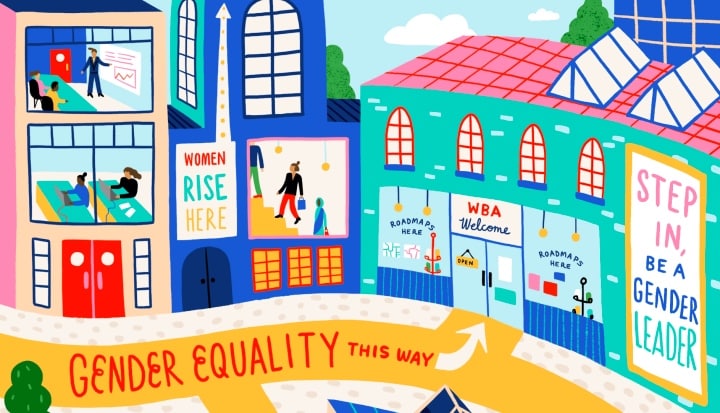
The foundation of business is solution-led. Most of the world’s most successful companies have their origin as a solution to a challenge their target market is facing. It is striking then that when a business, or in fact an entire sector, is plagued by a problem that needs an urgent answer there can be reluctance to understand the scale and nature of the issue and to find a meaningful solution. This is the case when it comes to gender equality. 
icon-content-article-grey
Members of the Business Fights Poverty share their insights through a series of “how-to” videos on the themes of Business Fights Poverty NYC Online 2020. In this video Professor Stephanie Barrientos of the Global Development Institute at The University of Manchester looks at how companies can ensure gender equality through value chains
icon-content-article-grey
Members of the Business Fights Poverty share their insights through a series of “how-to” videos on the themes of Business Fights Poverty NYC Online 2020. Ceri Davies Managing Director at More Mascots Please CIC looks at the role of businesses in addressing inclusion, specifically in reference to disabled people,
icon-content-article-grey
Our webinar explored “Creating an Equitable Future,” discussing the role of businesses in addressing inequalities, both exposed by the pandemic and longstanding. Panellists emphasized
insights-icon
Recent advances in areas of image processing methods, cloud computing and machine learning techniques, has made it easier to access and process satellite data. This article makes the case for how this offers us a new repertoire of options for measuring impact.
icon-content-article-grey
As part of Business Fights Poverty NYC Online 2020, Business Fights Poverty and Visa are convening a webinar and online peer discussion to explore how multilateral partnerships can drive digital equity for the most vulnerable.  This article gives a brief insight into the importance of digital equity, and explains how a wide range of organisations can play a part in driving change at a systemic level. 
icon-content-article-grey
The World Business Council for Sustainable Development (WBCSD) has released an issue brief outlining the business model shifts, emerging technologies and social innovations that could shape the next decade. The report is designed to help us think about the innovations that we can leverage in service of the SDGs, and those that we need to work harder to bring about.
icon-content-article-grey
The WTO has recently predicted that the economic impacts of the coronavirus pandemic will be disproportionately felt by women, with a ‘pink collar recession’ threatening to roll back the gender equality gains of recent decades.  In the UK, there are indications that women are bearing the brunt of redundancies, mothers are more likely than fathers to have been furloughed, and women have done the greater share of domestic and caring work during lockdown.
icon-content-article-grey
Blockchain is banded around as a silver bullet to solving transparency and traceability challenges. This podcast reveals what this means to reality. Meet award-winning serial entrepreneur Ashish Gadnis – as he demystifies blockchain, shares the trends he thinks we should all be thinking about and why his father said to him – “If you want to get out of poverty you can either programme or you can beg.”
icon-content-podcast-grey
As has been observed in the Business Fights Poverty community, the coronavirus pandemic poses a specific set of threats to women. Whether in the UK or Uganda, there’s growing evidence that the pressures of lockdown and the associated economic downturn will lead to a regression in women’s rights and gender equality.
icon-content-article-grey
icon-content-podcast-grey
Mobile payment systems, artificial intelligence, blockchain—such digital innovations have exploded in the last few years, and with good reason. Their capacity to harness vast amounts of data means they can improve transparency and decision-making for all kinds of industries—not least of all, for food production.
icon-content-article-grey
Ghana is among the world’s leaders in the use of mobile money, but shockingly, the cocoa sector still pays upwards of 7 billion cedis (US$1.2 billion) every year in cash and checks to purchasing clerks, who then transfer it to farmers in cash. This means over 90% of the farmer transactions are still made in cash. Our organizations have released today new analysis showing that the costs and risk of cash to the cocoa sector are valued at more than $20 million every year, or more than 20% of turnover for all LBCs.
icon-content-article-grey

What do we mean by "Human Rights and Governance"?

Explore initiatives that advance human rights and promote effective governance, driving global change, enforcing equity and alleviating poverty.

Sub-topics within this category