Economic Development

Economic Development Strategies to Combat Global Poverty

Investing in women has several business benefits – from financial performance to innovation. And companies have made a significant progress on equality in recent years. But are we doing enough to empower women while building business value globally?
icon-content-article-grey
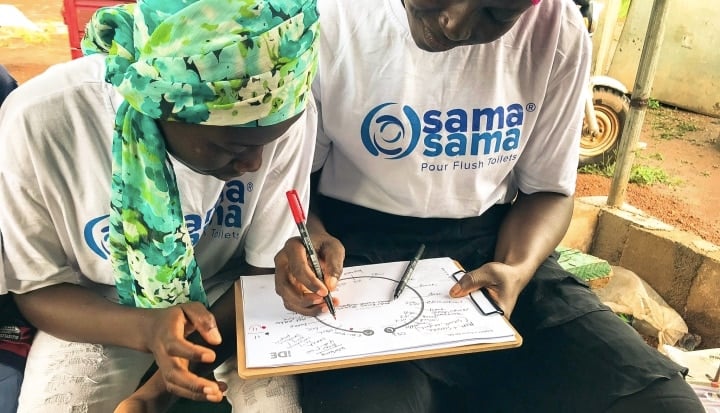
By May 2018, we knew something was missing in the business model for Sama Sama, a toilet business iDE had started in rural Ghana in 2016.1 After two years of knocking on doors, sales were lower than expected or desired. This is a sure sign that another round of design is needed.
icon-content-article-grey
Giving women better access to finance could unlock $330 billion in annual global revenue. Yet 80% of women-owned businesses are not getting the credit they need.  In response, CARE International has launched a campaign calling on the financial sector to develop products and services that are specifically designed to meet the needs of marginalised women.
icon-content-article-grey
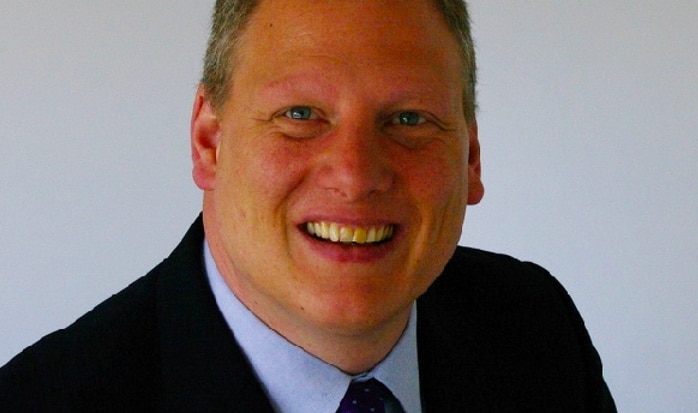
Meet Henning Ringholz, Senior Executive for the Small Foundation and the focus of this week’s Business Fights Poverty Spotlight podcast. Henning and the Small Foundation are on a mission to help end extreme poverty in sub-Saharan Africa by supporting initiatives that improve the business ecosystems that proliferate income opportunities.
icon-content-podcast-grey
Jacob is on the front line of the fight against malaria in Tanzania. He has been leading a project, supported by Comic Relief and GSK, to train hundreds of volunteers to help equip communities with life-saving knowledge to help beat the disease. The progress they have made in just two years is incredible.
icon-content-article-grey
As the world faces the transformative economic, social and environmental challenges of Globalization 4.0, it has never been more important to invest in people.
icon-content-article-grey
The Arusha region is home to Tanzania’s nomadic Maasai and other communities who farm and herd in the plains around Mount Meru. Communities here face life without light as soon as the sun sets, meaning that kids can’t play in the streets or study and families are often dependent on expensive and toxic fuel-powered resources to do their daily chores. It is also here that women are seeking a livelihood so they can take care of their families.
icon-content-article-grey
Partnership overview: For Burberry, modern luxury means being socially and environmentally responsible. Key to this agenda is supporting diverse communities around the world that sustain the company’s supply chain, which means partnering for the long-term with NGOs like Oxfam to ensure quality livelihoods for those communities. But how does this work in practice?
icon-content-article-grey
How can we find the right balance between protecting the forests, growing cocoa sustainably and helping the farmers? Darrell High talks about the action plan laid out by Nestle to help end deforestation and restore forests in the cocoa supply chain.
icon-content-article-grey
Worldwide, women have much less economic opportunity, security, and freedom, but microloans help women obtain capital they otherwise would not have access to. This support allows women to start their own businesses, go to school and invest in the health of their communities and families, creating a ripple effect in which entire societies thrive and women are regarded as role models and leaders.​
icon-content-article-grey
This podcast with management consultant and author Neil Gaught provides insight into what it takes to deliver business purpose authentically and embed it meaningfully and consistently across business.
icon-content-podcast-grey
Why is addressing gender-based violence (GBV) a key issue, which should be on the business agenda? Business Fights Poverty’s Challenge Author, Chiara Condi, talks about why eliminating GBV is essential to reaching all other UN Sustainable Development Goals.
icon-content-article-grey
M&S has made a bold commitment to helping its supply chain convert from cash to digital wage payments, but they recognise they can’t do this alone. In this article, M&S celebrates what can be achieved through collaboration with partnerships, other businesses and NGOs.
icon-content-article-grey
This year’s Commission on the Status of Women focused on social protection, access to public services and sustainable infrastructure. IDS researchers attending the event at the United Nations in New York sought to highlight the evidence on what works in each of these areas in terms of achieving gender equality and empowering women and girls.
icon-content-article-grey
In March this year, the IFC launched a new report, “Moving Toward Gender Balance in Private Equity and Venture Capital”, which explores the link between financial returns and gender diversity; the lack of women in the industry; and steps needed to achieve gender balance.​
icon-content-article-grey
Japan’s maker of water and housing products, LIXIL, has invested in a sustainable social business – SATO – to help bring affordable toilets to those that need them. In 2018, their work on SATO led them to a new partnership, “Make a Splash! Toilets for All” with UNICEF to tackle the global sanitation challenge. How did this partnership evolve and what has been learnt along the way?
icon-content-article-grey
Listen to this week’s Business Fights Poverty Spotlight podcast and hear from Paul Polak.
icon-content-podcast-grey
​How can technology be used to create inclusive financial infrastructure for women in remote communities? The Palladium-run SPRING Accelerator supports entrepreneurs who can bring products and services to adolescent girls. Read an interview with Accelerator participant, Amit Agrawal, CEO of Janaki Technology Pvt. Ltd., about his journey towards increasing financial inclusion for women in Nepal.
icon-content-article-grey
Ben & Jerry’s, and The Entrepreneurial Refugee Network have plans to scale-up their Ice Academy programme in 2019. Having learned plenty along the way, how did these partners come together so effectively? Cat Baron, European Social Mission Programme Officer, Ben & Jerry’s and Charlie Fraser, Head of Partnerships and Co-Founder, TERN tell us more.
icon-content-article-grey
More than three-quarters of people worldwide want CEOs “to take the lead on change” instead of waiting for the government to act, according to the 2019 Edelman Trust Barometer. Is this a good idea for society? What would this kind of leadership look like, and how could it be achieved? The past can provide answers.
icon-content-article-grey

What do we mean by "Economic Development"?

Explore how economic growth can significantly reduce poverty through innovative business initiatives and strategic planning. Join us in making a difference.

Sub-topics within this category