Human Rights and Governance

Advancing Human Rights and Governance

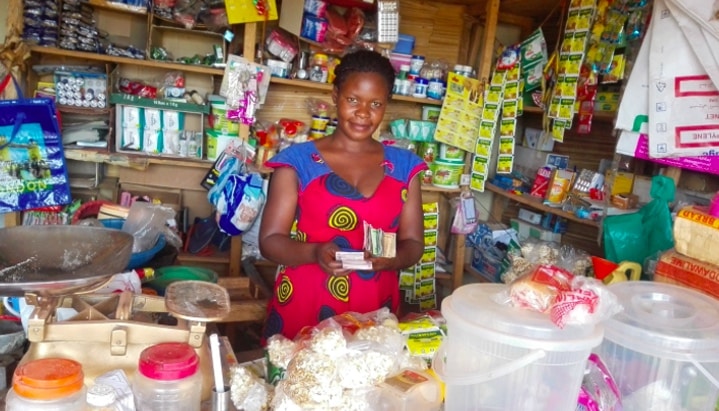
More than 61% of the world’s employed population – two billion people – earn their livelihoods in the informal sector, with 93% of the world’s informal employment occurring in emerging and developing countries. ​Yet informal retailers face complex challenges that prevent them from growing their business, stabilising the financial status of their business and their household income, and delivering a high level of service to their customers.
icon-content-article-grey
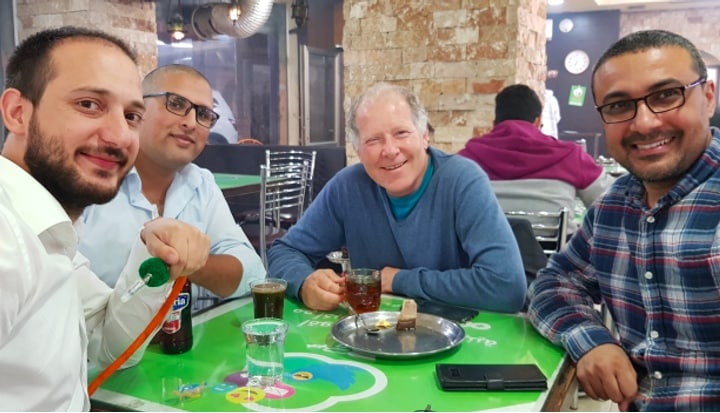
Conflict is a leading cause of poverty. Business can help bridge divides. Jerry Marshall is a co-founder of Transcend, Palestine, an “Impact Investment” technology company that transcends the Separation Wall by creating jobs unaffected by movement restrictions, building skills and hope, and developing relationships across the divide. The Transcend model could be adapted for replication elsewhere.
icon-content-article-grey
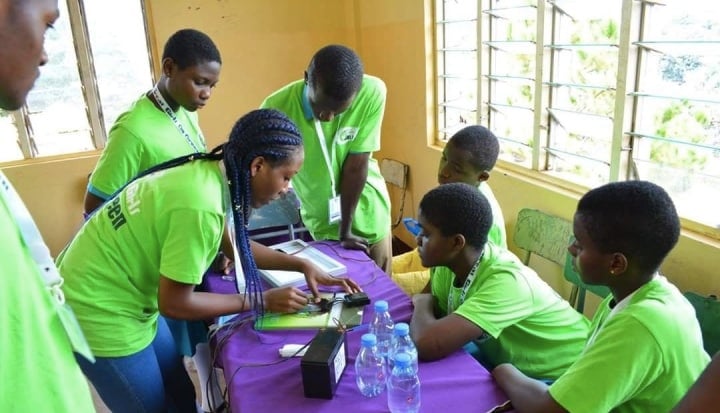
Be inspired by #BFPOxford Keynote speaker Monique Ntumngia, as she tells us more about the Green Girls Organisation, an award-winning clean energy technological innovation, which is creating a route towards economic independence for women and girls in Africa.
icon-content-article-grey
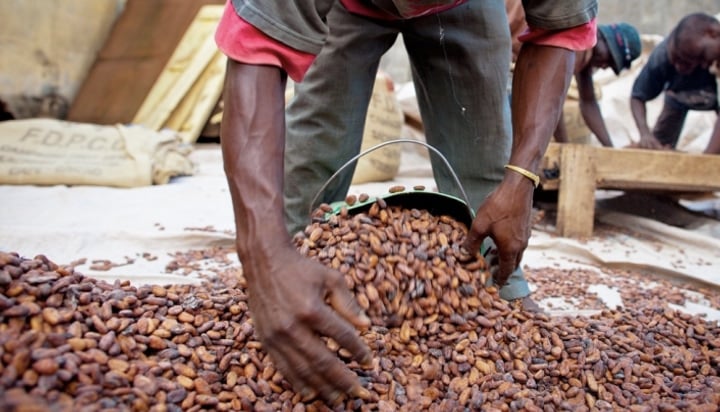
A discussion paper on how technology can help to create closer, two-way connections between a company and the workers in its supply chain, which may in turn reveal hidden, illicit practices that contribute to modern slavery. With Nestle and WBCSD.
icon-content-report-grey
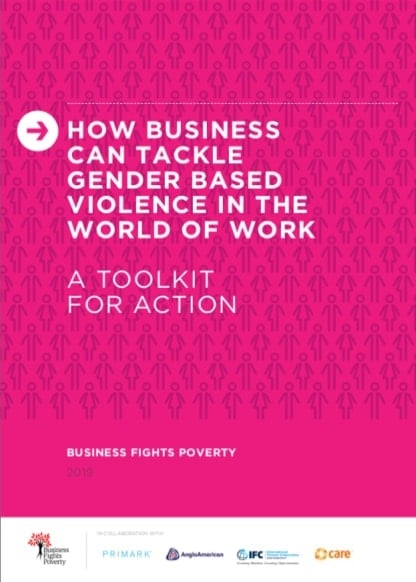
A toolkit with a five-step framework to help businesses tackle gender-based violence in the world of work. With Primark, Anglo American, IFC and CARE.
icon-content-report-grey
CARE International UK are delighted to support the Business Fights Poverty Challenge on business and GBV and to host the Women’s Equality Zone at the Business Fights Poverty Oxford conference on 11 July 2019. ​
icon-content-article-grey
People often think Corporate Responsibility is a company’s response when it’s asked to do the right thing. But corporate responsibility is quite the opposite of a defensive move. It’s about growth, common sense, culture, impact, and most of all, values.
icon-content-article-grey
A new report from Oxfam looks at Why unpaid care by women and girls matters to business, and how companies can address it ​
icon-content-article-grey
Impact is a word we hear all the time in sustainability circles. Often when we talk about impacts, we’re talking about reducing the negative ones. Causing less damage. But that’s not nearly enough, says Arjen Boekhold of Game Changer Unltd. and known from Tony’s Chocolonely.
icon-content-article-grey
There were mixed views in February when U.S. “First Daughter” Ivanka Trump announced her Women’s Global Development and Prosperity Initiative with US$50 million in start-up funds. Many were left to wonder: Is this a publicity stunt by the Trump administration, more of the usual one-size-fits-all U.S. foreign aid programs, or a real commitment to drive change?  
icon-content-article-grey
30 leading business networks and individual brands are calling for negotiators to deliver a new international law to end violence and harassment in the workplace that genuinely benefits business and employees world-wide.
icon-content-article-grey
Pakistan has made progress in boosting women’s education levels over the past several years—yet less than 8 percent of the country’s workforce are women. Closing that gap will represent a huge economic opportunity for our country.​
icon-content-article-grey
The Cherie Blair Foundation for Women has launched a new organisational strategy with an ambition to empower 100,000 more women and girls to fulfil their potential as entrepreneurs in the next four years. But why is this focus important and what does the roadmap towards getting there look like? ​
icon-content-article-grey
Readers of Business Fights Poverty have been exposed to the arguments for how business might contribute to peace. They have also seen examples of how music can do the same. Many studies have shown corollaries of how gender equity promotes peace. If you want a film that shows all three of these factors in action, one can’t do any better than Sweet Dreams.
icon-content-article-grey
The Unilever Young Entrepreneurs Awards, delivered by Unilever and the University of Cambridge Institute for Sustainability Leadership, support and celebrate inspirational young people from all over the world who have initiatives, products or services tackling some of the planet’s biggest sustainability challenges. ​
icon-content-article-grey
Business can offer solutions to even the most vast and complex issues: climate change, gender inequality, unyielding technological advancement, hunger and water scarcity, to name a few. On the topic of gender-based violence (GBV) – any act that is perpetrated against a person’s will and is based on gender norms and unequal power relationships – the opportunity for business to have an impact is no different.
icon-content-article-grey
The focus for this week’s Business Fights Poverty Spotlight podcast is Helen McEachern, CEO for the Cherie Blair Foundation for Women. In her role, Helen is on a mission to impact women’s economic equality working with an organisation that she believes can change the ecosystem for women entrepreneurs.
icon-content-podcast-grey
New study from DoSomething Strategic reveals disconnect between brands and their support of social causes in the minds of younger consumers. Savage x Fenty, Dove, and Love Beauty and Planet receive among the highest association between brand and cause.
icon-content-article-grey
The Guardian reported on a recent study that “Nearly half (43.1%) of 763 women interviewed in factories in three Vietnamese provinces said they had suffered at least one form of violence and/or harassment in the previous year”. The question is how buyers and suppliers address this issue?
icon-content-article-grey
By 2022 Uganda’s ICT industry is projected to hit US$1.1Bn, and Kenya’s US$1.7Bn and will create around 40,000 new jobs. But, this is not enough to keep pace with the global expansion of the industry. While technology has the potential to tackle youth unemployment in Africa, the lack of qualified workers in Kenya and Uganda risks holding these sectors back.
icon-content-article-grey

What do we mean by "Human Rights and Governance"?

Explore initiatives that advance human rights and promote effective governance, driving global change, enforcing equity and alleviating poverty.

Sub-topics within this category