Human Rights and Governance

Advancing Human Rights and Governance

Gender equality in the workplace is an important step in the creation of thriving societies and economies. However, the World Economic Forum’s Global Gender Gap Report 2018 suggests that at the current rate of change, it will take 202 years to achieve economic gender parity globally.
icon-content-article-grey
We’ve seen for so long a familiar dialogue running through advertising where gender stereotypes are reinforced time and time again. But with the likes of Skol’s REPOSTER, Nike’s Dream Crazier and Sport England’s ThisGirlCan challenging female stereotypes, there is a clear development towards a new narrative.
icon-content-article-grey
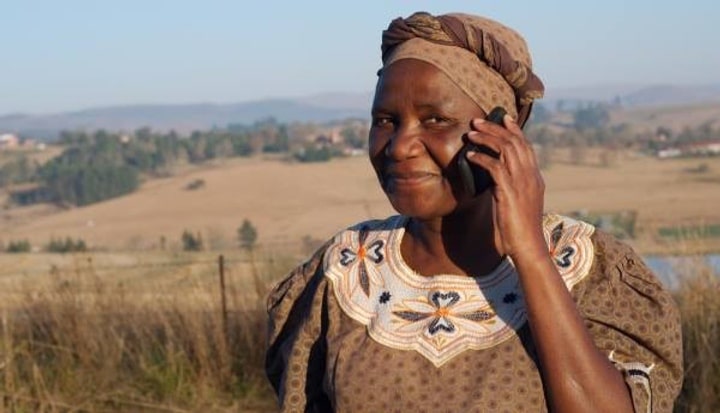
In spite of the fact that around 600 million people in Africa lack power, the mobile phone has revolutionized the continent, and the number of phones have exploded. Why did that happen, and what will be the next revolution?​
icon-content-article-grey
Over the past 15 years, corporate leaders, investors, and nongovernmental organizations (NGOs) have demonstrated that, with the use of innovative business models, profit can be aligned with social and environmental progress. A departure from the “band-aid” corporate social responsibility (CSR) approaches of the 1990s, these strategies involve fundamental changes to business practices, including alterations to core products and services.
icon-content-article-grey
If you are buying a toy for your child, niece, or nephew, it was most likely made by a woman in China or India. Indeed, women make up over 60 percent of the global toy manufacturing workforce and are critical to its success. However, low-income women working at toy factories can face gender discrimination, harassment, and poor health conditions.
icon-content-article-grey
It’s time to re-evaluate how we invest. I have seen funders stringing along companies in emerging markets for years while they jump through the hoops of their longwinded selection processes. To donors and funders I say: If you want to help businesses achieve social impact, maybe it’s your funding system that needs to change. ​
icon-content-article-grey
Gender Based Violence (GBV) affects 1 in 3 women globally and has been referred to by the UN Secretary General Antonio Guterres as a political ‘global pandemic’ and ‘a mark of shame on all our societies’. A new Business Fights Poverty toolkit has been published to help companies tackle violence and harassment and domestic violence. These two forms of violence can affect employees full and equal participation in the workforce.
icon-content-article-grey
There’s a strong call for men to step up to help deliver gender equality of opportunity. Research shows there is a gap between being supportive of action and knowing what action to take. This blog suggests practical actions that individual employees and middle managers can take and leaders of organisations can facilitate.
icon-content-article-grey
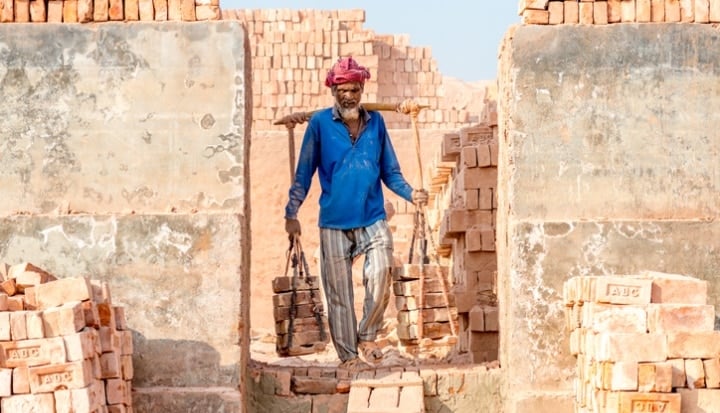
Over 40 million people are in modern slavery. It is a crime affecting all countries, yet it is often hidden and difficult to measure. In a new Business Fights Poverty Challenge, we are setting out to explore how technology can help tackle modern slavery through worker engagement.
icon-content-article-grey
Be inspired by Business Fights Poverty NYC keynote speaker, Naureen Hyat, as she tells us about Tez Financial Services, a Visa Everywhere Initiative award-winning technological innovation, which is positioned to bridge the gap towards the financial inclusion of women in Pakistan.
icon-content-article-grey
What happens when a bank makes a move towards achieving greater gender parity internally, combined with a razor sharp focus on the ambitions set out in SDG 5? Learn more in a conversation with Laura Hemrika, Global Head, Corporate Citizenship & Foundations and Patsy Doerr, Global Head of Diversity and Inclusion, Credit Suisse.
icon-content-article-grey
Engaging men as allies can be a powerful accelerator to help companies, governments and institutions achieve gender equality. Elizabeth Nyamayaro takes us behind the scenes of how UN Women built a worldwide network of men who are championing SDG 5 – the gender equality goal.​
icon-content-article-grey
This year, Business in the Community reported that companies are in danger of purpose-wash. Whilst 86% of the companies surveyed had a statement of purpose, 83% had not considered its implications for their departments or team targets. This implementation gap threatens to undermine the potential of business purpose as a force for good.
icon-content-article-grey
On 21 June 2019, the International Labour Conference agreed with a near-unanimous vote to adopt a new ILO Convention to eliminate violence and harassment in the world of work. As the focus now shifts to ratification and implementation of this new international treaty, leading businesses are taking a hard look at their own policies and practices and assessing whether they, too, are meeting the new global benchmark for protection and prevention.
icon-content-article-grey
About ten years ago, I hosted a conference on religion, business and peace.  It was held shortly after Yale University Press released my book, Prophets, Profits and Peace, which dealt with the same topic and I wanted to see if we could further engage representatives from religion and business to see how each could separately and together foster peace. The conference proved fruitful, but one of the more interesting aspects was the reaction of invitees. 
icon-content-article-grey
Following my experiences of Business Fights Poverty Oxford 2019, I explore the link between purpose, clarity, and success, and share learnings about how companies around the world can embed purpose authentically.
icon-content-article-grey
Family friendly workplace policies, such as paid parental leave, breastfeeding breaks and support for affordable childcare, play a fundamental role in ensuring children get the best start possible in life. But are businesses doing all they can to support parents manage a changing work-family balance?​
icon-content-article-grey
The workforce includes more women — especially in traditionally male professions — and business leaders are changing workplace environments to be more flexible, collaborative and caring in a calculated effort to attract and retain the best talent, both male and female.​
icon-content-article-grey
In the third edition of a series exploring the relationship between culture, film, and business, Timothy Fort shines a light on how “ping-pong diplomacy” helped countries participating in World Table Tennis Tournaments along a path of more peaceful, open interaction.
icon-content-article-grey
Join us and a panel of experts for a live written discussion to explore how business can advance gender equality across the value chain by engaging men as allies, taking place on Wednesday 11 September 2019, 16:30-17:30 BST/ / 11.30-12.30 EDT
forum_grey

What do we mean by "Human Rights and Governance"?

Explore initiatives that advance human rights and promote effective governance, driving global change, enforcing equity and alleviating poverty.

Sub-topics within this category