Climate & Environment

Environmental Strategies to Fight Poverty

Communities and business can save forests explains Kinari Webb. Why stopping deforestation is about the people.
icon-content-podcast-grey
As we head into COP26 in Glasgow, we hope to see corporate climate commitments grounded in real actions that cut emissions sharply and rapidly by the end of this decade and support a just and resilient transition.
icon-content-article-grey
Populations in vulnerable contexts disproportionately bear the consequences of climate change, however, their voice is often silenced by other issues or approaches to the topic. Find out how the Green Stoplight provides a framework to break down environmental action into small and doable steps to then unite communities in hopes of influencing public policy.
icon-content-article-grey
What is climate justice and why should we care about it? Meet Edward Cameron. Edward has dedicated his career to understanding, delivering, and advocating for climate justice. He has a PhD in the topic and is the founder of the International Institute for Climate Justice.
icon-content-podcast-grey
The eyes of the business world have been trained on Glasgow for COP26. The environment is increasingly topping the agenda for boardrooms at the biggest companies. At the UN’s recent biodiversity conference in China the chief executives of Unilever and H&M were among those calling on governments to take significant action to reverse the collapse of our ecosystems.
icon-content-article-grey
By definition, social procurement leverages the purchasing power of companies to achieve broader social impact objectives. It goes beyond responsible sourcing which integrates and manages ESG criteria into the procurement process. Instead, it focuses on buying goods, materials, or services from social businesses with the explicit intention to create net positive impact.
icon-content-article-grey
A new report, titled Fairtrade and Climate Change and conducted by researchers from VU Amsterdam and Bern University of Applied Sciences on behalf of Fairtrade, is explicit in identifying how climate change will impact specific regions and Fairtrade crops. Above all, it presents a clarion call for immediate and comprehensive climate action.
icon-content-article-grey
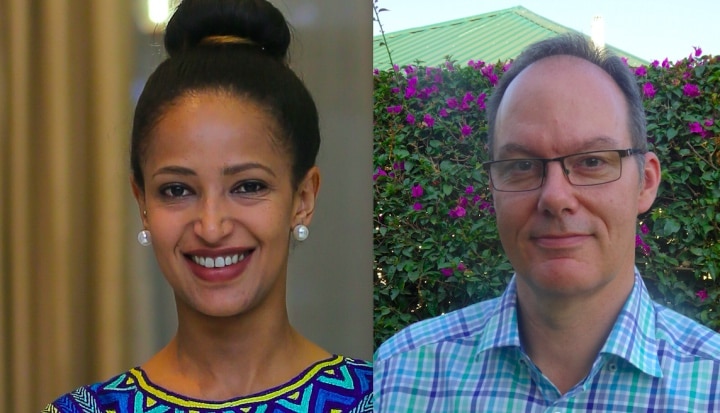
Smallholder farmers and agribusiness are benefiting from market ecosystem alliances. Hileena Eshetu and Mark Blackett from AMEA explain how. Hear about cooperative farming, access to business supply chains and resilience.
icon-content-podcast-grey
How do you effectively spend billions of dollars of taxpayer’s money to help fight global poverty? And how do you invest for climate resilience and account for the unknown such as the risks of pandemics? We hear from Alicia Phillips Mandaville who is the Vice President of the Department of Policy and Evaluation at The Millennium Challenge Corporation (the MCC)
icon-content-podcast-grey
We’re just over two weeks away from a critical milestone in the fight against climate change. The UK will host the COP26 climate conference, bringing together countries to enhance their commitments for the first time since they made them under the Paris Agreement in 2015. Zahid Torres-Rahman shares 3 reasons why business must put people at the heart of climate justice.
icon-content-article-grey
With the release of the latest report from the IPCC on climate science, the planetary emergency sirens are sounding louder than ever. And as the world awaits the outcome of crucial international climate talks in Glasgow, momentum is building for ambitious global action that delivers net-zero greenhouse gas emissions no later than 2050.
icon-content-article-grey
In December 2009, Push embarked on his first long walk – his ‘Walk for Climate Justice’ – from Oxford, UK, to Copenhagen, Denmark, to raise awareness of the issues of climate change and poverty in advance of the UN conference on climate change in Copenhagen, COP15. In 2011, he repeated this effort in another Walk for Climate Justice in the southern Indian state of Karnataka, to call attention to the plight of small producers such as coffee growers in an era of climate change. This walk was supported by the Karnataka Growers Federation (KGF) and Centre for Social Markets (CSM), and reached 30,000 people directly, and through radio he was able to reach a million listeners a day!

icon-content-article-grey
An article from the latest edition of CLUED-iN, giving hands-on insights on how exactly inclusive businesses are already living up to climate and social impact expectations ahead of COP26, and what is needed to help other entrepreneurs to step up.
icon-content-article-grey
Our farms, and the wider ecosystem, need regenerating. That’s why I’ve been working on the REEL Regenerative Code for Cotton to introduce various regenerative farming practices and new techniques to cotton farmers, which not only enhance but also enable them to foster mitigation and adaptation to climate change. It’s a win-win for the farmers and for the environment.
icon-content-article-grey
Sheila Senathirajah, innovations senior manager at ISEAL, discusses the importance of equality in building inclusive and fair value chains for producers.
icon-content-article-grey
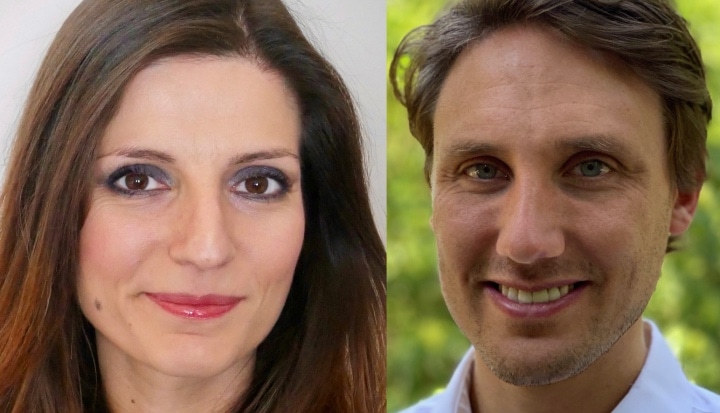
In this session, Charlotte and Sofía shared the goals of WBA’s Climate and Energy Benchmark and how companies can use WBA’s indicators to increase their ambition and action on addressing their social and climate impacts.
icon-content-article-grey
As the global Food Systems Summit arrives, Lesley Mitchell, international non-profit Forum for the Future’s Associate Director for Sustainable Nutrition, explores what it will take to transform how we produce and consume food – and the role of business in stepping up to the challenge.
icon-content-article-grey
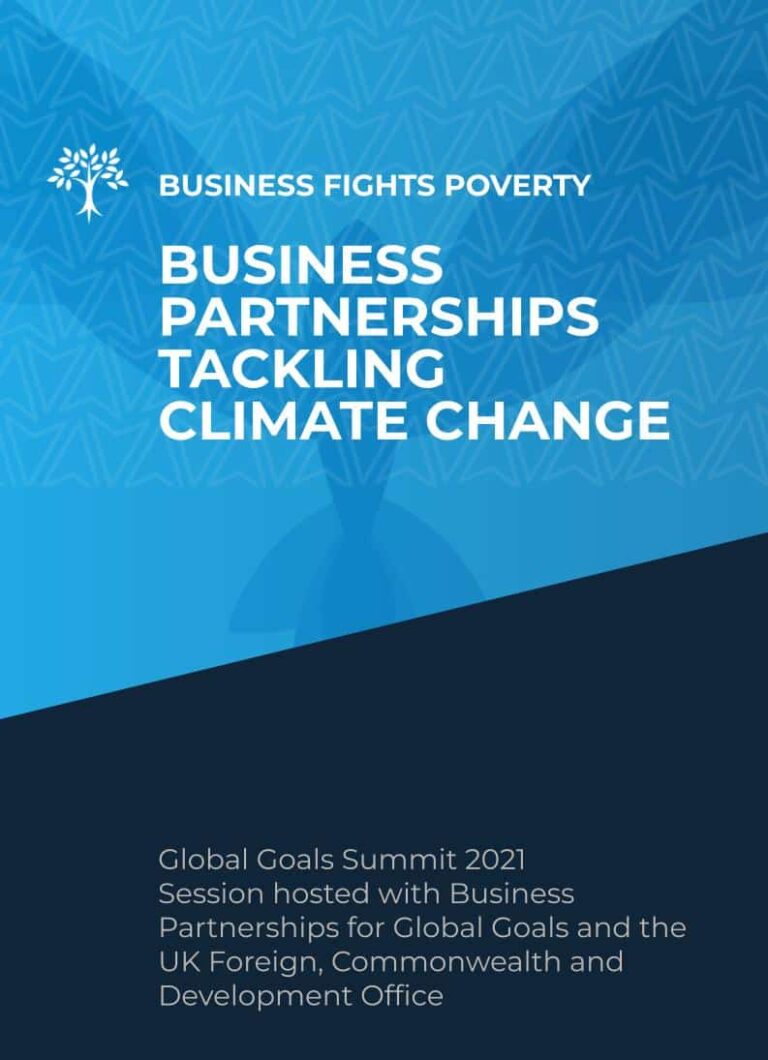
Our webinar explored “Business Partnerships Tackling Climate Change” and discussed why businesses are essential players in combating climate change, how partnerships improve resilience, and
insights-icon
The climate crisis is accelerating faster and is more severe than previously anticipated – to avoid the destructive consequences of a world warmed by more than 1.5°C, we must decarbonise the global economy to reach net zero by 2050.
icon-content-article-grey
My guests in this podcast are Maria Pia Bianchetti, Senior Specialist, Child Rights and Business, at the UK Committee for UNICEF and Nicholas Rees, Climate and Environment Specialist, at UNICEF
icon-content-podcast-grey

What do we mean by "Climate & Environment"?

Explore initiatives that leverage climate and environmental preservation as critical tools in the global fight against poverty.

Sub-topics within this category