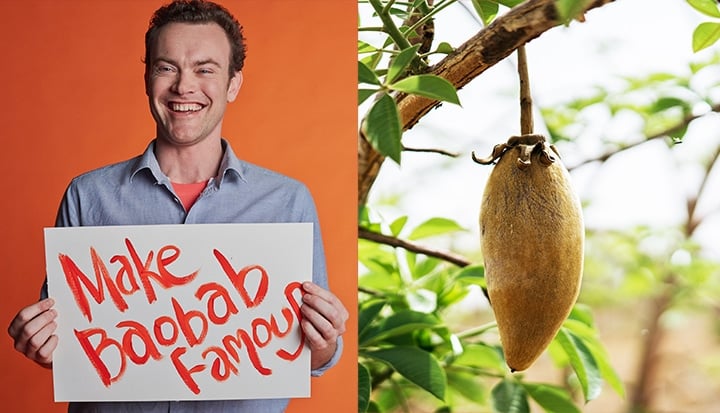
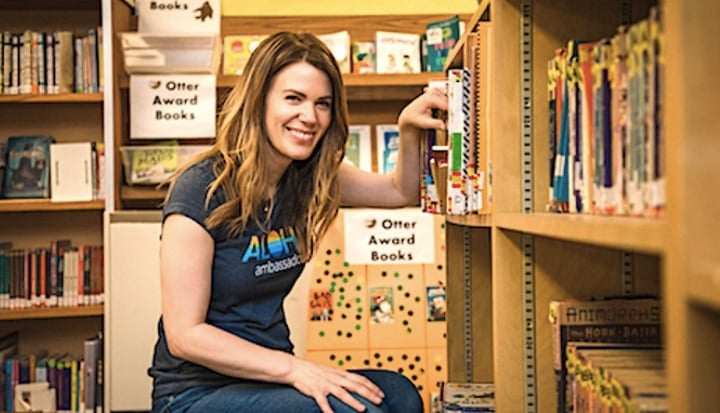
15 years ago I was working in the London advertising industry, promoting products I didn’t believe in for clients who didn’t appreciate it. I ended up asking myself ‘What am I doing with my life?’
Working out whether or not your sustainability program is having the impact you intend is more complex than you might think. There’s heated debate among academics and practitioners around how to do it best, much of it pointing out that designing a perfect measurement methodology in theory is a lot more straightforward than applying it in practice. That said, most can agree that it’s a necessary exercise. With this blog, we add the Cocoa Life perspective to the debate.
The health sector is on the frontline when it comes to dealing with the ever-increasing effects of climate change; and yet the sector with a unique healing mission is also contributing to the problem through greenhouse gas (GHG) emissions from its activities, undermining the health of the very populations it seeks to heal.
Understanding the impact of development interventions is a complex process. From picking the most suitable measurement and evaluation (M&E) methodology, to designing a suitable plan for implementing it in the field, there might appear to be endless hurdles to the uninitiated.
From climate change to climate crisis and now a climate emergency, the growing debate around the language used for some of our biggest global challenges is missing the most important word for addressing them: resilience.
According to the Global Slavery Index, 40.3 million people are in some form of modern slavery, including 24.9 million in forced labour. 71% of the total are women and girls. The ILO reports that US$150 billion of illegal profits are generated by forced labour each year.
More than 61% of the world’s employed population – two billion people – earn their livelihoods in the informal sector, with 93% of the world’s informal employment occurring in emerging and developing countries. Yet informal retailers face complex challenges that prevent them from growing their business, stabilising the financial status of their business and their household income, and delivering a high level of service to their customers.
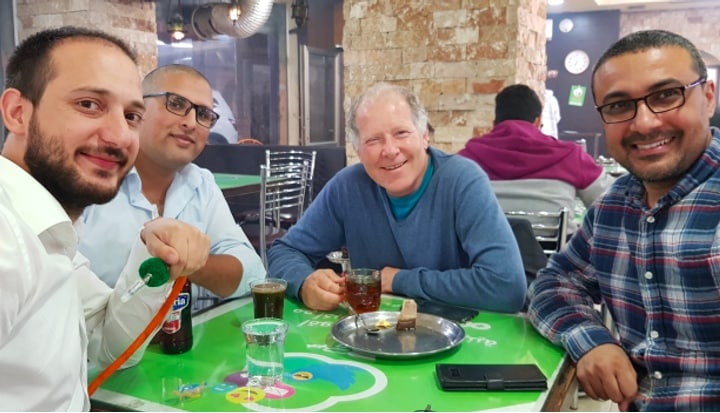
Conflict is a leading cause of poverty. Business can help bridge divides. Jerry Marshall is a co-founder of Transcend, Palestine, an “Impact Investment” technology company that transcends the Separation Wall by creating jobs unaffected by movement restrictions, building skills and hope, and developing relationships across the divide. The Transcend model could be adapted for replication elsewhere.
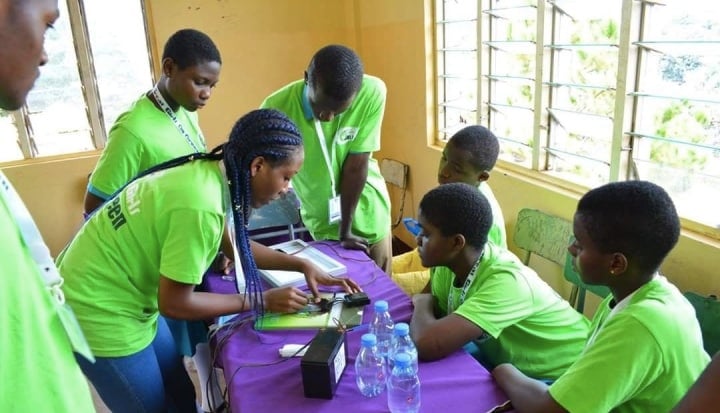
Be inspired by #BFPOxford Keynote speaker Monique Ntumngia, as she tells us more about the Green Girls Organisation, an award-winning clean energy technological innovation, which is creating a route towards economic independence for women and girls in Africa.
Over the last decade, many multinational corporations (MNCs) have attempted to set up inclusive businesses of one kind or another, with varying success. Despite good intentions and the investment of significant resources, few of these pilots have been successful and an even smaller proportion has reached significant scale.
People often think Corporate Responsibility is a company’s response when it’s asked to do the right thing. But corporate responsibility is quite the opposite of a defensive move. It’s about growth, common sense, culture, impact, and most of all, values.
Impact is a word we hear all the time in sustainability circles. Often when we talk about impacts, we’re talking about reducing the negative ones. Causing less damage. But that’s not nearly enough, says Arjen Boekhold of Game Changer Unltd. and known from Tony’s Chocolonely.
Pakistan has made progress in boosting women’s education levels over the past several years—yet less than 8 percent of the country’s workforce are women. Closing that gap will represent a huge economic opportunity for our country.
In Uganda, TechnoServe is partnering with Nile Breweries Limited and the Sustainable Food Lab to identify climate risks in sorghum and barley supply chains.
The Cherie Blair Foundation for Women has launched a new organisational strategy with an ambition to empower 100,000 more women and girls to fulfil their potential as entrepreneurs in the next four years. But why is this focus important and what does the roadmap towards getting there look like?
Business can offer solutions to even the most vast and complex issues: climate change, gender inequality, unyielding technological advancement, hunger and water scarcity, to name a few. On the topic of gender-based violence (GBV) – any act that is perpetrated against a person’s will and is based on gender norms and unequal power relationships – the opportunity for business to have an impact is no different.
In this blog, we argue why corporate foundations are the ideal partner for companies in building a truly sustainable brand. Find out what makes them a unique partner, what contributions they can have, and how you can leverage this partnership most strategically.
Stories about terrible working conditions along supply chains keep emerging. From sweat shops to modern slavery – we reply on journalists to uncover horrible truths to spark change. But social enterprise organisations with traceable supply chains eliminate ambiguity and promote social change. I want to share why I think we should all become a little more social.
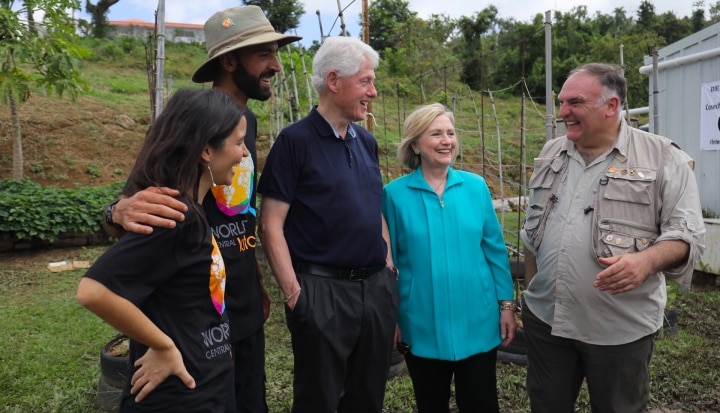
At the Clinton Foundation, we believe that everyone deserves a chance to succeed, everyone has a responsibility to act, and we all do better when we work together. It’s this belief that led President Clinton to launch the Clinton Global Initiative (CGI), which convenes leaders through its Action Network on Post-Disaster Recovery to support recovery and resiliency efforts in the Caribbean.
Increasingly, large companies are realising that they need to collaborate closely with their SME supply chains to compete in global markets. But developing collaborative relationships with supply chains is not only compatible with success, it can also be a driver of it.