It was inspiring to witness the extent of our collective energy and expertise at the Business Fights Poverty Global Summit 2021. This five-day event, held from 21-25th June, brought together over 80 speakers with more than 1000 registered participants to celebrate the successes of our members; share insights and lessons learned; and build our resilience.
A toolkit on how companies can transition to a net-zero economy at the same time as economically empowering the many vulnerable women working upstream in global value chains. With the UK Foreign, Commonwealth and Development Office’s Work and Opportunities for Women Programme, PwC and the Corporate Responsibility Initiative, Harvard Kennedy School.
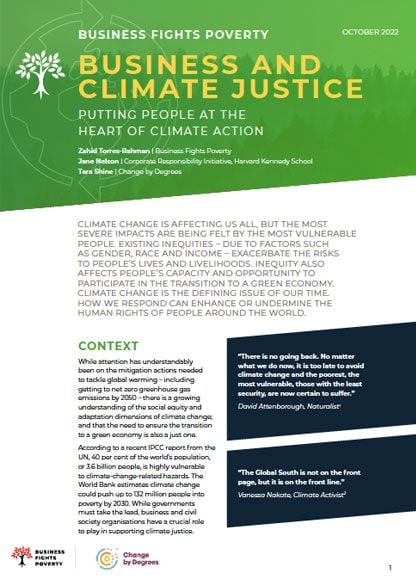
An action framework on how business can put people at the heart of climate action; recognising the social equity dimensions of climate impacts. With the Corporate Responsibility Initiative, Harvard Kennedy School.
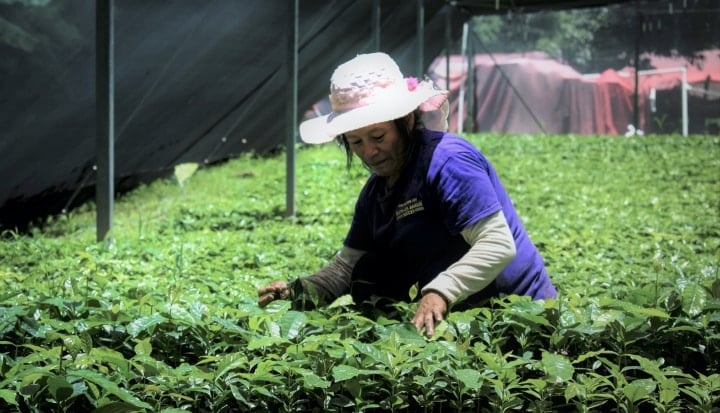
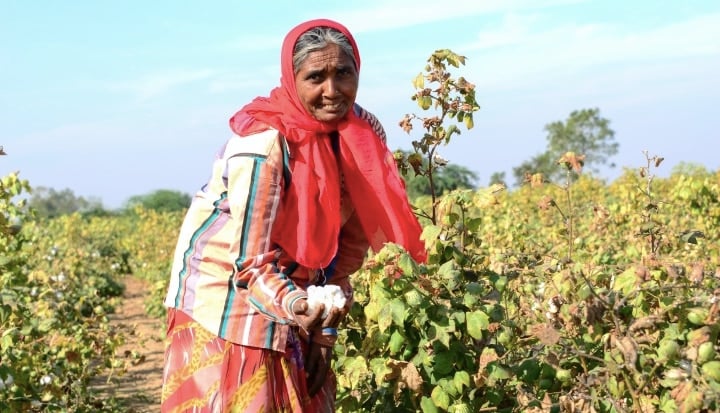
Globally, women farmers struggle to access land, credit, and training and bear a heavy double burden of farm and household responsibilities. These gender inequalities pose a serious risk to women farmers in the face of climate change.
CottonConnect’s understanding of the effect of climate change on cotton farmers led to its people-centred approach as it works to create climate resilient farming communities, who can respond to the challenges to their farms and livelihoods through training, technology and adapted crop planning.
Faced with the growing threat of climate change, from heatwaves and frequent wildfires to rising sea levels, we are in a race to avoid the worst impacts of the climate crisis and secure a world the next generation can thrive in. At the individual, corporate and country level, the sense of urgency to act has increased dramatically.
Members of the Business Fights Poverty network share their insights through a series of “how-to” videos on the themes of the Business Fights Poverty Global Summit 2021.
Join us for this live written panel discussion on Embedding Climate and Social Innovation into Business. This event is part of the Business Fights Poverty Global Summit. Live Panel Monday 21 June 2021, 9.30-10.30AM EDT / 2.30-3.30PM BST
Do you leverage digital technology to deliver urban services with social, economic and environmental Impact? if you do so in the fields of plastic and waste management, energy, water or sanitation, the newly launched GSMA fund could support you. Red on to learn more.
Children and young people are severely impacted by climate change. However, little information is available about the linkages with businesses and the actions they can take to address climate change and its consequences, despite climate change being on top of the agenda for many businesses. UNICEF UK is seeking the help of the business community to fill this gap.
Our Online Written Discussion on “Creating an Integral Approach for Measuring Social and Environmental Impact,” delved into the requirements for addressing the climate crisis
Our Online Written Discussion “Enhancing the Livelihoods of ‘Hidden Women’ in Global Smallholder Value Chains,” focused on how companies and partnerships can significantly improve
Our Online Written Discussion covered “Embedding Climate and Social Innovation into Business.” Panelists explored the integral connection between a company’s purpose and its capacity
Our webinar explored “Business and Climate Justice”. Participants discussed what a global approach to climate justice entails, exploring the connections between climate-related disasters and
In GSMA’s new report, they explore the specific benefits that plastics organisations (for-profit start-ups or social enterprises that manage plastic waste collection and recycling) in LMICs currently reap, or could eventually reap, from using digital tools or services or partnering with technology organisations, such as mobile network operators (MNOs).
2020 was a year full of uncertainly. Not only did the pandemic affect our health and personal lives, it also fundamentally challenged our political, social, and economic norms too. Most notably, was the impact it had on how many of us now think about tackling the big issues like climate change.
ACTS is driving community-based solutions to the climate crisis – including by providing education resources to underserved communities, gathering data that will reveal the vulnerabilities, and identifying the resources needed to address them. Learn more in this interview with ACTS Founder, Bridgette Murray.
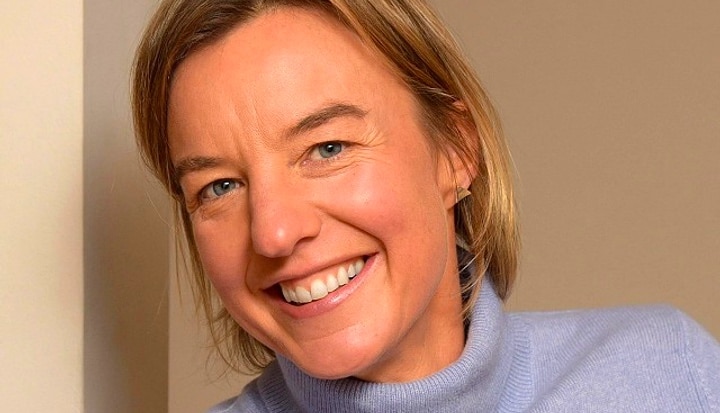
This podcast talks with Dr Tara Shine. Tara was formerly an international climate change negotiator and adviser to governments & world leaders on environment & development policy. During our conversation, Tara shares how business can ensure people are at the centre of climate action.
Climate change is affecting us all, but the most severe impacts are being felt by the most vulnerable people. This new framework explores what climate justice means in practice and the actions that business can take.
As the world marked the anniversary of the COVID-19 pandemic, Business Fights Poverty launched its new programme on Climate Justice. As well as becoming environmentally sustainable, climate justice demands that equity and inclusion are front-and-centre in efforts to tackle the climate emergency. The content shared by our community this fortnight provides insights into work already underway.