Technology

Technology and Human Rights

Financial access and inclusion continue to be sold to farming communities in the world’s leading supply chains at the very price of poverty. How do we reduce this toxic trade-off, why is it taking so long and how does it impact the planet’s future? Tasneem Mayet, BFP Ambassador, shares insights from conversations had at #BFPOXFORD, closing with some examples of what has worked well in the industry and yet why it is not enough.​
icon-content-article-grey
During this week’s Spotlight interview podcast, we speak with Naureen Hyat. Naureen is a serial entrepreneur ranked on the Women in FinTech Powerlist 2017.
icon-content-podcast-grey
Business Fights Poverty is running a Challenge on the use of technology to tackle modern slavery in global supply chains, in partnership with Nestle and WBCSD. Technology has huge potential to challenge systemic opacity, and can disrupt systems where there is misinformation.
icon-content-article-grey
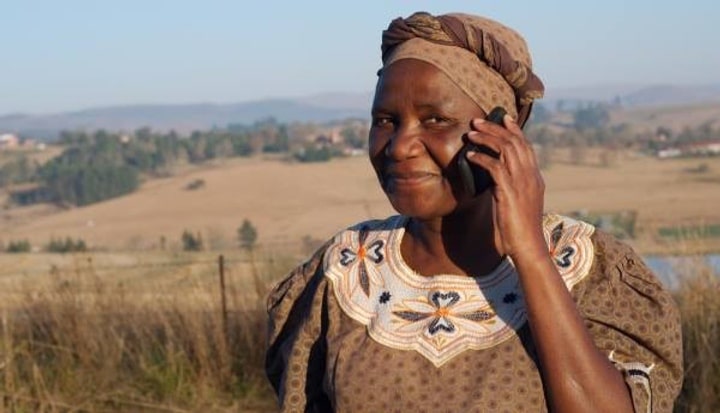
In spite of the fact that around 600 million people in Africa lack power, the mobile phone has revolutionized the continent, and the number of phones have exploded. Why did that happen, and what will be the next revolution?​
icon-content-article-grey
Over 40 million people are in modern slavery. It is a crime affecting all countries, yet it is often hidden and difficult to measure. In a new Business Fights Poverty Challenge, we are setting out to explore how technology can help tackle modern slavery through worker engagement.
icon-content-article-grey
Be inspired by Business Fights Poverty NYC keynote speaker, Naureen Hyat, as she tells us about Tez Financial Services, a Visa Everywhere Initiative award-winning technological innovation, which is positioned to bridge the gap towards the financial inclusion of women in Pakistan.
icon-content-article-grey
Social isolation can affect people at any stage of their life and technology has a unique power to prevent this, bringing people together and redefining connection. Nesta Challenges’ Tech to Connect challenge seeks to offer civil society organisations support in helping to build more connected communities and reduce social isolation.
icon-content-article-grey
According to the Global Slavery Index, 40.3 million people are in some form of modern slavery, including 24.9 million in forced labour. 71% of the total are women and girls. The ILO reports that US$150 billion of illegal profits are generated by forced labour each year.
icon-content-article-grey
More than 61% of the world’s employed population – two billion people – earn their livelihoods in the informal sector, with 93% of the world’s informal employment occurring in emerging and developing countries. ​Yet informal retailers face complex challenges that prevent them from growing their business, stabilising the financial status of their business and their household income, and delivering a high level of service to their customers.
icon-content-article-grey
A discussion paper on how technology can help to create closer, two-way connections between a company and the workers in its supply chain, which may in turn reveal hidden, illicit practices that contribute to modern slavery. With Nestle and WBCSD.
icon-content-report-grey
By 2022 Uganda’s ICT industry is projected to hit US$1.1Bn, and Kenya’s US$1.7Bn and will create around 40,000 new jobs. But, this is not enough to keep pace with the global expansion of the industry. While technology has the potential to tackle youth unemployment in Africa, the lack of qualified workers in Kenya and Uganda risks holding these sectors back.
icon-content-article-grey
At the end of 2018, Save the Children’s Migration and Displacement Initiative (MDI) launched its Predictive Displacement prototype tool. MDI is now developing the second iteration of the tool – a more precise and powerful version – and calls on humanitarian and technological partners for support.
icon-content-article-grey
As the world faces the transformative economic, social and environmental challenges of Globalization 4.0, it has never been more important to invest in people.
icon-content-article-grey
​How can technology be used to create inclusive financial infrastructure for women in remote communities? The Palladium-run SPRING Accelerator supports entrepreneurs who can bring products and services to adolescent girls. Read an interview with Accelerator participant, Amit Agrawal, CEO of Janaki Technology Pvt. Ltd., about his journey towards increasing financial inclusion for women in Nepal.
icon-content-article-grey
BRAC microfinance is working with ShopUp – one of Bangladesh’s biggest e-commerce platforms – to deliver innovative financial services. This partnership is piloting a loan product, which utilises an AI credit rating system, for small-scale Facebook-based entrepreneurs in Bangladesh. It is BRAC’s first ever product for the e-commerce sector, and the first of its kind in the microfinance sector in Bangladesh
icon-content-article-grey
“Aid organisations are improving lives with fourth industrial revolution technologies and the indispensable partnership of the corporate world. These efforts are good PR but they are also good business. Even more importantly, they help build a better, more cooperative world” – says Neal Keny-Guyer, CEO of Mercy Corps
icon-content-article-grey
Across the globe, factories that pay workers digitally are five times more likely to follow exemplary social and labor practices than those that pay with cash or checks. The data comes from the Higg Index from nearly 3,000 factories across 58 countries, representing 85 brands and retailer supply chains.
icon-content-article-grey
Food systems fail hundreds of millions of underserved consumers and business entrepreneurs around the world. There is a huge opportunity before us to harness talent, innovation and technology to build inclusive food systems for the future.
icon-content-article-grey
What more can be done to tackle the global migration crisis? Save the Children are stepping up using predictive analytics. “With better data on how a displacement will impact children and families over time, aid workers and policymakers can make more informed decisions about whether to focus on short-term humanitarian aid or plan for long-term investments”
icon-content-article-grey
Digital technologies are opening up new possibilities to help companies develop better solutions to predict, prevent and respond to human rights abuses in their value chains. But what does this mean for companies in practice? What can some of these new technologies tangibly be used for as far as business and human rights are concerned?
icon-content-article-grey

What do we mean by "Technology"?

Discover how technology can bolster human rights protections and governance, providing innovative solutions for global challenges.

Sub-topics within this category

There are no sub-topics within this Category.