Human Rights and Governance

Advancing Human Rights and Governance

When we think of social isolation it’s very easy to picture older, lonely people. But in reality, isolation affects people of all ages and backgrounds. More than one in five people in the UK feel lonely at least some of the time, making social isolation a major public health issue.
icon-content-article-grey
“We live in a world where it is easier to imagine the end of humanity than it is to imagine the end of capitalism,” said Fredric Jameson about 40 years ago when Climate Change wasn’t even on the agenda (Capitalist realism, 2010). What is worrying is that this claim holds true to this day. When did we move from politics of collective well-being to politics of consumption?
icon-content-article-grey
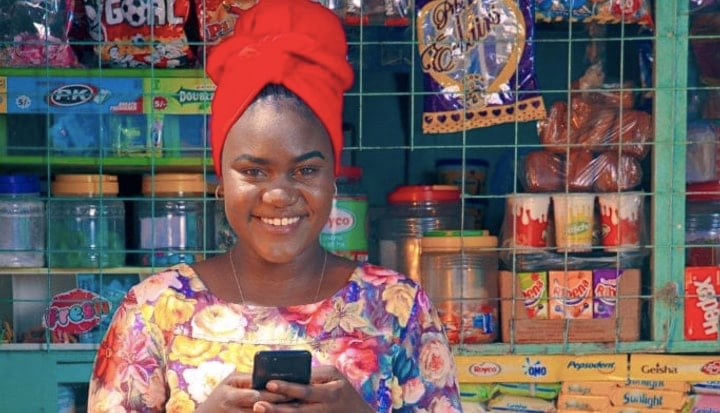
What are the pathways to prosperity in the digital age and how can we help developing countries navigate these pathways? Every1Mobile shares unique insights to help formulate a strategy that is truly inclusive and considerate of the digitally and economically disenfranchised.
icon-content-article-grey
SDG 17 calls for a revitalisation of global partnerships. In India and Nepal, a social enterprise, Pollinate Group, is working in partnership to empower women to distribute solar energy products in informal settlements. Pollinate Group is partnering with Greenlight Planet and the Australian Department of Foreign Affairs and Trade (DFAT) through the Business Partnerships Platform.
icon-content-article-grey
Inequality in income and availability of work between rural and urban areas are large contributors to a country’s overall economic inequality. In India, agriculture still employs more than half of the workforce, but wages are low and with rising education levels many young people no longer aspire to take over the family smallholder farm
icon-content-article-grey
Financial access and inclusion continue to be sold to farming communities in the world’s leading supply chains at the very price of poverty. How do we reduce this toxic trade-off, why is it taking so long and how does it impact the planet’s future? Tasneem Mayet, BFP Ambassador, shares insights from conversations had at #BFPOXFORD, closing with some examples of what has worked well in the industry and yet why it is not enough.​
icon-content-article-grey
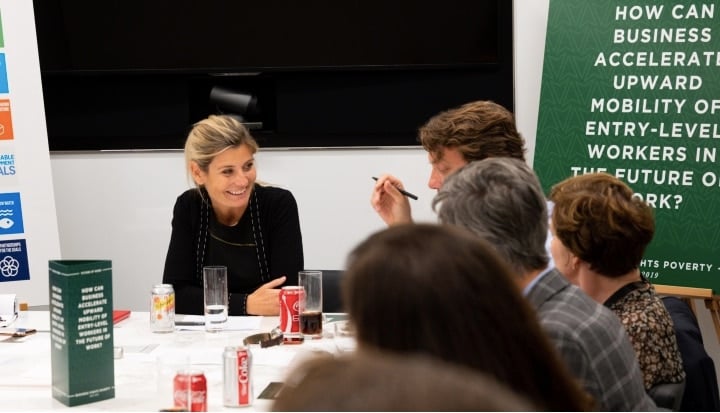
Business Fights Poverty is partnering with Walmart on a recently-launched Challenge which asks how business can accelerate the upward mobility of entry-level workers in the future of work. ​
icon-content-article-grey
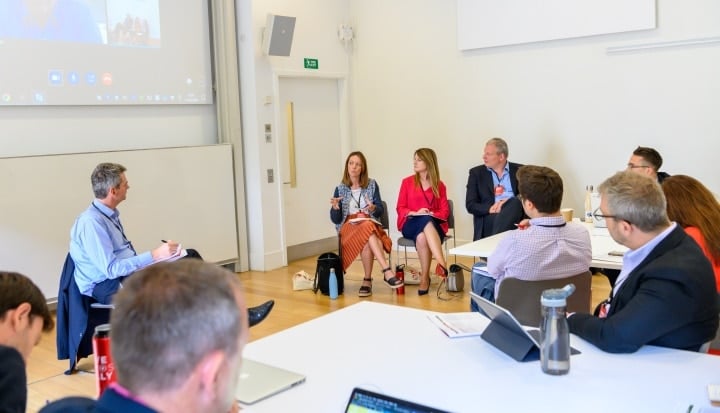
As part of our Challenge on Purpose supported by GSK, VISA and Unilever, Business Fights Poverty convened a meeting of around 30 representatives from companies, financial institutions, NGOs and development institutions to discuss this pertinent topic.
icon-content-article-grey
During this week’s Spotlight interview podcast, we speak with Naureen Hyat. Naureen is a serial entrepreneur ranked on the Women in FinTech Powerlist 2017.
icon-content-podcast-grey
Business Fights Poverty is running a Challenge on the use of technology to tackle modern slavery in global supply chains, in partnership with Nestle and WBCSD. Technology has huge potential to challenge systemic opacity, and can disrupt systems where there is misinformation.
icon-content-article-grey
The Business Fights Poverty lunch in NYC provided an opportunity to explore how companies can address gender equality challenges through their business aware practices. The discussion was focussed on the question ‘Why is SDG 5* for gender equality reportedly off-track and what can companies do differently to accelerate progress’?
icon-content-article-grey
Gender equality in the workplace is an important step in the creation of thriving societies and economies. However, the World Economic Forum’s Global Gender Gap Report 2018 suggests that at the current rate of change, it will take 202 years to achieve economic gender parity globally.
icon-content-article-grey
We’ve seen for so long a familiar dialogue running through advertising where gender stereotypes are reinforced time and time again. But with the likes of Skol’s REPOSTER, Nike’s Dream Crazier and Sport England’s ThisGirlCan challenging female stereotypes, there is a clear development towards a new narrative.
icon-content-article-grey
In spite of the fact that around 600 million people in Africa lack power, the mobile phone has revolutionized the continent, and the number of phones have exploded. Why did that happen, and what will be the next revolution?​
icon-content-article-grey
Over the past 15 years, corporate leaders, investors, and nongovernmental organizations (NGOs) have demonstrated that, with the use of innovative business models, profit can be aligned with social and environmental progress. A departure from the “band-aid” corporate social responsibility (CSR) approaches of the 1990s, these strategies involve fundamental changes to business practices, including alterations to core products and services.
icon-content-article-grey
If you are buying a toy for your child, niece, or nephew, it was most likely made by a woman in China or India. Indeed, women make up over 60 percent of the global toy manufacturing workforce and are critical to its success. However, low-income women working at toy factories can face gender discrimination, harassment, and poor health conditions.
icon-content-article-grey
It’s time to re-evaluate how we invest. I have seen funders stringing along companies in emerging markets for years while they jump through the hoops of their longwinded selection processes. To donors and funders I say: If you want to help businesses achieve social impact, maybe it’s your funding system that needs to change. ​
icon-content-article-grey
Gender Based Violence (GBV) affects 1 in 3 women globally and has been referred to by the UN Secretary General Antonio Guterres as a political ‘global pandemic’ and ‘a mark of shame on all our societies’. A new Business Fights Poverty toolkit has been published to help companies tackle violence and harassment and domestic violence. These two forms of violence can affect employees full and equal participation in the workforce.
icon-content-article-grey
There’s a strong call for men to step up to help deliver gender equality of opportunity. Research shows there is a gap between being supportive of action and knowing what action to take. This blog suggests practical actions that individual employees and middle managers can take and leaders of organisations can facilitate.
icon-content-article-grey
Over 40 million people are in modern slavery. It is a crime affecting all countries, yet it is often hidden and difficult to measure. In a new Business Fights Poverty Challenge, we are setting out to explore how technology can help tackle modern slavery through worker engagement.
icon-content-article-grey

What do we mean by "Human Rights and Governance"?

Explore initiatives that advance human rights and promote effective governance, driving global change, enforcing equity and alleviating poverty.

Sub-topics within this category