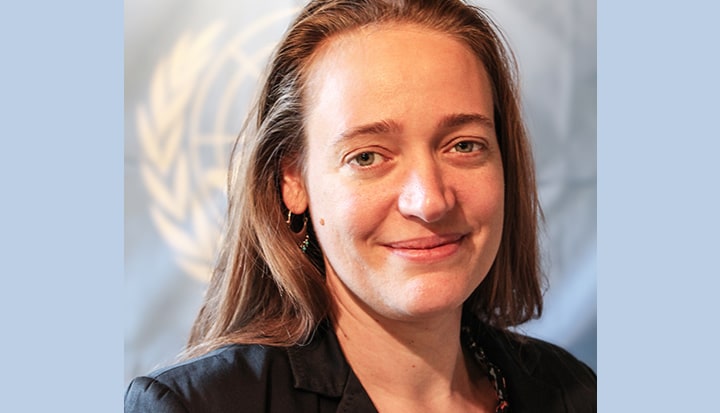
Amanda Gardiner, Vice President of Global Sustainability & Social Innovation at the world’s largest education company Pearson joins us for this week’s Spotlight interview.
Business and societal failures have arisen from flawed economic and financial theories, and a skewed, systemic, perspective of purpose and value. A new book argues that we can create a socio-economic system in which all organisations are encouraged and incentivised to generate lasting value for all human stakeholders
With the New Year imminent, we thought we’d take a look at the most popular articles of the year. So here, based on the number of unique visits each article received and in reverse order, are the ten most popular stories published in 2018.
Education is at the heart of human progress and central to the Sustainable Development Goals. In our latest report, we explore how business can contribute more to education and training for sustainable development. Ultimately, the skills of the future are skills for sustainable development.
Voluntary sustainability standards have the potential to deliver impacts that go beyond individual certified operations and effect wider systemic changes, according to new research published by WWF and ISEAL. These ‘systemic impacts’ help to create an enabling environment for production and consumption practices that benefit people and the planet, and contribute toward the Sustainable Development Goals.
A conversation with Martha Estrada, owner of SuperCo of Guatemala City, and a Bpeace Fast Runner, and Nat Love, a U.S. retail expert and a Bpeace Skillanthropist.
The UN Environment Finance Initiative’s (UNEP FI) Global Roundtable took place in Paris recently, an event dedicated to mobilising the financial sector to deliver a sustainable financial system. UNEP FI’s Positive Impact Initiative, “Rethinking Impact to finance the SDGs”, was launched, and explores avenues to closing the SDGs funding gap.
Donal Brown is arguably a good man to have in a crisis. Having been awarded his CBE for leading the UK taskforce during the devastating Ebola outbreak in 2014, he is now turning his attention to climate resilience for small holder farmers in some of our poorest regions.
The state of the online infrastructure that underpins the sustainable development agenda today is lacking. Despite the momentum that’s been built, the standards, tools and systems required to facilitate individual and collective action are often missing. TPI and C-Change share a plan to collectively bring SDG infrastructure and online systems into the 21st century.
The need for more collective action to address the world’s most urgent challenges couldn’t be clearer. TPI and C-Change argue no sector has a more important role to play than finance in determining whether or not we are successful in addressing these challenges.
Who will step up to address the very real liquidity gap that stands between poor households and their first toilet in Cambodia? iDE believes that local, friendly latrine businesses are best placed to provide non-interest bearing payment facilitation to households in their community. Read how iDE is seeking to unlock this sanitation supply-led financing at a larger scale.
New ‘Good Life Goals’ embrace individual action in a fun, easily-understood, and accessible way and offer organisations a charming way of engaging staff, partners and customers in the 17 SDGs.
Delivering the SDGs will require partnerships across business, governments, donors, the UN and NGOs at a scale that dwarfs current efforts of collaboration. TPI and C-Change explore how to design and build the new infrastructure that can systematically engage business and deliver the unprecedented level of collaboration required to achieve the SDGs.
Watch the videos of Business Fights Poverty NYC 2018. The event brought together 200 professionals from business and the development community during UN General Assembly Week to explore the theme of rethinking collaboration for the Sustainable Development Goals. The event was supported by Barclays and GSK.
Business Fights Poverty has just released a series of reports that mark the culmination of co-creation processes with a range of partners and network members. Topics include Social Intrapreneurship, Transformational Partnerships, Supporting Refugees and Education for Sustainable Development. Download them for free.
Our new report demonstrates how business can help people gain the skills and knowledge to advance sustainable development, navigate the future of work and create a more prosperous society. The project was led by Business Fights Poverty, Pearson, Arizona State University and PRME, an initiative of the United Nations Global Compact.
Jon Shepard shares why he see grounds for optimism in reaching the UN Sustainable Development Goal of equitable access to safe, affordable drinking water for all by 2030. In particular the growing number of impact entrepreneurs who are innovating new models for the scalable and sustainable provision of safe water in underserved communities.
At the recent World Water Week 2018, the Toilet Board Coalition explored the commercial and social impact opportunities for businesses willing to engage in the sanitation crisis. What exactly is the sanitation economy? And what role can business and government play?