Economic Development

Economic Development Strategies to Combat Global Poverty

icon-content-podcast-grey
In this session, Charlotte and Sofía shared the goals of WBA’s Climate and Energy Benchmark and how companies can use WBA’s indicators to increase their ambition and action on addressing their social and climate impacts.
icon-content-article-grey
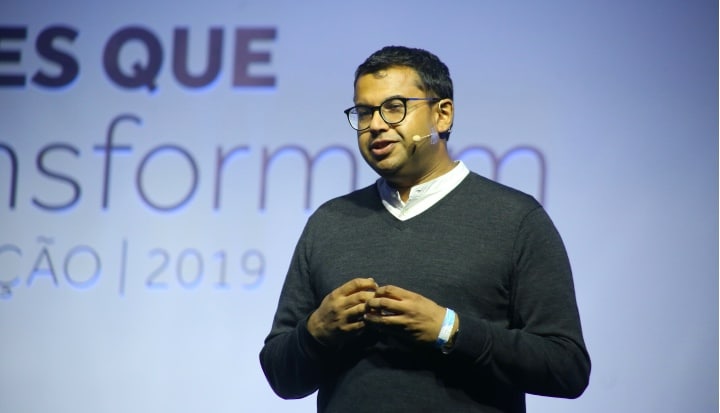
Laís Higashi is President of Litre of Light Brazil and One Young World Ambassador. Litre of Light Brazil is a social organisation that provides solar solutions to low income communities without adequate access to electricity. In this session, Laís explained why partnerships are critical for the initiative she leads and shared the practical challenges of developing system-level change.
icon-content-article-grey
As countries struggle to address the economic and health costs of COVID-19, finding solutions for mothers in informal employent will be important. Governments, donors, and businesses will need to invest in care — and will need to know what works and what doesn’t in reaching the most vulnerable families.
icon-content-article-grey
Monica Romis is Private Sector Human Rights Advisor at Oxfam Business Advisory Service. In this session, Monica speaks about grievance mechanisms, and references good practices that can help companies move in the right direction.
icon-content-article-grey
As the global Food Systems Summit arrives, Lesley Mitchell, international non-profit Forum for the Future’s Associate Director for Sustainable Nutrition, explores what it will take to transform how we produce and consume food – and the role of business in stepping up to the challenge.
icon-content-article-grey
Agriculture is not working for people or the planet. The statistics are startling. 78% of the world’s poorest people remain reliant on agriculture, 33% of the world’s soils are degraded (a figure that could rise to 90% by 2050) and agriculture contributes to about a quarter of global climate emissions (stats from the World Bank, the FAO and the IPCC respectively). There is an emerging consensus that we need to move to a more regenerative food system.
icon-content-article-grey
As Human Rights Due Diligence becomes increasingly important for businesses, Oxfam’s Private Sector Human Rights Advisor, Monica Romis looks at how purchasing practices have direct implications on the human rights of workers, sharing some of Oxfam’s research and highlighting concrete steps business can take for a more equitable sharing of rights and responsibilities through the supply chain.
icon-content-article-grey
Rachel Wilshaw, Workers’ Rights Senior Manager and Monica Romis, Private Sector Human Rights Advisor, reflect on a decade of working with businesses on living wage – with practical lessons from work done with companies that have partnered with Oxfam and made changes that have a positive impact on workers.
icon-content-article-grey
In this blog, Fairtrade reflects on some of the learnings from the Cadbury Farmer Resilience Fund, a partnership between Fairtrade, Mondelēz International and the FCDO.[1]  The importance of “tri-partite” partnerships between business, NGOs and government, co-creation with producers and embedding gender inclusion and climate resilience will be critical to ensure sustainable livelihoods in global supply chains.
icon-content-article-grey
Lorena explains why intrapreneurship is so critical for our current reality and she shares her advice with intrapreneurs who are starting their journey.
icon-content-article-grey
Micro and small enterprises (MSEs) are vital to inclusive growth. Payal Dalal of Mastercard Center for Inclusive Growth and Evelyn Nguyen explain why.
icon-content-podcast-grey
Jiselle Steele is Private Sector Gender Advisor at Oxfam Business Advisory Service. In this session, Jiselle explains what has been the impact of COVID-19 on inequality and gender gaps in the private sector, and how companies can identify and respond to gender inequality issues in global supply chains.
icon-content-article-grey
Julie Jenson Bennett is Practice Lead for Intergenerational Fairness at the School of International Futures (SOIF), an institution that helps policy makers and business leaders to make their organisations future-ready. In this session, Julie explained why intergenerational fairness is important to business and how companies can put intergenerational fairness into practice.
icon-content-article-grey
Our webinar explored “Business Leadership for the SDGs” and discussed the role companies play in achieving the Sustainable Development Goals, supporting small and micro
insights-icon
Over half of young people think that humanity is doomed, according to a new climate change survey. Since I was born just over 50 years ago, global surface temperatures have risen faster than in any other 50-year period over the past 2,000 years. Clearly, my generation has a lot to answer for. What is one to do in the face of such dire challenges? For business, the message from employees, customers and their other stakeholders is clear: do something.
icon-content-article-grey
Meet Zubair Junjunia, he is an educational activist, social entrepreneur, and founder of ZNotes – the online learning platform which shares revision notes democratically for students by students.
icon-content-podcast-grey
Access resources for Day 1 of the Business Fights Poverty Global Goals Summit: LEADERSHIP, Business innovation to deliver the SDGS. 20 September 2021, 1pm
event-grey
During our conversation, Charlotte Ntim, Disruptive Technology Officer with IFC’s Gender and Economic Inclusion Group, shares with us how the pandemic has disproportionately impacted on women-owned businesses, and why achieving gender parity on e-commerce platforms could be a $15 billion opportunity.
icon-content-podcast-grey
What is invisible labour and why should businesses care about it? Meet Pins Brown, Head of Responsible Procurement at Natura &Co – the parent company which includes the brands Avon, Natura Cosmeticos, The Body Shop and Aesop. Pins and her team work to address global inequalities through trade and employment.
icon-content-podcast-grey

What do we mean by "Economic Development"?

Explore how economic growth can significantly reduce poverty through innovative business initiatives and strategic planning. Join us in making a difference.

Sub-topics within this category