Unilever is a global consumer goods company renowned for its diverse portfolio of brands in categories like food, beverages, cleaning agents, and personal care. Their commitment to sustainability drives innovation and enhances the quality of life for people around the world. Discover the social impact initiatives that Unilever has been actively developing. This page highlights key insights into their community-focused projects and sustainable development efforts.

Resources from Unilever

Unilever UK’s 2024 gender pay data shows women’s median hourly pay is 4.8 % higher and mean pay 0.1 % higher than men’s overall. Women’s median bonus pay is 78.9 % higher. Pay quartiles show mixed gender representation across roles. The report reflects ongoing gender equity efforts
Gender Pay Gap
Unilever
Equal Pay
Gender Equality
Diversity, Inclusion
R&D
Managerial Roles
Workforce Diversity
Women in Leadership
Unilever Climate Policy Engagement Review 2025
Unilever’s Climate Policy Engagement Review 2025 assesses 26 trade associations across 10 regions for alignment with its 1.5°C climate ambition. 18 associations showed no misalignment—up from 13 in 2023—while seven improved from obstructive to neutral. Five were fully aligned and active. The review urges stronger engagement on fossil fuel phase-out, renewable energy, and carbon pricing, with standout progress from WBCSD, CLG, and Cefic. The report reinforces Unilever’s CTAP goal of achieving net zero across its value chain by 2039.
Unilever Climate Advocacy
1.5°C Paris Agreement Alignment
Trade Association Sustainability
Renewable Energy Policy
Fossil Fuel Phase-out
Unilever Sustainable Agricultural Principles 2025
Unilever’s Sustainable Agricultural Principles 2025 update its 2017 Code, setting six core principles to ensure legal integrity, protect nature, drive climate action, uphold human rights, guarantee animal welfare, and promote continuous improvement. The plan mandates 95% of key crops—such as palm oil, tea, and soy—be verified as sustainably sourced by 2030 through third-party certification. It integrates regenerative agriculture, zero-deforestation, fair labour, and biodiversity protection into supplier standards, promoting resilient, transparent, and low-carbon global supply chains.
Unilever Sustainable Agriculture
Regenerative Farming Principles
Deforestation-Free Sourcing
Human Rights Supply Chain
Sustainable Crop Certification
Unilever Climate Transition Action Plan 2024
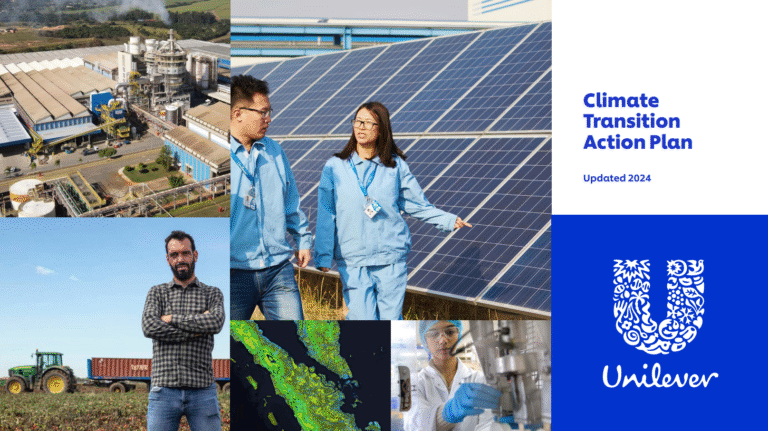
Unilever’s Climate Transition Action Plan 2024 commits to net-zero emissions by 2039 and absolute Scope 1 & 2 reductions of 100% by 2030 (already 74% achieved since 2015). Scope 3 targets include 42% cuts in energy and industrial emissions and 30.3% in agriculture and land use by 2030 vs 2021. Key levers: regenerative agriculture, reformulation, supplier climate programs, deforestation-free sourcing (97.5% achieved), and low-carbon packaging. The €1 billion Climate & Nature Fund underpins transition investments and inclusive value-chain collaboration.
Unilever Climate Strategy
Net Zero 2039
Scope 3 Emissions Reduction
Regenerative Agriculture Unilever
Deforestation-Free supply Chain
Five ways Unilever’s new Lighthouse site applies AI for impact
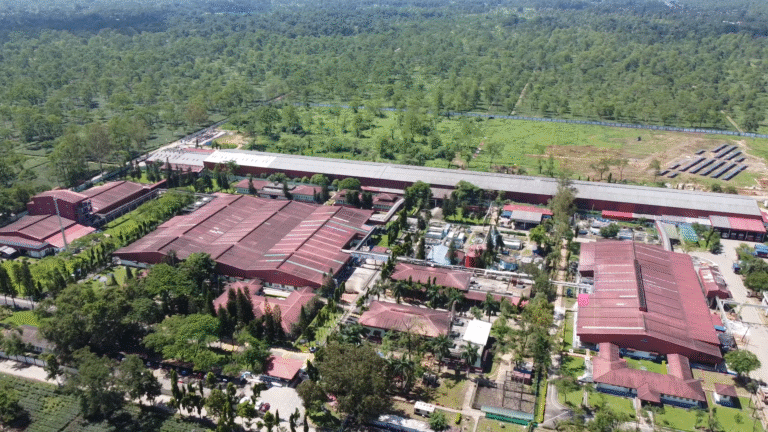
At its new Lighthouse-certified site in Tinsukia, India, Unilever deployed AI across five areas: 85% faster machine changeovers, 97% accuracy in consumer-feedback analysis driving a 21% defect reduction, a 400% increase in labour productivity via dynamic AI worker allocation, a 21% drop in virgin plastic use through digital-twin packaging trials, and 35% better demand-forecast accuracy which cut inventory by 16%. The factory supports inclusive employment, digital upskilling of local workers and real-time sustainability.
Unilever AI Manufacturing
Digital Twin Packaging
Sustainable Factory productivity
AI India
Recycled plastic reduction FMCG
Inclusive workforce upskilling manufacturing
Unilever is testing refill solutions to tackle plastic waste
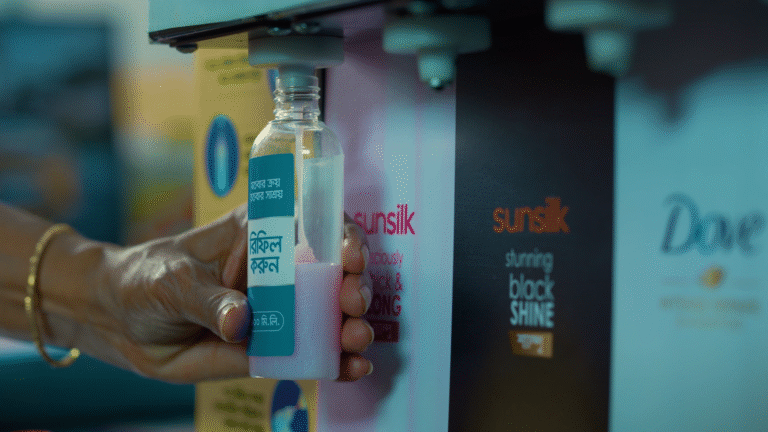
Unilever is accelerating its efforts to tackle plastic waste through over 50 global refill and reuse pilot projects since 2018, notably in Indonesia, Bangladesh and Sri Lanka. These initiatives have reduced an estimated six tonnes of virgin plastic per year across 1,000 Indonesian stations, and achieved 43% repeat usage in Bangladesh trials. The company aims for 100% of its plastic packaging to become reusable, recyclable or compostable by 2030 for rigid plastics and by 2035 for flexible plastics.
Refill Packaging Solutions
Plastic Waste Reduction
Unilever Sustainable Packaging
Reuse Economy Consumer Goods
Virgin Plastic Elimination
Unilever Accelerating the shift to net zero in India’s chemicals industry
Unilever is driving India’s chemicals-industry shift to net zero by promoting renewable and recycled feedstocks instead of fossil sources. Through its chairing of a government-established working group, the $220 billion industry (employing 2 million) is encouraged to cut the roughly 6% of global-GHG emissions tied to India’s chemical sector. Unilever has set a 42% reduction target for Scope 3 energy and industrial emissions by 2030, collaborating on technology, policy and industry roadmaps to scale low-carbon chemistry.
India Chemicals Net-zero
Renewable Chemical Feedstocks
Unilever Scope 3 Reduction
Chemical Industry Decarbonisation
Sustainable Material Transition
The "Unilever Gender Pay Report 2023" reflects the company's progress in promoting gender equality, revealing that women in the UK earn 4.7% more in median pay and 0.8% more in mean pay than men. The report also highlights that 55% of managerial roles are occupied by women, and women in the company receive a 61.8% higher median bonus. Additionally, 52% of the global R&D team consists of women, showcasing Unilever's commitment to gender balance across various leadership and technical positions.
Gender Pay Gap
Unilever
Equal Pay
Gender Equality
Diversity
Inclusion
R&D
Managerial Roles
Workforce Diversity
Women in Leadership.
The "Unilever EDI Report 2023/24" underscores the company's dedication to equity, diversity, and inclusion (EDI) through various initiatives aimed at achieving gender balance, eliminating workplace bias, and supporting marginalized communities. Women now make up 55% of Unilever's management, and the company has engaged over 1,300 colleagues in LGBTQ+ inclusion networks. Additionally, 98 Unilever workplaces have completed diversity and inclusion checklists, and the company has spent $1.1 billion on diverse-owned suppliers in 2023. These efforts reflect Unilever's comprehensive approach to fostering an inclusive environment both internally and across its supply chain.
Unilever
EDI Report
Gender Balance
Diversity
Inclusion
LGBTQ+ Inclusion
Fair Pay
Inclusive Marketing
Supplier Diversity
Workplace Equity.
Unilever's initiative to support SME retailers centers on providing access to digital tools, finance, and skills training, with a focus on empowering small business owners, particularly women. Through programs like the Shakti model in India and the Jaza Duka program in Kenya, Unilever has enabled 1.9 million small retailer stores to use its digital platforms. Over 190,000 women are involved in the Shakti program, while Jaza Duka has enrolled over 20,000 retailers, promoting financial inclusion and improving livelihoods in these communities.
SME Retailers
Unilever
Digital Tools
Financial Inclusion
Shakti Program
Jaza Duka
Women Empowerment
Small Business Growth
Livelihood Improvement
Inclusive Business Models.