Reckitt is a global health and hygiene company that produces well-known brands in health, nutrition, and home care. Their innovative products aim to improve lives and enhance well-being across diverse markets worldwide. Discover the social impact initiatives that Reckitt has been actively developing. This page highlights key insights into their community-focused projects and sustainable development efforts.
Resources from Reckitt

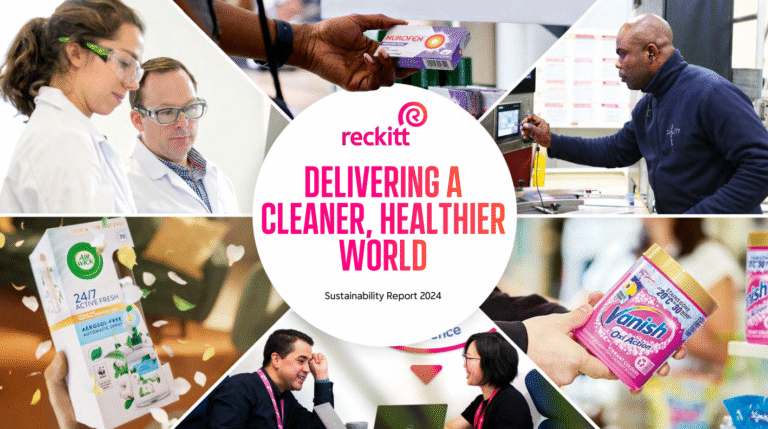
Reckitt Sustainability Report 2024
Reckitt’s Sustainability Report 2024 details major progress toward its 2030 and 2040 ambitions across people, planet, and products. The company achieved a 69% reduction in Scope 1 and 2 emissions, 34.9% of revenue from sustainable products, and a 24% chemical footprint reduction. Nearly all electricity is renewable, with one-third of sites generating their own power. Socially, Reckitt advanced gender equity (51% women in management) and strengthened community health partnerships. The report aligns with SDGs 3, 5, 6 and 13, embedding climate, biodiversity, and fairness into global value chains.
Reckitt Sustainability Report 2024
Scope 1 and 2 Emissions Reduction
Chemical Footprint Reduction
Gender Equality and Fair Society
Climate and Health Impact
Reckitt’ “Fairer Society” Framework
Reckitt’s “Fairer Society” framework advances inclusive employment, gender equality, and community health. It aims for 50/50 gender balance in management by 2030, invests £34 m in social impact, and supports 200 social innovators through its Catalyst programme—reaching over 1 million people so far. The company strengthens supplier livelihoods (e.g., €970 000 premium paid to rubber smallholders in Thailand), embeds human rights in value chains, and expands health-and-hygiene access across underserved communities.
Reckitt Fairer Society
Gender Equality Management
Social innovation Health Access
Rubber Smallholders in Thailand
Community Health Hygiene Initiative
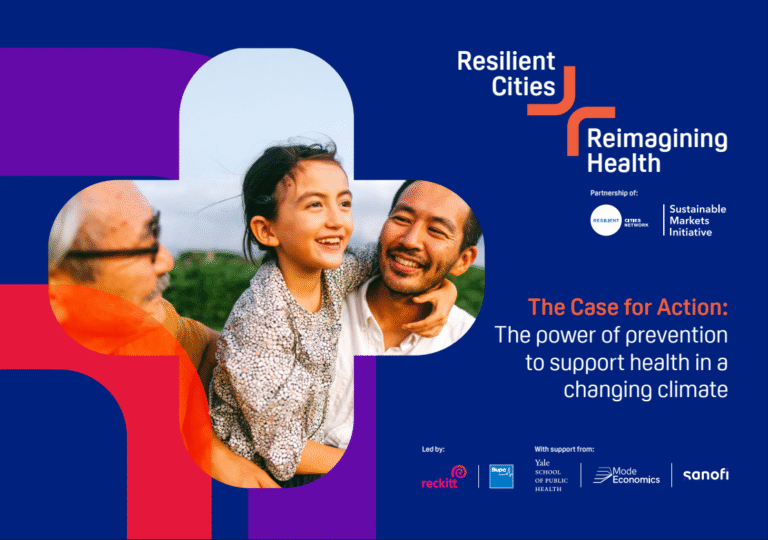
Reckitt and Bupa’s Resilient Cities, Reimagining Health report
Reckitt and Bupa’s Resilient Cities, Reimagining Health report outlines a global framework to prevent climate-driven health crises by empowering cities to adopt proactive, place-based healthcare models. Partnering with 29 cities across 19 countries, the initiative shows that preventive urban interventions such as green infrastructure, WASH access, and heat-action plans could save 725,000 lives annually, cut emissions by 15.6 MtCO₂e, and save $70 billion in healthcare costs. The report urges collaboration among governments, businesses, and communities to make health and equity central to climate resilience
Urban Climate Health Resilience
Preventive Healthcare Cities
Reckitt Bupa Sustainability Report
Health Equity Climate Action
Resilient Cities Initiative
Reckitt Resilient Cities, Reimagining Health
Reckitt, alongside Bupa and the Sustainable Markets Initiative (SMI), launched Resilient Cities, Reimagining Health—a global partnership uniting 22 cities across 15 countries to tackle climate-related health risks. The initiative, supported by the Resilient Cities Network and Yale University, empowers cities to pilot preventive, climate-smart public-health actions, reducing emissions and inequality. Outputs include a Practical Guide for Cities, an Urban Health Resilience Tool, and a Community of Practice reaching 100 million people. This city-led movement positions health and equity at the heart of climate action worldwide.
Reckitt Climate Health Initiative
Urban Resilience Cities
Preventive Healthcare Climate Action
Health equity climate change
Sustainable Markets Initiative SMI
The report "Reckitt’s Digital Transformation: Unleashing the Power of Process Intelligence at Scale" outlines Reckitt's strategic shift towards automation and digital innovation. The initiative aims to enhance operational efficiency by leveraging AI and advanced analytics, integrating digital solutions across procurement, finance, and customer service. Key aspects include a focus on sustainability and ethical data infrastructure, with the goal of delivering both immediate P&L impact and long-term competitive advantage.
Reckitt
Digital Transformation
Automation
Process Intelligence
Operational Efficiency
AI
Advanced Analytics
Sustainability
P&L Impact
Competitive Advantage.
Reckitt is investing over MX$120 million (US$7.2 million) in social responsibility projects in Mexico over the next four years. Key initiatives include the "Keep Children in School" program to improve water access in schools, "Safeteen First/Sí Confío" for sexual education, and "GRIP-PERAM" to raise awareness about antimicrobial resistance. In the past three years, Reckitt has donated 6 million products and over 27 million people have benefited from these social programs.
Reckitt
Social Responsibility
Mexico
Education
Public Health
Water Access
Sexual Education
Antimicrobial Resistance
Community Impact
Corporate Responsibility.
The "Reckitt Sustainability Report 2023" highlights Reckitt's commitment to sustainable practices across three pillars: purpose-led brands, a healthier planet, and a fairer society. Achievements include a 65% reduction in Scope 1 and 2 carbon emissions since 2015, 100% renewable electricity in global operations, and 29.6% of net revenue from more sustainable products. The company aims to use 25% recycled plastic content in packaging by 2025.
Reckitt
Sustainability
Carbon Emissions
Recycled Plastic
Renewable Energy
Sustainable Products
Environmental Impact
Fairer Society
Climate Action
Sustainable Packaging.
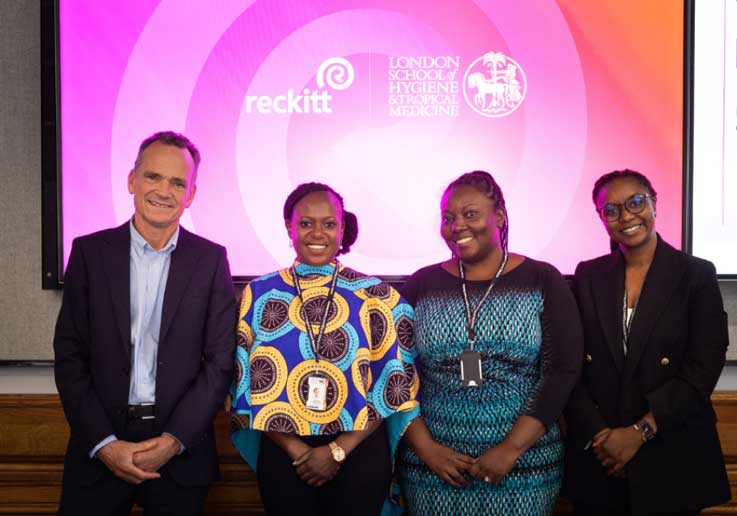
Reckitt and the London School of Hygiene & Tropical Medicine (LSHTM) have established the Reckitt Hygiene Forum to advance hygiene research and education. This five-year partnership focuses on behavior change research, safe surface science, and disease transmission. The Forum supports four new PhD studentships and has funded two seed grants for innovative research. Key projects include hygiene interventions in sub-Saharan Africa, and the collaboration involves creating science-based hygiene protocols for global events such as COP26.
Reckitt
Hygiene Research
LSHTM
Public Health
Antimicrobial Resistance
Hygiene Standards
Hygiene Education
Global Health
Research Partnership
School Hygiene.
Reckitt's "TechnoGirl" program in South Africa seeks to empower young girls from underprivileged backgrounds to pursue STEM careers. The initiative offers mentoring, job shadowing, and bursary schemes to address the gender gap in STEM fields. Currently, only 13% of girls in South Africa study STEM in higher education, and women make up 28.2% of the global STEM workforce. The program underscores the value of diverse teams in fostering innovation and growth.
Reckitt
TechnoGirl
STEM Education
Gender Equity
South Africa
Mentoring
Bursary Schemes
Diversity in STEM
Women in STEM
STEM Careers.