

ASUNCION, April 13, 2026 – As the World Bank convenes its Spring Meetings this week, we have an opportunity to reflect on the longstanding debate on the relationship between economic growth and human wellbeing, not only as a one-way process in which rising incomes improve basic living standards, but also as a mutually reinforcing dynamic in which investments in health, education, and other core capabilities can themselves drive productivity and growth. The more relevant distinction today is not between growth and redistribution, but between approaches that rely primarily on GDP-based indicators and those that complement them with multidimensional and income-sensitive measures of poverty. Aggregate income remains a powerful summary indicator of economic performance, but on its own it cannot capture how poverty is experienced, how it varies across populations, or which constraints are most binding at a given time. A more complete assessment of development requires combining GDP with tools that reveal the structure, depth, and distribution of poverty.
A recent paper by Pritchett and Lewis (Economic growth is enough and only economic growth is enough)[1] highlights a key empirical regularity: sustained economic growth is closely associated with improvements in basic material wellbeing. Indicators such as health, education, and living conditions track GDP per capita across countries, reinforcing the central role of growth. Yet the paper relies heavily on GDP as the main lens for understanding development outcomes. For policy, the issue is not only how growth is generated and sustained, but also how it is measured and interpreted alongside other dimensions of poverty. GDP captures aggregate expansion, but it does not reveal, for instance, how gains are distributed or how different aspects of poverty evolve.
A broader perspective, inspired by structuralist and evolutionary economics, sees growth as the result of cumulative processes of structural change, capability building, learning, and investment, shaped by institutions and demand conditions. GDP growth is informative but incomplete. Multidimensional and income-based measures may provide additional insight into how development unfolds across sectors, regions, and social groups. They also highlight the two-way relationship between growth and wellbeing. While higher incomes support improvements in health, education, and living standards, these same capabilities can enhance productivity and growth by strengthening labor capacity and learning.
In this context, instruments such as the Multidimensional Poverty Index (MPI) and the Poverty Stoplight become especially relevant. Their value lies in diagnosis, prioritization, and evaluation. The MPI identifies the structure of poverty across dimensions such as health, education, and living standards, showing which constraints are most severe and how they are distributed. While often used to demonstrate correlation with GDP per capita, these tools can also guide policy by identifying where poverty is most acute and which dimensions are most binding.
Multidimensional tools such as the MPI and the Poverty Stoplight help identify which aspects of poverty matter most, for whom, and where, improving the timing, sequencing, prioritisation, and targeting of interventions. Recent work from OECD/ODA reinforces this point, showing that MPI-type information can guide allocation decisions by pinpointing where the poorest are and which hardships overlap, particularly when resources are scarce.
The Poverty Stoplight adds a robust operational layer by capturing the state of development at the household level in real time. Through visual classification and dynamic monitoring, it enables more precise and timely intervention. It reveals not only who is poor, but how poverty is structured and which constraints are changing or persisting, which is critical given that development bottlenecks are often localized and time-sensitive.
At the same time, these instruments should not be overextended conceptually. They are enabling tools, not development strategies in themselves. The Poverty Stoplight’s global database, the largest of its kind in the world, compiles real-time, fine-grained, georeferenced, household-level, self-reported multidimensional poverty data. It shows that improvements in income often coincide with gains in savings, income diversification, and self-esteem, as seen in Paraguay and Argentina, while in Brazil similar gains have not yet translated into higher income stability, unlike in Bolivia where the relationship is tighter. These patterns help identify where and when action is needed and how different dimensions of poverty interact across contexts, informing more place-specific and time-sensitive strategies, even if they do not by themselves specify how economies build productive capabilities or sustain growth.
Such tools therefore need to be embedded in a broader account of development. This involves attention to structural transformation, demand dynamics, institutions, and cumulative causation. Development policy must go beyond tracking GDP growth alone and instead shape the conditions under which productivity rises, new sectors emerge, and gains from transformation spread across society. Economic and industrial policy in this tradition are concerned not only with stimulating investment, but also with supporting learning, strengthening capabilities, sustaining demand, and avoiding narrow patterns of growth. Human basics matter not only as outcomes, but also as factors that influence an economy’s capacity to absorb technology and sustain development.
Seen in this light, the main limitation of Pritchett and Lewis is not that they emphasize growth, but that their framework relies too heavily on GDP as the primary metric of development. Their analysis is a useful corrective against approaches that underplay the importance of growth, but it risks narrowing the lens through which development is assessed. A richer perspective retains their core insight while emphasizing the need to integrate GDP with multidimensional and income-based measures that capture the full complexity of poverty and wellbeing.
The policy implication is clear as the World Bank gathers to set priorities for the year ahead. Development strategy must move beyond reliance on GDP alone and adopt measurement frameworks that reflect the full, multidimensional reality of poverty. Instruments such as the MPI and the Poverty Stoplight make poverty visible in ways that are actionable, time-sensitive, and policy-relevant, helping governments direct scarce resources where they will have the greatest impact. But their real power lies in being used alongside GDP, not instead of it. The challenge for policymakers is to align growth strategies with multidimensional diagnostics so that economic expansion translates more effectively into broad-based improvements in human wellbeing. In that agenda, measurement is not neutral. It shapes priorities, guides action, and ultimately determines whether growth delivers on its promise.
[1] https://substack.com/home/post/p-190638546
[2] https://lantpritchett.org/wp-content/uploads/2022/05/Basics-legatum-paper_short.pdf
EDITOR’S NOTES:
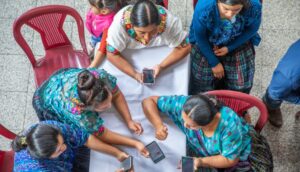
The photograph was taken on February 11, 2025, during the inauguration of 200 meters of rural roads in Cordillerita, Paraguay. This project “greened” the all-weather road access indicator for this community, where the Poverty Stoplight works in partnership with Forestal Sylvis. The women in the community helped build the road. This story was later featured in the BBC World Service program, “People Fixing the World.”
ABOUT THE AUTHORS:
Julia Corvalan, PhD, is an international development expert, academic, and researcher. She is the Global Operations Manager at the Poverty Stoplight, the world’s leading database of household-level, self-reported multidimensional poverty data. A Senior Fellow with Aspen Institute’s Global Innovators Group, Julia is the Dean of the School of Business Administration, Universidad Internacional de Desarrollo, Paraguay
Alessandro Rosiello, PhD, is an academic, economist and entrepreneur. He is Professor of Innovation and Entrepreneurship and Director of Internationalisation at the University of Edinburgh Business School. Since 2022, he is the Director of Innovation at the Edinburgh Futures Institute at the University of Edinburgh.