Visa is a global payments technology company that facilitates secure and efficient financial transactions through its extensive network of cardholders, merchants, and financial institutions. Discover the social impact initiatives that Visa has been actively developing. This page highlights key insights into their community-focused projects and sustainable development efforts.

Resources from Visa

Visa travel insights 2025
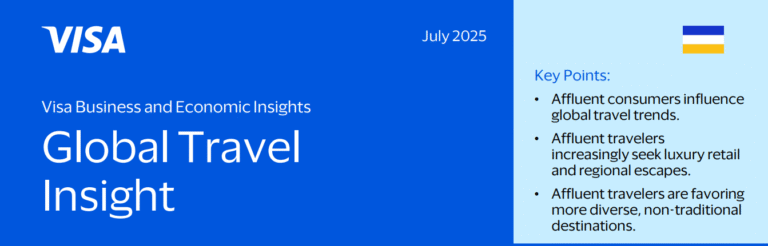
Visa’s Global Travel Insight July 2025 shows affluent travelers—earning over US$200 000 annually—represent just 5% of households yet drive 25% of global travel spend. Their cross-border credit spend averages 3× that of non-affluent travelers, reaching 6× in Hong Kong. Emerging-market affluents are reshaping tourism, with Asia-Pacific’s affluent households projected to grow 8% CAGR to 2030. Destinations like Hokkaido, Mendoza, and Mersa Matruh are rising, reflecting a shift toward authentic experiences and regional escapes that blend luxury, culture and sustainability.
Visa travel Insights 2025
Affluent tourism Trends
Emerging market Travellers
Luxury Travel Spending
Asia Pacific Affluent Growth
Visa Opportunities for European banks in the green transition
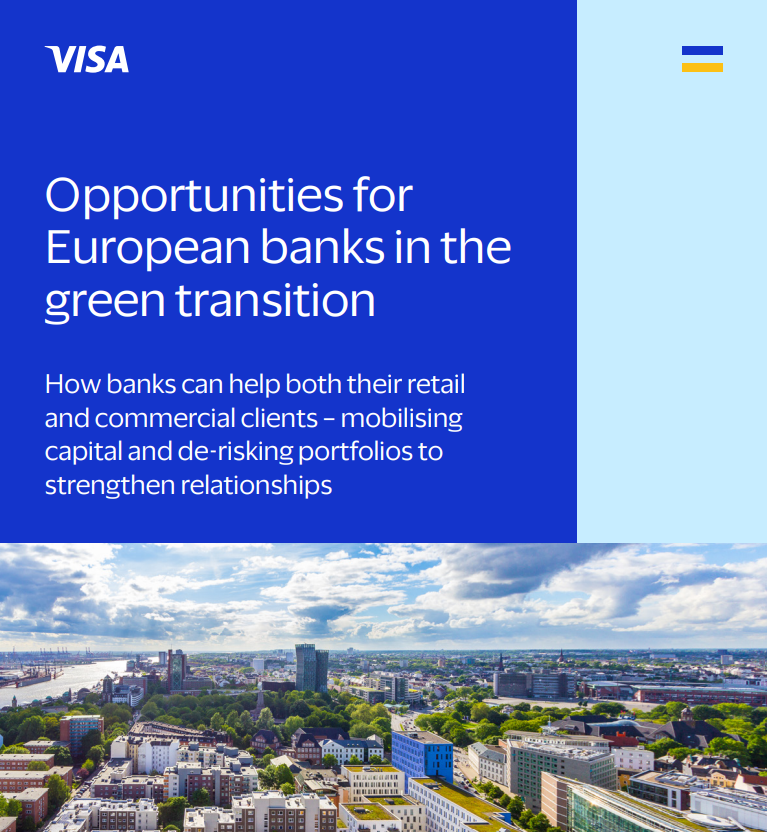
Visa’s Opportunities for Europe’s Banks in the Green Transition (2025) highlights how financial institutions can mobilise capital and reduce portfolio risk while driving net-zero progress. Climate change could cost 12% of global GDP per +1°C, yet offers a $5–11 trillion market in decarbonisation by 2030. Banks can lead through green mortgages, EV loans, renewable-energy financing, and sustainability-linked lending. Consumer demand is rising—57% of Gen Z would pay more for green banking—creating new profit, compliance, and impact opportunities.
Visa sustainable finance Europe
Green transition banking
Net zero financing solutions
Climate investment opportunity
Consumer sustainable banking
Visa Affluent travelers are reshaping 2025 global travel trends
According to Visa’s “Emerging 2025 Travel Trends – Affluent Tourism Destinations” report, affluent households (earning > US$200,000/year) represent only ~5% of households but account for up to one in four dollars spent on travel. The report highlights emerging hotspots such as Hokkaido (Japan), Mendoza (Argentina) and Mersa Matruh (Egypt), driven by affluent demand for authenticity, off-the-beaten-path experiences, luxury retail and regional proximity.
Affluent Travel Trends 2025
Luxury Tourism Destinations
Emerging Travel Hotspots
High-net-worth Travel Behaviour
Visa Affluent Tourism Insights
Visa Why Payment Innovation Matters for Small Businesses
Visa’s Why Payment Innovation Matters for Small Businesses (April 2025) highlights how digital payments and tokenization empower MSMEs—representing 90% of global businesses and 70% of jobs—to grow securely and inclusively. Tokenized transactions cut fraud by 34%, raised authorization rates by 4.7%, and saved merchants $5.9 billion between 2019–2024. Adoption enhances financial inclusion, real-time data insights, and online sales (up 20–30 pp). Visa urges public-private collaboration to close the $5.7 trillion MSME financing gap and drive sustainable economic growth.
Visa Economic Empowerment Institute
MSME digital payments
Tokenization fraud reduction
Financial inclusion innovation
Small business growth
The report on Minority Depository Institutions (MDIs) highlights their critical role in supporting low-income homeowners and underserved communities. MDIs are more likely to serve minority and low-to-moderate-income customers, providing essential financial services often unavailable from non-MDIs. The study reveals that MDI customers, particularly Black and Hispanic Americans, have a 3.1% higher homeownership rate than those served by non-MDIs. However, the report also notes a decline in MDIs, with a 15% reduction in MDI banks and a 36% decrease in MDI credit unions over the past decade, underscoring the challenges these institutions face in continuing their impactful work.
Minority Depository Institutions
MDIs
Low-Income Homeownership
Financial Inclusion
Wealth Building
Underserved Communities
Mortgage Access
Racial Equity
Community Banks
Credit Unions.
The report "An Ecosystem Approach to Sustainable Tourism" stresses the importance of holistic strategies to tackle the environmental and social challenges linked to tourism. It advocates for policy frameworks and tools that governments and businesses can use to foster sustainable practices. The focus is on reducing greenhouse gas emissions, managing over-tourism, and supporting local communities, especially as international tourism is expected to return to pre-pandemic levels by 2024. The report also highlights that 29% of surveyed travelers are actively reducing their carbon footprint, and it underscores the importance of emerging green claims regulations to combat greenwashing in the industry.
Sustainable Tourism
Ecosystem Approach
Over-tourism
Greenhouse Gas Emissions
Green Claims
Policy Frameworks
Environmental Impact
Climate Change
Tourism Management
Community Support.
The "MDI Cardholders vs. Non-MDI Cardholders" report by the Visa Economic Empowerment Institute examines homeownership disparities among Black Americans, revealing that those who use Minority Depository Institutions (MDIs) are more likely to own homes, particularly at lower income levels. The study highlights that MDI cardholders with an income under $35,000 have a 49.9% homeownership rate, compared to 45.7% for non-MDI cardholders, showcasing the positive impact of MDIs in fostering homeownership among low-income Black Americans.
MDI Cardholders
Homeownership
Black Americans
Financial Inclusion
Visa Economic Empowerment Institute
MDI Impact
Minority Depository Institutions
Housing Disparities
Wealth Building
Economic Equity.
The "Insights from Uzbekistan: Unlocking the Benefits of Digital Payments" report by Visa highlights the rapid adoption of digital payments in Uzbekistan, spurred by government initiatives and technological advancements. The report emphasizes the significant benefits for individuals and small businesses, noting that 57% of small business owners and 48% of individuals have adopted digital payments within the last two years. This shift has led to 65% of small businesses reporting a 30-40% increase in revenue, and 69% experiencing a rise in customer numbers, demonstrating the positive impact of digital payments on business growth and efficiency.
Digital Payments
Uzbekistan
Financial Inclusion
Small Businesses
Revenue Growth
Convenience
Payment Systems
Government Initiatives
Financial Services
Visa.
The "Visa 2023 Corporate Responsibility & Sustainability Report" details Visa's commitment to sustainable practices, focusing on empowerment, security, and environmental stewardship. The report highlights the digital enablement of 67 million small and micro businesses, the prevention of $40 billion in fraud-related losses, a 24% reduction in Scope 1 and 2 greenhouse gas emissions since FY20, and the achievement of 100% renewable electricity use.
Visa
Corporate Responsibility
Sustainability
SMB Empowerment
Fraud Prevention
Renewable Energy
Greenhouse Gas Emissions
Environmental Impact
Financial Inclusion
Digital Payments.