Mars is a global leader in the confectionery, pet care, and food industries, With a commitment to sustainability and innovation, Mars strives to make a positive impact on the planet. Discover the social impact initiatives that Mars has been actively developing. This page highlights key insights into their community-focused projects and sustainable development efforts.

Resources from Mars

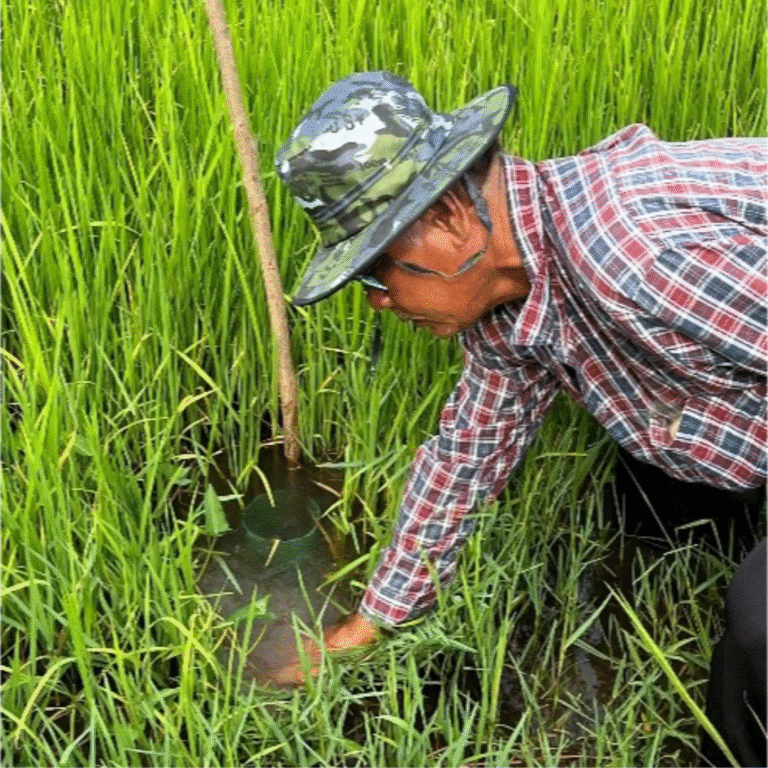
Working with rice farmers to champion climate-smart agriculture in our food
The Ben’s Original-owner Mars partnered with GIZ to train 1,450 rice farmers in Thailand 70% women in climate-smart cultivation under the Sustainable Rice Platform. Yields rose by +43% in Roi Et and +10% in Central Plain while water use dropped by 56% and 41% respectively. The programme embeds sustainable sourcing, gender equality and resilience in food supply chains anchoring key social-impact and climate-adaptation outcomes across rice agriculture in Asia.
climate-smart agriculture Thailand
women rice farmers sustainable sourcing
Sustainable Rice Platform Thailand
water-efficient rice cultivation
Mars sustainability supply chain
Mars’s Sustainable in a Generation Plan 2024 Report
Mars’s Sustainable in a Generation Plan 2024 details major progress across climate, people and packaging goals. The company cut total GHG emissions 16.4% from 2015 despite 69% business growth, reached 58% renewable electricity, and improved water-use sustainability by 36%. Over 850,000 people including 160,000 farmers and 115,000 women benefited from its value-chain programs. Highlights include 60+ climate-smart agriculture projects, coral reef restoration planting 80,000 corals, and packaging that’s 64% recyclable or compostable.
Mars sustainability 2024
Climate-smart agriculture
Corporate net zero roadmap
Responsible supply chains
Sustainable packaging innovation
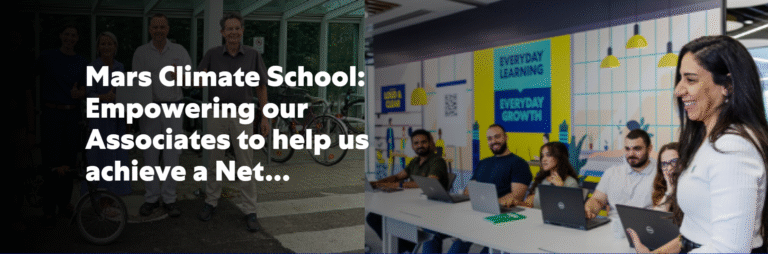
Mars Climate School Empowering our Associates to help us achieve a Net Zero Future
Mars Incorporated introduces its “Climate School,” a six-hour e-learning programme developed with Project Drawdown to embed sustainability and climate competence across its workforce. The initiative targets 80% completion by 2025 among key functions such as R&D, Supply and Commercial, making training mandatory for senior leaders. Thousands of Associates have enrolled to become “Climate Heroes”, aligning employee literacy with Mars’s Roadmap to Net Zero by 2050 and deepening its climate-resilient culture.
Climate Literacy Workforce
Corporate Net Zero Training
Mars Climate School
Corporate Sustainability Education
Employee Climate Upskilling
Mars is committed to supporting smallholder farmers through initiatives designed to increase their incomes, ensure sustainable livelihoods, and encourage future generations to remain in farming. Key programs include the Livelihoods Fund for Family Farming and the Farmer Income Lab. These initiatives focus on investing in sustainable agriculture projects, enhancing food security, and working towards the elimination of poverty among farmers within their supply chains. The Farmer Income Lab plays a crucial role by concentrating on practical solutions aimed at eradicating smallholder poverty. Mars has set a target to impact 200,000 farms by improving both income levels and sustainability practices.
Smallholder Farmers
Sustainable Agriculture
Farmer Income
Livelihoods Fund
Mars Incorporated
Poverty Eradication
Food Security
Agroforestry
Supply Chain Sustainability
Farmer Empowerment.
Mars' "Full Potential" platform aims to advance gender equality across their workplaces, sourcing communities, and marketplace. This initiative focuses on achieving gender-balanced leadership, with 43% of Mars leaders currently being women, and on ensuring equal pay. The platform also supports women-owned businesses, with a commitment to spend $500 million with women-led suppliers by 2025. The economic impact is underscored by the fact that women control more than 25% of the world’s wealth, estimated at $20 trillion, and make 70% of brand purchasing decisions. Mars has partnered with CARE, benefiting 58,000 women, and supported 4,600 women in mint communities in India, where 70% of small-scale businesses in emerging markets are operated by women. Gender-diverse teams are highlighted as a key factor in improving business outcomes.
Gender Equality
Women's Empowerment
Mars Full Potential
Equal Pay
Women in Leadership
Gender Balance
Women-Owned Businesses
Economic Empowerment
Gender Parity
Sustainable Development.
The "Palm Positive Update 2024" outlines significant progress in sustainable palm oil initiatives, with a focus on traceability, deforestation-free supply chains, and the inclusion of smallholders. The report highlights a 15% increase in sustainable sourcing and a 20% reduction in carbon emissions. Achievements include 95% traceability to palm oil mills, 80% compliance with deforestation-free commitments, and support for 10,000 smallholders through sustainability programs. Despite these advancements, ongoing challenges remain in meeting global sustainability targets.
Sustainable palm oil
Palm oil traceability
Carbon emissions reduction
Deforestation-free supply chain
Palm oil sustainability
Smallholder inclusion
Palm oil supply chain
Global sustainability targets
Responsible palm oil sourcing
Environmental impact palm oil
The "Mars Net Zero Roadmap 2050" details Mars' commitment to achieving net zero greenhouse gas emissions by 2050. The plan includes a target to reduce emissions by 50% by 2030 and achieve 100% renewable energy use. As of 2022, 58% of Mars' global electricity usage is covered by renewables. The roadmap also sets a goal for 100% of cocoa to be deforestation-free by 2025. The net zero target encompasses all Scope 1, 2, and 3 emissions, with Mars investing $1 billion annually in sustainability initiatives. Key focus areas include sustainable agriculture, renewable energy, and responsible sourcing.
Net Zero
Mars Inc.
Greenhouse Gas Emissions
Sustainable Agriculture
Renewable Energy
Responsible Sourcing
Climate Action
Carbon Footprint
Sustainability Initiatives
Environmental Impact.
The report "Integrating Social and Environmental Sustainability" by IDH and Mars, developed with Forum for the Future, highlights the importance of adopting an integrated approach to sustainability, addressing both environmental and social challenges simultaneously. The report makes a business case for this integration, demonstrating how it can enhance resilience, productivity, and growth. Practical recommendations are provided for embedding sustainability across business operations, from governance structures to cultural shifts, ensuring long-term systemic change. As of 2020, 80% of companies reported on sustainability, but only 34% of the largest companies have net-zero commitments, with 93% not on track to meet them.
Sustainability Integration
Social Responsibility
Environmental Impact
Business Resilience
Climate Change
Inequality
ESG
Corporate Governance
Sustainable Development
Systemic Approach.