
Women farmers are central to fixing broken food systems, yet they remain excluded from the technologies, financing and markets needed to scale solutions. New research from CARE shows that reducing food loss and waste requires women-centered design, investment and partnerships. Empowering women farmers can strengthen food security, resilience and climate outcomes globally.
In the UN’s International Year of the Woman Farmer, a new CARE report shows that the technologies to reduce food loss and waste already exist – but they will only scale when women are at the center.
The crisis hiding in plain sight
Today, roughly one-third of all food produced globally is lost or wasted. In many food insecure places like Kenya and Niger, this translates into 50% of vegetables never reaching a market. Nutrient-dense fruits, eggs, and dairy – the foods women and young children most need – spoil before they can feed anyone. Adding to—and compounding— this tragedy, decomposing food generates methane at a scale that accounts for approximately 10% of all global greenhouse gas emissions.
At the same time, global food systems are under unprecedented strain and the number of hungry people in the most fragile states has risen for six consecutive years. The conflict in Iran is driving up fuel and fertilizer costs–which make it harder to grow, store, and get food to market, all while climate shocks are intensifying. The communities absorbing the worst of it are the same ones with the least buffer: smallholder farmers, and disproportionately, the women who are farming the land and cooking the meals.
Fixing our food systems is one of the most powerful levers we have against hunger right now. And the UN’s designation of 2026 as the International Year of the Woman Farmer makes this the right moment to be honest about what fixing those systems actually requires.
The technology exists. So why isn’t it working?
A new CARE report, Why Food Loss and Waste Technologies Scale or Fail, draws on research across 21 countries to answer a question that has frustrated governments, funders and practitioners alike: why have millions of dollars invested in food loss and waste technologies failed to move the needle?
The answer is not a lack of good solutions. We have technologies that work: Solar drying, hermetic storage, small-scale processing, biodigesters that turn agricultural waste into biofertilizer. All of these technologies can reduce post-harvest losses, increase farmers’ income, cut emissions, and improve access to nutritious food. In Honduras, for example, a smallholder farmer named Norma Hernandez began using a biodigester with support from CARE. Thanks to the new resource, Norma cut her fertilizer costs, eliminated indoor cooking smoke, and found herself with something else she hadn’t expected: more time. “Now I can spend more time with my children and help them with their schoolwork,” she says.
Norma’s story illustrates why technologies can be successful, yet it also points directly to why they so often fail. The problem is not the technology but rather the systems built around it.
Women do half the work but are excluded from the solutions
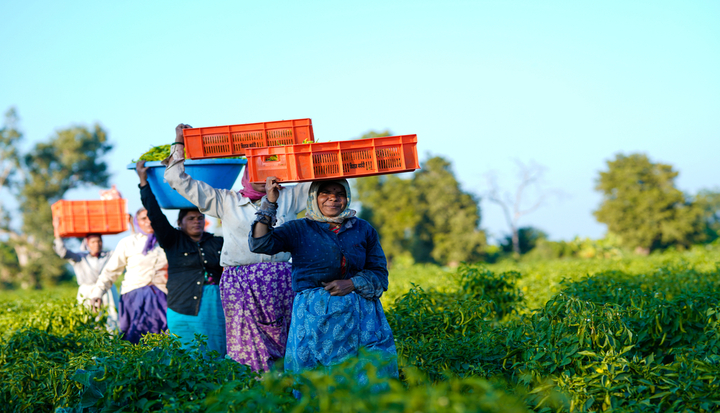
Women make up around 40% of the global agricultural labor force and perform up to half of all post-harvest work, yet they are consistently the last to access the technologies, financing, and market connections that would make their labor more productive and less precarious.
Technologies designed without women’s input usually don’t work for women, so women don’t adopt them. Financing products that require land as collateral exclude women who don’t hold formal land titles. Many technologies don’t account for women’s time, and they often add hours of labor rather than reduce them. The result: solutions that look good on paper but don’t reach the people who need them most.
CARE’s findings show that solutions scale when they:
Reduce women’s time burden, create viable business opportunities, ensure reliable market demand, and provide access to financing.
These are not add-ons but rather they are the conditions for success.
No-regret investments for an uncertain world
The private sector has a concrete role to play. Business is not just a funder. They must also be a co-designer, buyer, and financier of solutions that work for women. In practice, this means that companies must co-develop technologies with women farmers and small business owners rather than for them. That means listening to women and their specific experiences. It means offering flexible financing to smallholders, and committing to the reliable purchasing agreements that create the market demand that technologies need to scale. It means recognizing that supply chain resilience and women’s equality are not separate agendas.
These are “no-regret investments;” interventions that deliver immediate benefits for farmers while building the long-term resilience that protects supply chains against future shocks.
The time to act is now
There has never been a better moment than now, the International Year of the Woman Farmer, for the global community to move from recognition to investment. The women at the center of our food systems are already innovating, organizing, and building solutions and they need the financing and market infrastructure to take those solutions to scale.
Closing that gap doesn’t just reduce waste; it also helps build food systems that are more resilient, more equal, and better able to withstand whatever comes next.
Download the full report | Visit the CARE landing page | To explore partnership opportunities with CARE, contact us at pa**********@**re.org